guides
Vertical Gardening: Grow Up When You Can't Grow Out
Double a small garden's output by climbing — what actually grows vertically, the trellis that beats bought kits, and the mistakes that flatten beginners.
Honest disclosure: Some links below are affiliate links — Glivox earns a commission if you purchase, at no extra cost to you. We pay full price for products we review and rankings are never paid. Read the full policy.
A small garden’s most wasted resource isn’t soil — it’s air. The two metres above every bed are free real estate, and a whole category of vegetables would rather climb into it than sprawl across your precious ground. Trellis a cucumber and it stops eating a square metre of bed; suddenly there’s room for a row of lettuce underneath.
Vertical growing is the closest thing small-space gardening has to a cheat code — but the internet oversells what climbs and undersells what the structure has to survive. Here’s the honest version.
TL;DR — vertical gardening in one paragraph
Natural climbers — pole beans, cucumbers, peas, small-fruited squash and melons, indeterminate tomatoes (tied, not twining) — can double a small garden’s productive area. The structure matters more than the plant: build or buy something that survives wind plus the wet weight of a fully loaded vine, anchor it like you mean it, and place it on the north side of beds so it shades paths, not plants. The best value trellis in gardening is a cattle/livestock panel (~$25–35) arched between two beds or wired to T-posts — stronger than almost any kit twice its price. One honest warning: vertical plants dry out faster and fruit hangs in the open, so watering and harvesting both change.
Buy it if
your ground space is maxed but you have sun and vertical room — climbing doubles output per square metre
Skip it if
giant pumpkins and full-size watermelon on trellises (slings can't save everything), and flimsy decorative trellises for heavy crops
Try instead
Zero yard? Vertical works in containers too — a bucket + a sturdy stake or cage grows climbing beans on a balcony
What actually climbs (and what needs help)
- Pole beans — the champion: true twiners that climb anything vertical, hugely productive per square foot, and they feed their own nitrogen. A tripod of long sticks is a complete trellis.
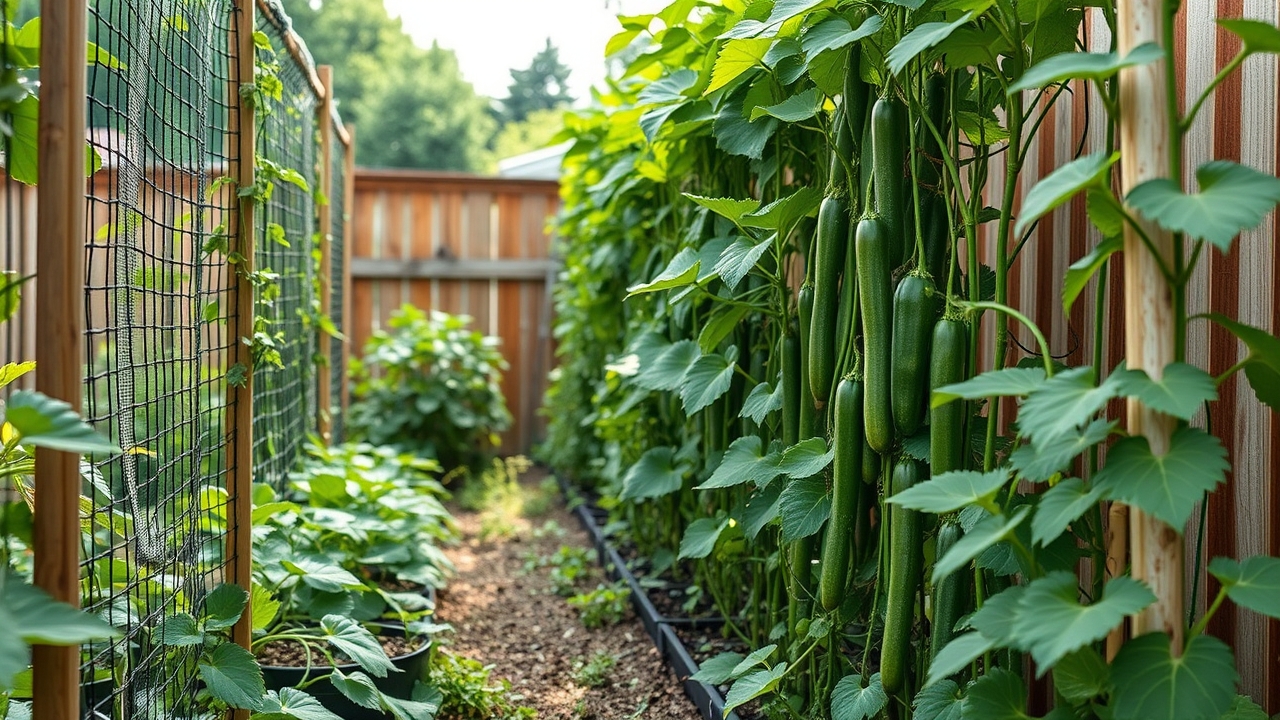
- Cucumbers — enthusiastic tendril climbers; trellised fruit hangs straight, stays clean, and dodges the ground rot and beetle problems of sprawlers.
- Peas — light climbers for netting or twiggy branches; spring and fall crop.
- Small squash & melons — acorn squash, delicata, small cantaloupes climb with tendril help; fruit over ~1 kg wants a sling (old t-shirt fabric works).
- Indeterminate tomatoes — they don’t climb, they lean: stakes, cages, or a string system with weekly tying. Vertical, but labor-assisted.
- Won’t climb, stop trying: determinate tomatoes, peppers, eggplant (stake them, that’s all), bush varieties of anything, and heavyweight pumpkins/watermelons.
~$30
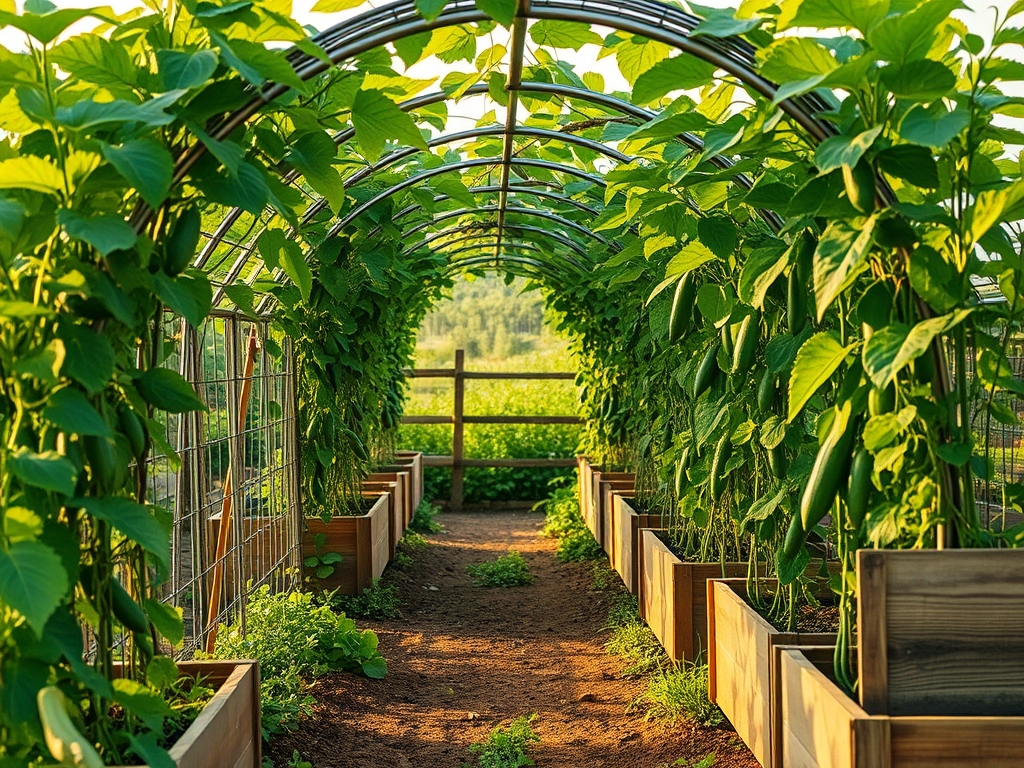
A cattle panel — the strongest trellis per dollar in gardening; arch it and it's also beautiful
The structure is the whole game
Every vertical failure story is the same: July windstorm + fully loaded vines + cute decorative trellis = everything flat on the ground, too tangled to save. Build for the worst week, not the first week:
- Cattle panel arch (the best value): one 16-ft livestock panel bent into an arch between two beds, or cut and wired flat to steel T-posts. Holds anything, lasts decades, turns a path into a food tunnel.
- T-posts + netting or mesh: driven 30+ cm into the ground, heavy trellis netting stretched taut. Cheap, fast, effective for beans/peas/cucumbers.
- Bamboo tripods: three or more thick canes lashed at the top — self-bracing, free if you grow bamboo, perfect for pole beans in beds or buckets.
- String lines: for tomatoes and cucumbers under a sturdy top support — commercial-style, elegant, but the top bar must be genuinely solid.
Placement rule: trellises go on the north edge of beds (in the northern hemisphere) so the wall of green shades the path behind it — not the crops beside it. Exception by design: use that shade deliberately for summer lettuce.
The honest trade-offs
- Vertical dries out faster. More leaf area in the wind and sun = thirstier plants; container-plus-trellis setups doubly so. Mulch and steady watering matter more, not less.
- Wind is now your problem. A loaded trellis is a sail. Anchoring is 80% of success.
- Train weekly, not monthly. Five minutes tucking wayward vines while they’re soft beats wrestling them after they’ve committed elsewhere.
- The payoff stack: straighter, cleaner fruit; better airflow (less mildew); easy standing harvests; and the ground floor freed for a second crop underneath.
Quick wins vs. vertical mistakes
What works
- One cattle panel beats three decorative trellises at a third the price
- Install the trellis AT planting time — retrofitting around grown vines is misery
- North-side placement: shade the path, not the neighbors
- Sling anything heavier than a fist (old t-shirts are free slings)
What doesn't
- Dollar-store trellises under real crop loads (they fold in the first storm)
- Trellising full-size watermelon and hoping
- Forgetting vertical plants drink faster — especially in containers
- Letting vines free-solo for three weeks, then trying to untangle them
FAQ
What vegetables grow best vertically?
The natural climbers: pole beans and peas (true twiners/tendril climbers), cucumbers, and small-fruited squash and melons like acorn, delicata and small cantaloupe (fruit over a kilogram needs a fabric sling). Indeterminate tomatoes grow vertically too but must be tied to stakes, cages or strings — they lean rather than climb. Peppers and eggplant just need a stake; bush varieties and giant pumpkins should stay on the ground.
What is the cheapest strong trellis for a vegetable garden?
A livestock/cattle panel — a 16-foot welded wire panel from a farm store (~$25–35) — is the best strength-per-dollar structure in gardening. Arch it between two beds for a food tunnel, or wire it flat to driven T-posts. It handles fully loaded cucumber and bean vines in wind, lasts decades, and outperforms most decorative trellises sold at several times the price. Bamboo tripods are the best free option for pole beans.
Does vertical gardening really save space?
Yes — it converts ground area into air area. A trellised cucumber occupies roughly a third of the footprint of a sprawling one, and the freed ground can grow a second crop like lettuce or radishes underneath. The honest caveats: vertical plants dry out faster (more exposure), structures must be genuinely anchored against wind, and heavy fruit needs support. For small gardens the trade is overwhelmingly worth it.
Which side of the garden should a trellis go on?
The north side of beds in the northern hemisphere (south side below the equator), so the tall wall of vines casts its shadow on paths or areas behind the bed rather than on shorter neighboring crops. The strategic exception: placing a trellis to deliberately shade heat-sensitive crops like summer lettuce, which appreciate afternoon relief — in that case, put the lettuce in the shadow on purpose.
Can I grow vertical vegetables in containers?
Yes — pole beans, cucumbers and peas all work in large containers (5-gallon buckets and up) with a sturdy stake, tripod or cage anchored in or behind the pot. Two things intensify: watering (container + vertical = the thirstiest combination in gardening, often daily in summer) and stability (a loaded vine makes a light pot top-heavy — use wide pots, heavy mix, or tie the support to a railing or wall).
Glivox publishes practical, honest guides for homesteaders and backyard growers — the sky over your garden is free; use it.
Keep reading
guides
Container Vegetable Gardening: How to Grow Food in Pots (2026 Guide)
No yard? No problem. A practical guide to growing vegetables in containers — which pots, what soil, the best crops for pots, and how to keep container plants watered and thriving through summer.
guides
How to Grow a Year's Worth of Food in a Small Backyard (2026)
A realistic plan for growing serious amounts of food in a small backyard — space-efficient layouts, the highest-yield crops per square foot, and how to stretch the harvest across all four seasons.
guides
The 5-Gallon Bucket Garden: Grow Real Food for Almost Nothing
Free buckets, a few drainage holes, and the right crops — how to build a productive vegetable garden from 5-gallon buckets, including the self-watering DIY upgrade.