guides
How to Save Seeds From Your Garden (and Which Ones Actually Come Back True)
Seed saving for beginners — the hybrid trap, the 5 easiest crops to start with, the tomato fermentation trick, and how to store seeds so they sprout next spring.
Honest disclosure: Some links below are affiliate links — Glivox earns a commission if you purchase, at no extra cost to you. We pay full price for products we review and rankings are never paid. Read the full policy.
August is when seed saving season quietly begins: the best tomatoes are ripe, bean pods are drying on the vine, and the lettuce you let bolt is turning to fluff. Saving seeds is the oldest move in the self-sufficiency playbook — it turns this year’s best plants into next year’s free garden, and slowly breeds vegetables adapted to your yard.
It’s also where beginners hit one nasty surprise: seeds saved from the wrong plants grow into disappointments. Here’s the honest guide — the one rule that decides everything, the five easiest crops to start with, and the storage habits that keep seeds alive till spring.
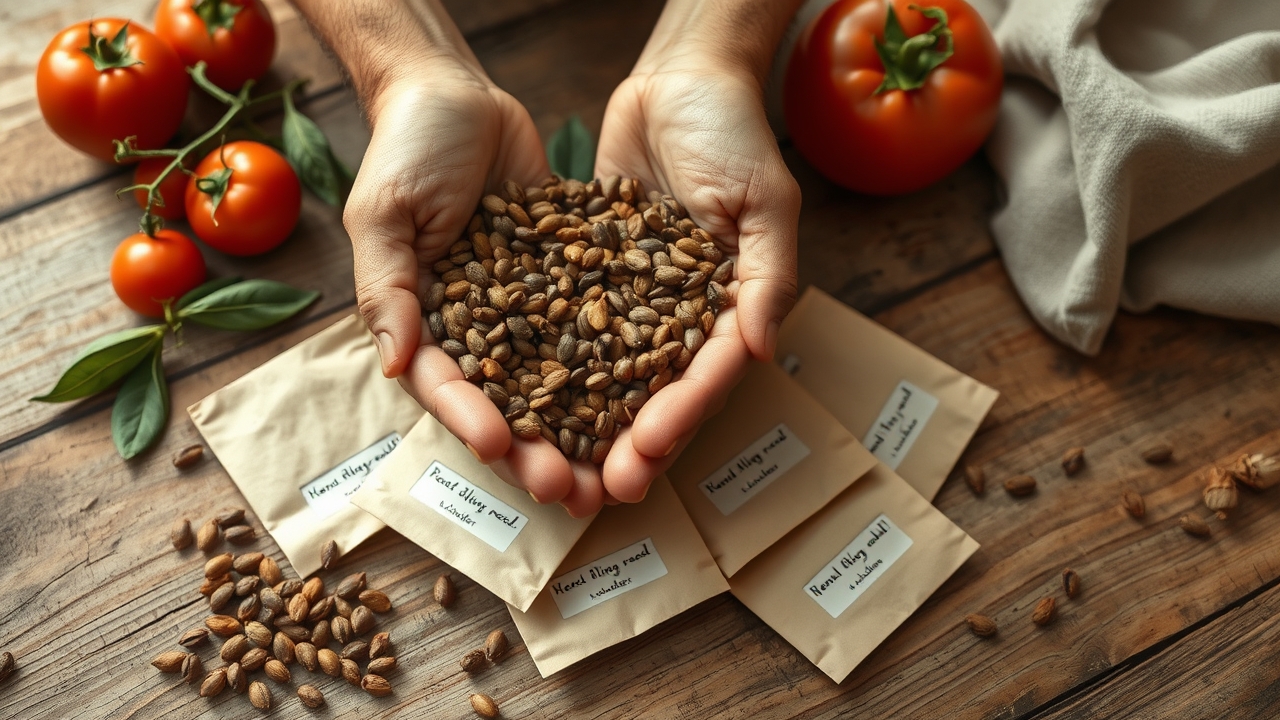
The five easiest seeds to start with
Save seeds only from open-pollinated (OP) or heirloom varieties — seeds from hybrids (F1 on the packet) don’t grow true and usually disappoint. Start with the five easy self-pollinators: tomatoes, beans, peas, lettuce, and peppers — they barely cross-pollinate, so what you save is what you get. Take seeds from your best, fully-ripe fruit, dry them thoroughly (a week or more spread on a plate — not paper towels they’ll glue onto), and store cool, dark, and dry in labeled envelopes. Done right, most vegetable seeds stay good for 3–5 years.
Buy it if
you grow open-pollinated or heirloom varieties and want free, locally-adapted seed every year after this one
Skip it if
saving seed from F1 hybrids or from squash family plants growing near their cousins — both roads lead to weird disappointing offspring
Try instead
All your plants are hybrids? Save seed anyway from beans and lettuce for the practice, and buy a couple of OP varieties next season to start your line
The one rule: open-pollinated or nothing
Hybrid (F1) varieties are crosses between two parent lines. They’re great plants — but their seeds reshuffle the genetics, and what grows next year is a lottery ticket that mostly loses: smaller fruit, odd shapes, missing disease resistance. The packet or plant tag tells you: “F1” or “hybrid” = don’t save; “open-pollinated,” “OP,” or “heirloom” = save away. Heirlooms are just OP varieties old enough to have a story.
This isn’t a scandal — it’s just genetics. But it’s the #1 reason beginner seed saving “fails,” so check your varieties before you invest the effort.
OP / Heirloom
The words to look for before saving a single seed — F1 hybrids don't come back true
The 5 easiest crops to start with
These five are self-pollinating — each flower mostly fertilizes itself, so varieties rarely cross even in a small garden. What you save is what you planted.
1. Beans & peas — the zero-effort gateway
Let pods dry brown and papery on the plant until seeds rattle inside. Shell, dry another week indoors, done. If frost threatens, pull whole plants and hang them to finish drying.
2. Tomatoes — one fermentation trick
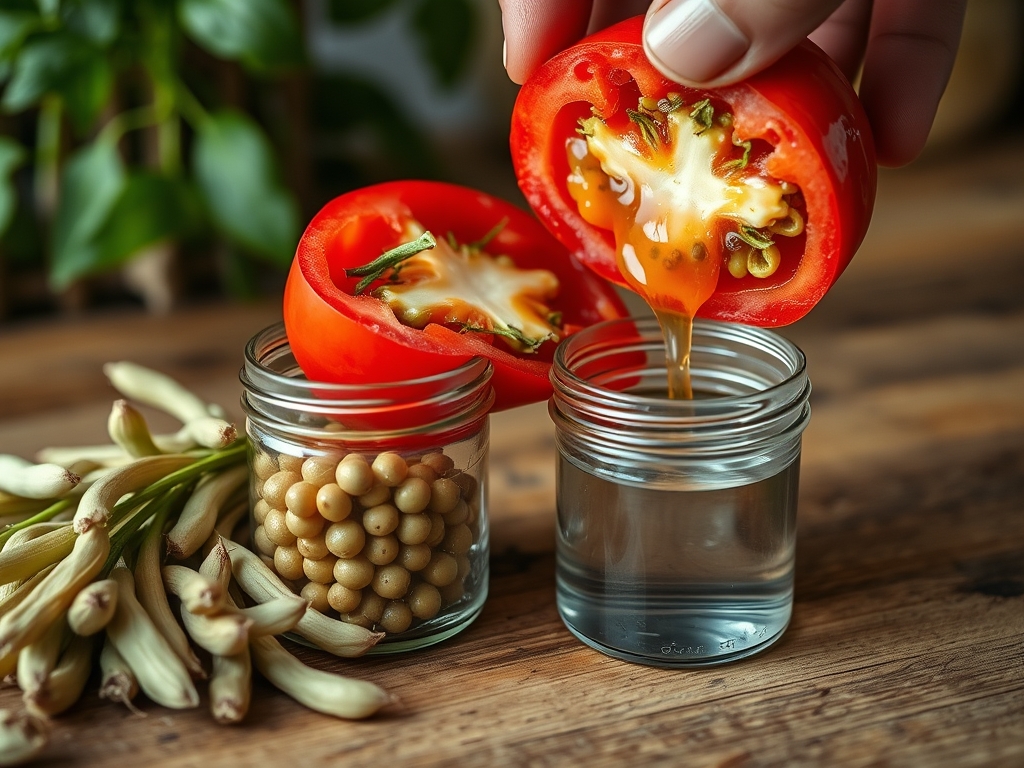
Pick your best fully-ripe tomato, squeeze the seeds and gel into a jar with a splash of water, and let it ferment 2–3 days until a film forms. It smells mildly terrible and that’s correct — fermentation dissolves the gel coat that inhibits germination and kills some seed-borne diseases. Rinse (good seeds sink), then dry on a ceramic plate for a week. (Skipping fermentation mostly works too — this is the better-results version, not a hard rule.)
3. Lettuce — let one plant bolt
The bolting you usually fight is the harvest here: let your best plant flower and turn to dandelion-like fluff, then shake seed heads into a paper bag on a dry day. One plant yields hundreds of seeds.
4. Peppers — the easiest of all
Let a fruit ripen fully to its final color (red, not green), scrape seeds onto a plate, dry a week. That’s the entire process.
5. Dill, cilantro & friends — herbs that volunteer
Let seed heads brown on the plant, snip into a paper bag. These are so eager you’ll find volunteers next spring anyway.
The crops to save for later (crossers)
Squash, cucumbers, melons, corn, and brassicas cross-pollinate enthusiastically — your zucchini and your neighbor’s pumpkin can make something neither of you wants. Saving these reliably means isolation distances or hand-pollinating flowers (the same technique used for fruit-set, plus taping blossoms shut). Absolutely learnable — just not the place to start. Biennials (carrots, beets, onions) don’t even flower until year two.
Drying and storing — where good seeds go to die
Saved seeds fail in storage more often than in saving. The rules:
- Dry thoroughly: spread on a ceramic plate or screen (not paper towels — they weld themselves to seeds) somewhere airy, out of sun, for 1–2+ weeks. A big bean should shatter, not dent, if you hit it with a hammer.
- Store cool, dark, dry: paper envelopes inside a jar or tin, in a closet or the fridge. Add a silica packet if humidity is your climate’s personality.
- LABEL — variety and year. Every seed saver has a jar of mystery seeds they refuse to talk about.
- Expect 3–5 good years from most vegetables (onions and parsnips fade after 1–2; tomatoes, beans and lettuce easily hit 4–5). Test old batches: 10 seeds in a damp paper towel in a warm spot — if 7 sprout in a week or two, sow normally.
Quick wins vs. seed-saving mistakes
What works
- Save from your BEST plant, not the leftovers — you are breeding the next garden
- Beans, lettuce and peppers first — self-pollinators forgive everything
- Ferment tomato seeds 2-3 days for cleaner, better-sprouting seed
- Label variety + year on everything, immediately, no exceptions
What doesn't
- Saving F1 hybrid seed and expecting the same plant back
- Saving squash-family seed while anything related blooms nearby
- Bagging seeds before they are bone dry (mold eats the whole envelope)
- Storing on a sunny windowsill — heat and light drain seed life fast
FAQ
Can I save seeds from any vegetable in my garden?
You can only expect true-to-type results from open-pollinated (OP) and heirloom varieties — seeds from F1 hybrids reshuffle their genetics and usually grow into inferior plants. Beyond that, start with self-pollinating crops (tomatoes, beans, peas, lettuce, peppers) whose varieties rarely cross. Squash, cucumbers, corn and brassicas cross-pollinate readily and need isolation or hand-pollination to save reliably.
How do you save tomato seeds properly?
Squeeze seeds and their gel from a fully ripe fruit into a jar with a little water and let it ferment for 2–3 days until a film forms — this dissolves the germination-inhibiting gel coat and reduces seed-borne disease. Rinse well (viable seeds sink), then dry the seeds on a ceramic plate for about a week and store them in a labeled paper envelope somewhere cool, dark and dry.
How long do saved seeds last?
Stored cool, dark and dry, most vegetable seeds stay viable 3–5 years — tomatoes, beans, peas and lettuce are on the longer end, while onions, leeks and parsnips fade after a year or two. Test older batches before spring: place 10 seeds in a damp paper towel in a warm spot; the number that sprout within a week or two is your germination percentage — at 70%+ sow normally, lower means sow thick or replace.
Why didn’t my saved seeds grow the same plant?
Almost always one of two reasons: the parent was an F1 hybrid (its seeds segregate into a mix of ancestral traits — smaller fruit, different shapes, lost vigor), or the parent cross-pollinated with a nearby relative, which is routine for squash, cucumbers, corn and brassicas. Save from open-pollinated varieties and start with self-pollinating crops, and what you plant is what you’ll get back.
Is seed saving actually worth the money?
For the easy crops, yes — a single bolted lettuce yields hundreds of seeds and one tomato covers next year’s plants, so a household garden can trim most of its annual seed bill while selecting plants that perform in your exact conditions. The honest caveat: your time has value, packets are cheap, and hybrid lovers still need to buy. Most gardeners land on a mix — save the easy five, buy the rest.
Save the easy five this year, label everything, and next spring the seed rack at the store becomes optional.
Keep reading
guides
How to Start a Self-Sufficient Vegetable Garden (2026 Beginner's Guide)
A step-by-step guide to starting a backyard vegetable garden that actually feeds you — site, soil, what to plant first, and mistakes to avoid.
guides
How to Preserve Your Vegetable Harvest (2026 Beginner's Guide)
Drowning in tomatoes and zucchini? A beginner's guide to preserving your vegetable harvest — freezing, canning, drying, root storage and fermenting, and which method suits each crop.
guides
What to Plant in July for a Fall Harvest (2026 Guide)
It's not too late — July is prime time for a second planting. What to sow now for a fall harvest, the frost-date math, and how to get seeds up in hot soil.