guides
The 5-Gallon Bucket Garden: Grow Real Food for Almost Nothing
Free buckets, a few drainage holes, and the right crops — how to build a productive vegetable garden from 5-gallon buckets, including the self-watering DIY upgrade.
Honest disclosure: Some links below are affiliate links — Glivox earns a commission if you purchase, at no extra cost to you. We pay full price for products we review and rankings are never paid. Read the full policy.
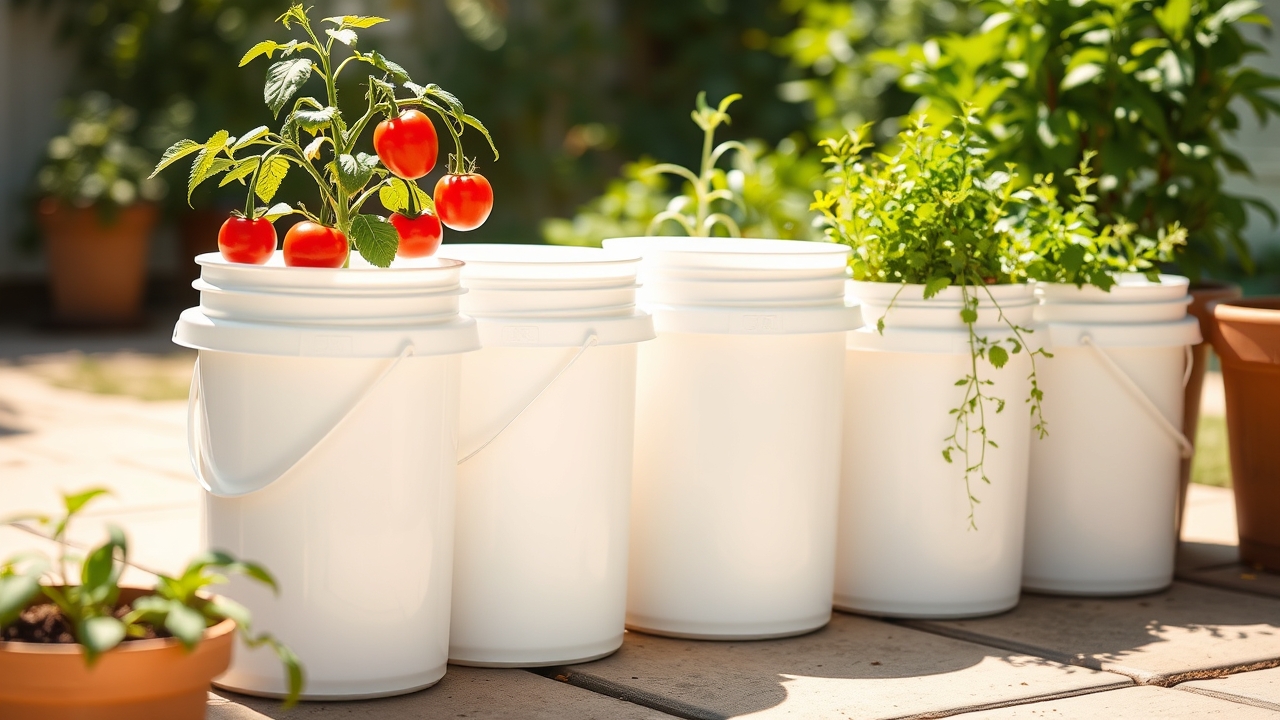
The humble 5-gallon bucket might be the most underrated garden container in existence. Bakeries, delis, and construction sites throw them away daily; hardware stores sell them new for a few dollars; and each one holds enough soil to grow a real tomato plant, a potato harvest, or a season of salad. If the cost math of raised beds made you wince, this is the other end of the spectrum: a garden for the price of potting mix.
Here’s how to do it properly — including the two details (drainage and food-safe plastic) that separate a thriving bucket garden from a disappointing one.
TL;DR — bucket gardening in one paragraph
Get food-grade buckets (free from bakeries/delis, or ~$5 new — look for the HDPE “2” recycling symbol and never reuse buckets that held chemicals), drill 4–6 half-inch drainage holes in the bottom, fill with potting mix, not garden soil, and plant one hungry crop per bucket: a compact tomato, a pepper, potatoes (a classic), or several lettuce/herb plants. Water daily in summer heat — or build the famous double-bucket self-watering version and cut that to every few days. Full sun, 6+ hours, and you’re farming a patio.
Buy it if
you want to grow food this month for the cost of a bag of potting mix — renters, patios, driveways, balconies all qualify
Skip it if
crops that hate buckets: sprawling winter squash, corn, and full-size indeterminate tomatoes will sulk in 5 gallons
Try instead
A few dollars more per plant? Fabric grow bags breathe better and store flat in winter — same rules, softer container
Step 1 — Get the right buckets (the 2-minute safety check)
- Free sources: bakeries, delis, grocery bakeries, restaurants (frosting and pickle buckets are the classics — wash well and pickle smell fades). Construction-site buckets are riskier: fine if they held drywall compound, never if they held sealants, tar, or chemicals.
- The rule: if you don’t know what was in it, or it held anything non-food, don’t grow food in it. Plastic absorbs; you can’t wash out what soaked in.
- Check the symbol: food-safe buckets are usually HDPE (recycling #2). New food-grade buckets are a few dollars at hardware stores if scavenging isn’t your thing.
- Color note: dark buckets cook roots in brutal sun — light colors, or wrap dark ones, or shade the bucket side in high summer.
Step 2 — Drill, fill, plant
- Drainage is non-negotiable: 4–6 holes, ~½ inch, in the bottom (not the sides — bottom holes drain fully). No holes = swamp = dead plant; it’s the #1 bucket-garden killer.
- Fill with potting mix — never dug-up garden soil, which compacts into concrete in containers (the same rule as any container garden). Stretch it by mixing in up to a third compost.
- One hungry plant per bucket. Crowding two tomatoes into one bucket gets you two stressed plants instead of one productive one.
4-6 holes
Half-inch drainage holes in the bottom — the single detail that decides whether a bucket garden works
What actually grows well in a 5-gallon bucket
- Tomatoes — compact/patio/determinate varieties shine; one plant per bucket with a stake. (Full-size indeterminates want 10+ gallons.)
- Peppers — practically made for buckets; one plant each, loves the warm root zone.
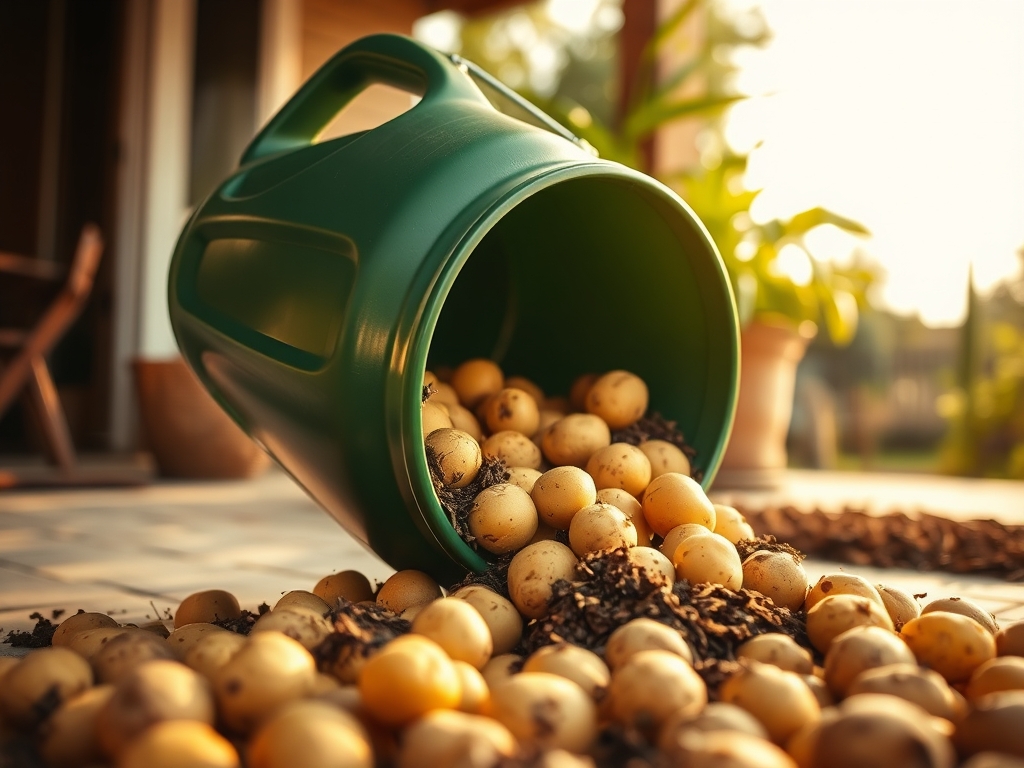
- Potatoes — the bucket classic: a few inches of mix, 2 seed potatoes, top up as they grow, then dump the bucket at harvest like opening a present.
- Salad greens & spinach — 4–6 plants per bucket, cut-and-come-again for weeks.
- Herbs — basil, parsley, chives thrive; mint finally somewhere it can’t invade.
- Bush beans, beets, carrots (shorter varieties), cucumbers with a trellis behind the bucket.
Skip: corn (needs a block to pollinate), sprawling winter squash and pumpkins, and anything the container guide flags as a big-root crop.
The upgrade: a self-watering double bucket (~15 minutes)
Buckets dry out fast — daily watering in July is the honest cost. The classic fix is the double-bucket self-watering planter:
- Nest one bucket inside another. The gap at the bottom is your water reservoir.
- In the inner bucket: drill small holes across the bottom, plus one hole sized for a wicking cup — a perforated cup (or yogurt tub with holes) packed with potting mix, hanging down into the reservoir. Soil wicks water upward as the plant drinks.
- Drill an overflow hole in the outer bucket at reservoir height (so rain can’t drown the roots), and add a fill tube (any pipe) down one side to refill the reservoir.
Result: watering every 3–5 days instead of daily, and steadier moisture — which, as the tomato problems guide explains, is exactly what prevents blossom-end rot and cracking. Want the full build with measurements, the crops that love (and hate) wicking beds, and the salt-flush maintenance trick? That’s the complete self-watering container guide.
Quick wins vs. bucket mistakes
What works
- Ask bakeries/delis for frosting and pickle buckets — free and genuinely food-grade
- Potatoes in buckets: the most fun harvest in gardening — just tip it over
- Give mint its own bucket — the invasive herb finally contained
- Build one self-watering double bucket and copy it once it proves itself
What doesn't
- Skipping drainage holes (the #1 bucket-garden killer)
- Mystery buckets or chemical buckets — plastic absorbs what it held
- Garden soil instead of potting mix (compacts into brick)
- Two hungry plants in one bucket = two stunted plants
FAQ
Are 5-gallon buckets safe to grow food in?
Yes, if they’re food-grade: buckets that originally held food (frosting, pickles, bulk ingredients) or new buckets sold as food-safe, typically HDPE plastic with the #2 recycling symbol. Wash well before use. Never grow food in buckets that held chemicals, sealants, or unknown substances — plastic absorbs residues that washing can’t remove. When in doubt, spend a few dollars on a new food-grade bucket.
What vegetables grow best in 5-gallon buckets?
One per bucket: compact or determinate tomatoes, peppers, and potatoes (the bucket classic — top up soil as they grow, tip over to harvest). Several per bucket: lettuce and salad greens, spinach, bush beans, shorter carrots and beets, and most herbs. With a trellis, cucumbers work too. Skip corn, sprawling squash and pumpkins, and full-size indeterminate tomatoes — they need more root room than 5 gallons offers.
How many holes do I drill in a bucket garden?
Four to six holes, about half an inch (12 mm) across, in the bottom of the bucket. Bottom holes let excess water drain completely; skipping them turns the bucket into a swamp that rots roots — the most common bucket-garden failure. Raise the bucket slightly on bricks or scraps of wood so water can actually escape. If the bucket sits on soil, worms may even move in through the holes.
How often do I water a bucket garden?
In summer heat, plain buckets usually need water daily — small soil volume dries fast, exactly like any container garden. Check by pushing a finger two inches into the mix: dry means water now. A mulch layer on top slows evaporation, and the double-bucket self-watering design (a reservoir below with a soil wick) stretches watering to every 3–5 days while keeping moisture steadier — which also prevents cracked tomatoes and blossom-end rot.
Do bucket gardens need fertilizer?
Yes, more than in-ground plants. Frequent watering washes nutrients out of the small soil volume, so feed hungry crops (tomatoes, peppers, potatoes) every 2–3 weeks with a diluted balanced fertilizer or compost tea once flowering starts. Mixing a third compost into the potting mix at planting buys you several weeks before feeding matters. Leafy greens and herbs need much less — compost in the mix usually carries them.
Glivox publishes practical, honest guides for homesteaders and backyard growers — proof that a garden is a decision, not a budget.
Keep reading
guides
Container Vegetable Gardening: How to Grow Food in Pots (2026 Guide)
No yard? No problem. A practical guide to growing vegetables in containers — which pots, what soil, the best crops for pots, and how to keep container plants watered and thriving through summer.
guides
How to Grow a Year's Worth of Food in a Small Backyard (2026)
A realistic plan for growing serious amounts of food in a small backyard — space-efficient layouts, the highest-yield crops per square foot, and how to stretch the harvest across all four seasons.
comparisons
Raised Beds vs. Containers vs. In-Ground: Which Should You Choose?
An honest comparison of the three ways to grow vegetables — real costs, effort, yields, and which setup actually fits your space, soil, and budget.