guides
Container Vegetable Gardening: How to Grow Food in Pots (2026 Guide)
No yard? No problem. A practical guide to growing vegetables in containers — which pots, what soil, the best crops for pots, and how to keep container plants watered and thriving through summer.
Honest disclosure: Some links below are affiliate links — Glivox earns a commission if you purchase, at no extra cost to you. We pay full price for products we review and rankings are never paid. Read the full policy.
You don’t need a backyard to grow your own food. A balcony, a patio, a sunny driveway, even a bright windowsill can produce real harvests — tomatoes, peppers, herbs, salad greens, beans — if you grow them in containers. Container gardening is how renters, apartment dwellers, and anyone short on ground space gets into growing food, and it has some real advantages over in-ground beds, too.
But pots also have their own rules. Get the container size, the soil, and the watering right and you’ll be amazed how much a few well-placed pots produce. Get them wrong — garden soil in a pot, no drainage, letting it dry out in July — and plants stall or die. Here’s how to do it right.
TL;DR — container gardening basics
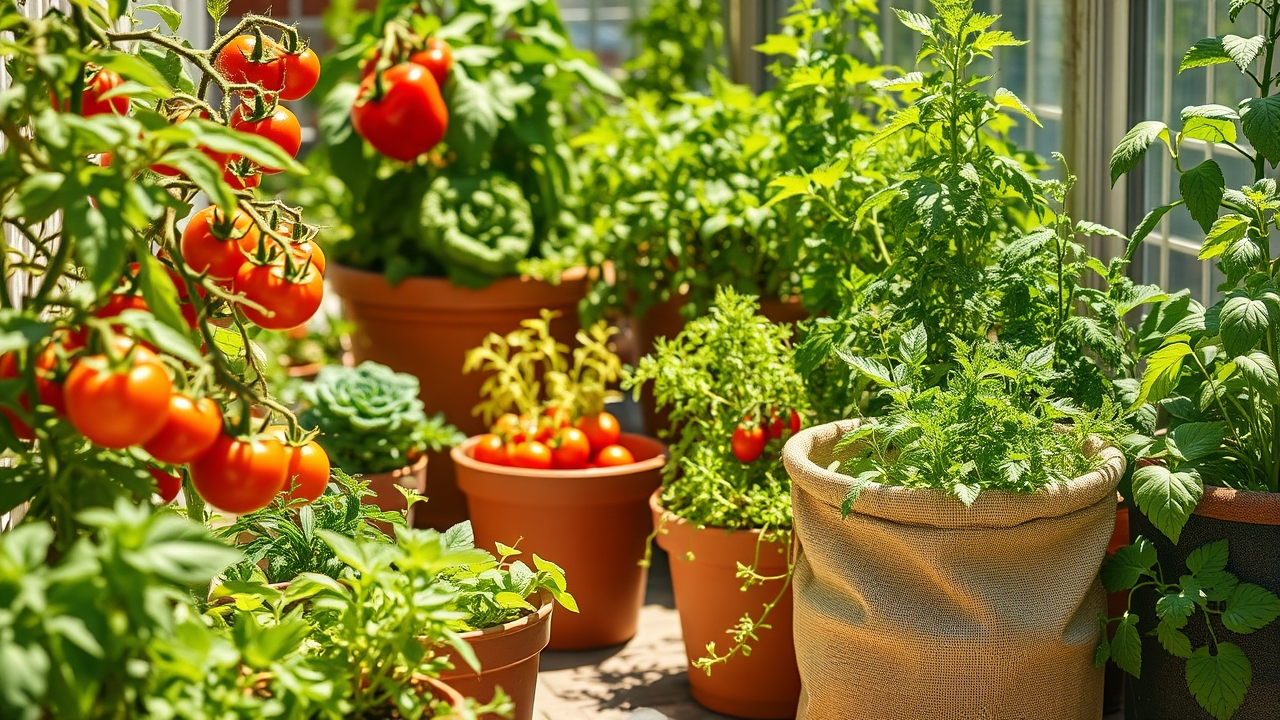
Grow vegetables in pots by following four rules: pick big enough containers (most vegetables want at least 5 gallons; the bigger the pot, the more forgiving it is), use potting mix — never garden soil (garden soil compacts and suffocates roots in pots), give them 6+ hours of sun, and water consistently because containers dry out far faster than the ground. Start with proven container crops — tomatoes, peppers, lettuce, herbs, beans — and you’ll get real harvests from a patio or balcony.
Buy it if
you rent, have a balcony/patio, or want to grow food without digging up a yard — containers let you grow almost anywhere with sun
Skip it if
you have good in-ground space and want maximum yield for minimum watering — beds are less thirsty than pots
Try instead
A mix is often best: containers for herbs, greens, and tomatoes near the kitchen, plus a bed or two for space-hungry crops
Why container gardening works
Pots aren’t just a compromise for people without yards — they bring genuine upsides:
- Grow anywhere with sun — balcony, patio, rooftop, driveway, windowsill.
- Fewer weeds and soil pests — you start with clean potting mix, not whatever’s in the ground.
- Move plants around — chase the sun, or pull tender plants into shade during a heatwave or indoors before frost.
- Control the soil completely — perfect drainage and fertility from day one, no fighting bad native dirt.
- Easier on your back — raise pots to a comfortable height; great for accessibility.
The trade-off is that pots dry out faster and need more attentive watering and feeding. Manage that one thing and container gardening is genuinely productive.
Choosing the right containers
Size is the single most important choice. The bigger the container, the more soil it holds, the more water it stores, and the more forgiving it is. Small pots dry out in hours and stunt roots.
Rough minimums per plant:
- Herbs, lettuce, salad greens: 1–2 gallons (a window box or small pot).
- Peppers, bush beans, compact crops: 3–5 gallons.
- Tomatoes, eggplant, squash, larger crops: 5–10+ gallons (a 5-gallon bucket is a popular tomato pot).
Beyond size, two musts:
- Drainage holes are non-negotiable. Without them, roots sit in water and rot. If a pretty pot has no holes, drill some or use it as a cover for a plain nursery pot.
- Material matters for water. Plastic, glazed ceramic, and fabric grow bags hold moisture better; unglazed terracotta is beautiful but wicks water away fast and dries out quickest in heat. Lighter-colored pots stay cooler than black plastic in summer sun.
5 gal
A good minimum container size for tomatoes and other large vegetables — bigger is more forgiving
Use potting mix, not garden soil
This is the mistake that sinks more container gardens than any other: filling pots with soil dug from the yard. Garden soil compacts in a container, drains poorly, suffocates roots, and can bring in pests and weed seeds.
Instead use a potting mix (also called potting soil) — a light, fluffy blend designed for containers that drains well while holding moisture. For a productive vegetable pot, mix in some compost for fertility, and consider a slow-release organic fertilizer at planting. Because frequent watering flushes nutrients out of pots over time, container plants need feeding more often than in-ground ones — a regular liquid feed through the season keeps them producing.
The best vegetables for containers
Some crops are practically made for pots. Start with these proven performers:
- Tomatoes — the container superstar; choose a pot at least 5 gallons and stake or cage it. Compact “determinate” or “patio” varieties suit pots best.
- Peppers and chilies — compact, productive, and happy in 3–5 gallon pots.
- Lettuce and salad greens — shallow-rooted, fast, perfect for window boxes; cut-and-come-again.
- Herbs — basil, parsley, mint, chives, thyme; the easiest entry point, right by the kitchen door.
- Bush beans — heavy producers that don’t need much depth.
- Radishes — fast and shallow-rooted; ready in about a month.
- Spinach, kale, chard — leafy greens that crop for weeks.
- Dwarf/patio varieties of cucumbers, eggplant, even squash — look for “bush,” “patio,” or “compact” on the label.
Watering: the make-or-break skill
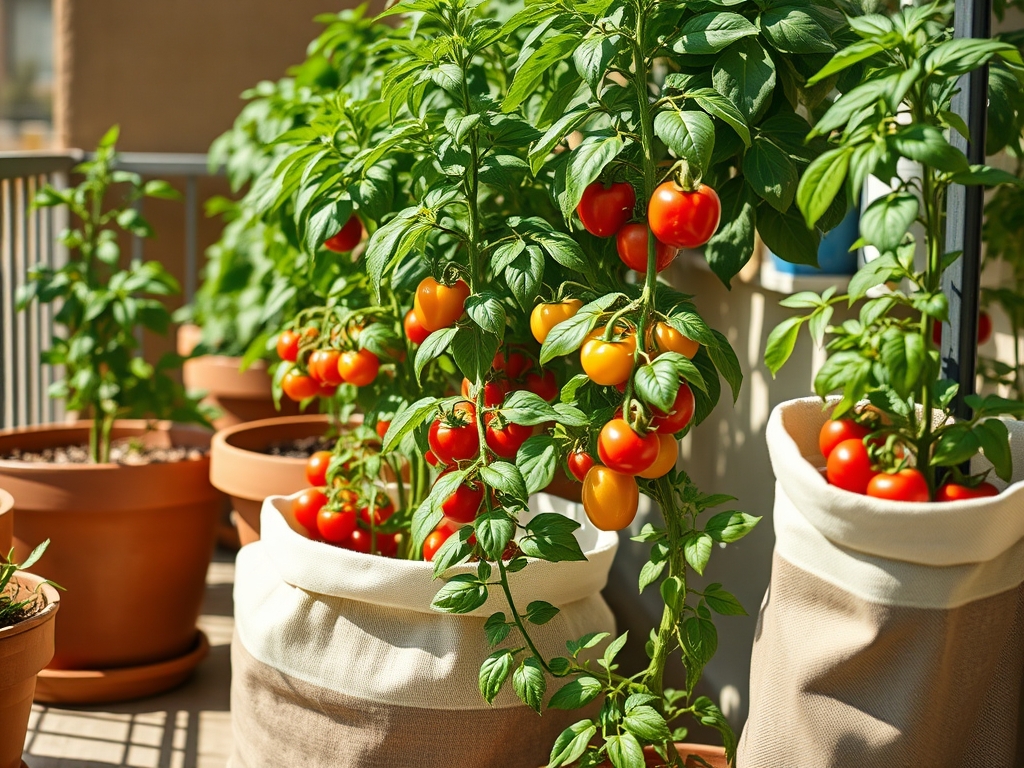
Containers dry out much faster than garden beds — the limited soil volume can’t buffer moisture, and in peak summer a pot may need water once or even twice a day. This is the part that trips up beginners, so build the habit:
- Check daily. Push a finger an inch into the soil; if it’s dry, water. Lifting the pot also works — light means dry.
- Water until it runs out the bottom, so the whole root ball is soaked, not just the surface.
- Mulch the top of the pot (a little straw or bark) to slow evaporation — yes, mulch helps in containers too.
- Self-watering containers or a drip line on a timer are a lifesaver if you travel or garden in a hot climate.
The same deep, consistent approach that works in beds applies here — just more often. Our summer watering guide covers the underlying rules, and because pots heat up fast, our guide to protecting plants from extreme heat is especially relevant for container growers in a heatwave.
Sun and placement
Most fruiting vegetables — tomatoes, peppers, beans, squash — need at least 6 hours of direct sun a day to produce well. Leafy greens and herbs tolerate a bit less. Before you commit pots to a spot, watch how the sun moves across your balcony or patio through the day.
The movability of containers is a real advantage: chase the sun in spring and fall, and pull pots into afternoon shade during extreme heat. Group containers together and they shade each other’s soil and hold humidity, reducing how fast they dry.
Container gardening mistakes to avoid
What works
- Use the biggest containers you reasonably can (5+ gal for tomatoes)
- Fill with quality potting mix + compost, never garden soil
- Make sure every pot has drainage holes
- Check water daily — pots dry out fast, especially in heat
- Feed regularly, since watering flushes nutrients from pots
What doesn't
- Tiny pots that dry out in hours and stunt roots
- Garden soil in containers (compacts and suffocates roots)
- No drainage holes = waterlogged, rotting roots
- Letting pots bake and dry out in summer sun
- Never feeding — pots run out of nutrients faster than beds
FAQ
What vegetables grow best in containers?
The most reliable container vegetables are tomatoes (in a 5+ gallon pot), peppers, lettuce and salad greens, herbs like basil and parsley, bush beans, radishes, and leafy greens such as spinach, kale, and chard. Look for varieties labeled “bush,” “patio,” “dwarf,” or “compact,” which are bred for small spaces. Herbs and salad greens are the easiest starting point; tomatoes are the most productive once you give them a big enough pot and plenty of sun.
How big should a container be for vegetables?
Bigger is almost always better, because more soil holds more water and gives roots room. As a rough guide: herbs and lettuce do fine in 1–2 gallons, peppers and bush beans want 3–5 gallons, and tomatoes, eggplant, and squash need 5–10+ gallons. A 5-gallon bucket (with drainage holes drilled) is a popular, cheap tomato container. Small pots dry out fast and stunt plants, so err on the larger side.
Can I use garden soil in pots?
No — this is the most common container mistake. Garden soil compacts in pots, drains poorly, starves roots of air, and can introduce pests and weeds. Use a lightweight potting mix made for containers instead, ideally enriched with compost and a slow-release fertilizer. Potting mix holds moisture while still draining freely, which is exactly what container roots need.
How often should I water container vegetables?
More often than in-ground plants — containers dry out fast. In mild weather that may be every day or two; in peak summer heat, large fruiting plants can need water once or even twice daily. Don’t water on a fixed schedule; check the soil instead. Push a finger an inch in (or lift the pot — light means dry) and water thoroughly until it drains out the bottom whenever the top inch is dry.
Do containers need fertilizer?
Yes, and more regularly than garden beds. Frequent watering steadily flushes nutrients out the drainage holes, so even good potting mix runs low within weeks. Mix compost and a slow-release fertilizer in at planting, then feed through the season — a regular liquid feed (following the label) keeps container vegetables producing. Pale leaves and stalled growth are usually a sign your pots are hungry.
Glivox publishes practical, honest guides for homesteaders and backyard growers — including those whose “backyard” is a balcony.
Keep reading
guides
How to Grow a Year's Worth of Food in a Small Backyard (2026)
A realistic plan for growing serious amounts of food in a small backyard — space-efficient layouts, the highest-yield crops per square foot, and how to stretch the harvest across all four seasons.
guides
How to Start Composting at Home (2026 Beginner's Guide)
Turn kitchen scraps and yard waste into free, rich soil. A beginner's guide to composting at home — what to compost, the simple browns-to-greens method, and how to fix a smelly or slow pile.
guides
How to Water a Vegetable Garden in Summer (Without Killing It)
Summer watering makes or breaks a vegetable garden. How much, how often, what time of day, and the watering mistakes that quietly kill plants in the heat — a practical 2026 guide.