guides
How to Grow a Year's Worth of Food in a Small Backyard (2026)
A realistic plan for growing serious amounts of food in a small backyard — space-efficient layouts, the highest-yield crops per square foot, and how to stretch the harvest across all four seasons.
Honest disclosure: Some links below are affiliate links — Glivox earns a commission if you purchase, at no extra cost to you. We pay full price for products we review and rankings are never paid. Read the full policy.
“You need acres to grow your own food” is the myth that stops most people before they start. You don’t. A small backyard — even a few hundred square feet — can produce a genuinely meaningful share of a household’s vegetables if you plant the right crops, stack them in space and time, and keep the soil working hard. What a small plot can’t do is grow everything; the skill is choosing what’s worth the square footage.
This is a practical plan for getting the most food out of a small space in 2026 — what to grow, how to lay it out, and how to keep something productive in the ground nearly year-round.
TL;DR — can a small backyard really feed you?
It can’t make you fully self-sufficient, but it can take a real bite out of your grocery bill — especially on the expensive stuff: salad greens, herbs, tomatoes, and anything you’d otherwise buy in small overpriced packets. The trick is to grow high-value, high-yield crops intensively, go vertical wherever possible, and use succession planting so no bed sits empty. Think “serious supplement,” not “total food independence,” and a small yard delivers.
Buy it if
you have a small sunny yard (even 100–300 sq ft), want to maximize food per square foot, and you'll commit to a bit of planning around what and when to plant
Skip it if
your space gets under 4 hours of sun, or you want a low-effort ornamental garden rather than a productive one
Try instead
No yard at all? A sunny balcony with large containers and a vertical trellis can still grow herbs, greens, and cherry tomatoes — start there
Step 1 — Grow the crops that pay their rent
In a small space, every square foot is prime real estate. Some crops earn their spot; others are space hogs that you’re better off buying. The rule: prioritize crops that are expensive to buy, productive per square foot, and harvested over a long window.
High-value, high-yield winners for small plots:
- Leafy greens (lettuce, spinach, kale, chard) — cut-and-come-again harvesting means weeks of food from one planting, and they’re pricey at the store.
- Herbs (basil, parsley, cilantro, chives, mint) — tiny footprint, absurd markup at the shop, and they elevate everything you cook.
- Tomatoes (especially cherry/compact varieties) — huge yield from a single vertical plant.
- Pole beans & peas — grow up a trellis, not out, and produce heavily for weeks.
- Zucchini & summer squash — one or two plants can overwhelm a household.
- Radishes & green onions — fast fillers you tuck between slower crops.
Space hogs to mostly skip in a small yard: sprawling winter squash, corn, maincrop potatoes, and full-size cabbages. They’re cheap to buy and eat space a small plot can’t spare. Grow the things that are costly in the store and generous in the bed.
High-value
Greens, herbs, tomatoes return the most food and savings per square foot
Step 2 — Lay it out for density, not rows
Traditional single-file rows with wide walking paths waste half a small garden on bare dirt. Small-space growing flips that: maximize growing area, minimize paths.
The layout principles that matter most:
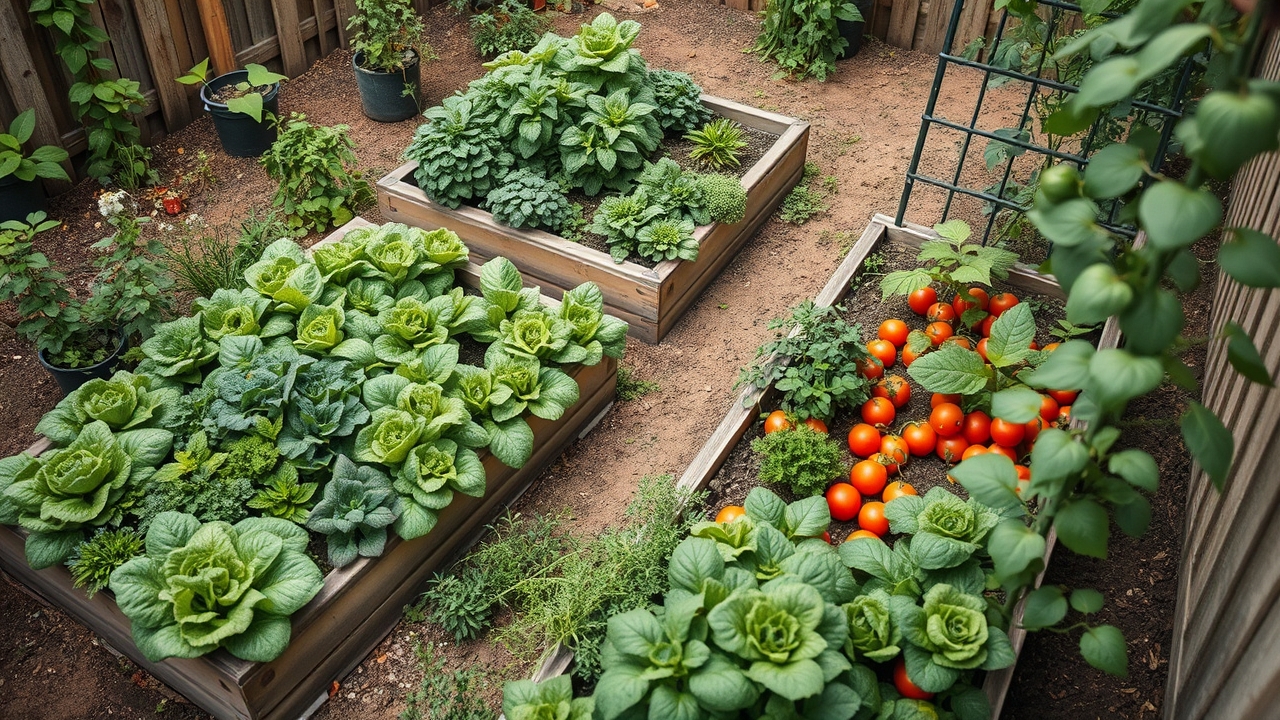
- Raised beds or wide blocks, not narrow rows. A 4-foot-wide bed lets you reach the middle from both sides with no internal path. Plant across the whole bed in a grid, not a line.
- Square-foot spacing. Instead of “rows 12 inches apart,” think in small squares and pack each with as many plants as it’ll hold (e.g. 16 radishes, 4 lettuces, or 1 tomato per square foot). Closely spaced plants also shade out weeds.
- Keep beds narrow enough to never step in them. Compacted soil kills roots. You work from the paths; the soil stays loose and alive.
A small yard with two or three well-built raised beds, intensively planted, will out-produce a much larger area of sparse traditional rows — especially once you grow vertically (not sure beds are your best setup? Our raised beds vs containers vs in-ground comparison walks the real costs).
Step 3 — Go vertical (the small-yard superpower)
When you run out of ground, build up. Vertical growing is the single biggest multiplier for a small backyard — it turns a few square feet of soil into a wall of food.
What grows beautifully vertical:
- Pole beans and peas on a simple bamboo teepee or netting.
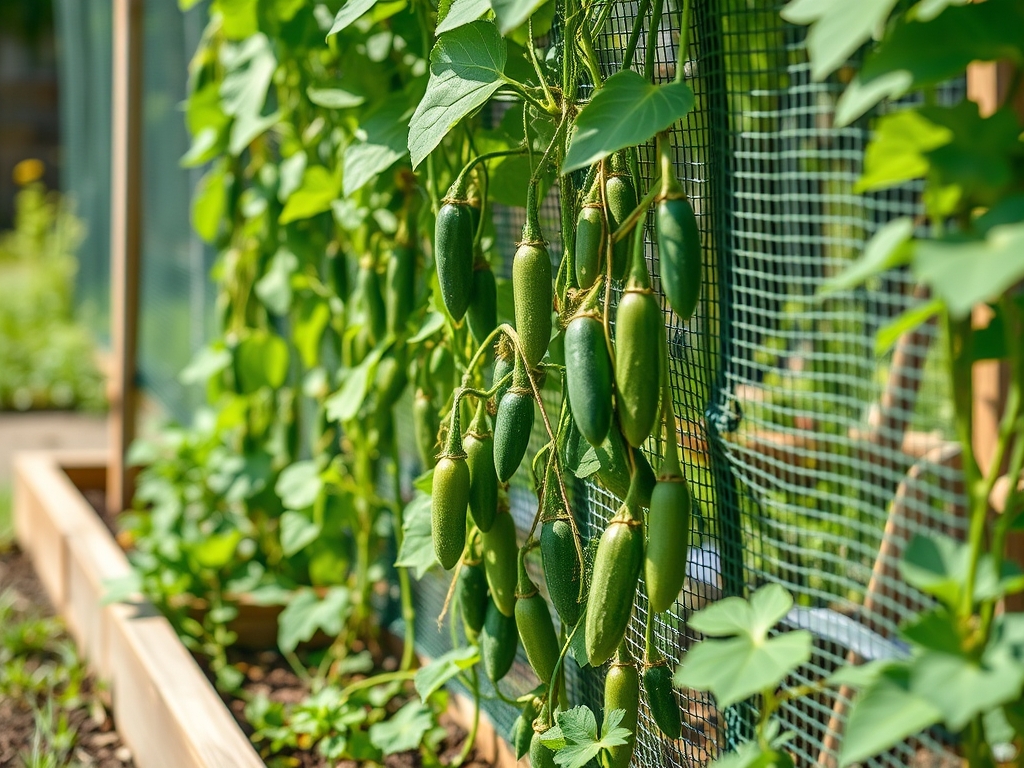
- Cucumbers trained up a trellis (cleaner, straighter fruit, less disease).
- Tomatoes staked or caged tall instead of sprawling.
- Squash and small melons on a sturdy A-frame (support heavy fruit with slings).
A trellis along the sunny side of a bed adds an entire extra growing plane without taking new ground. In a small yard, that’s the difference between “a few plants” and “a real harvest.”
Step 4 — Never let a bed sit empty (succession + seasons)
This is where small-space growers double their output without adding a single square foot: time. A bed that grows one crop and then sits bare for two months is only half-working. Keep something productive in the ground as much of the year as possible.
Three techniques that compound:
- Succession planting — sow small batches of fast crops (lettuce, radishes, beans) every 2–3 weeks instead of all at once. You get a steady stream of harvest instead of a glut, and beds refill the moment they clear.
- Interplanting — tuck fast crops (radishes, greens) between slow ones (tomatoes, peppers). The fast crop is harvested before the slow one needs the space.
- Season extension — a cold frame, low tunnel, or small greenhouse pushes your growing season earlier in spring and later into autumn. In milder climates, hardy greens can produce right through winter.
Done well, a small backyard can have something growing in nearly every month — which is how a modest plot adds up to a year’s worth of meaningful harvests.
3–4 seasons
Succession planting + season extension keeps a small plot producing nearly year-round
Do you need a paid plan to do this?
Honestly? No — everything above is the free, foundational knowledge of intensive small-space growing. You can absolutely run a productive small backyard on free information and a season or two of practice.
Where a structured guide can help is if you’d rather follow one organized plan than assemble it yourself — particularly for the build-out side (raised beds, a small greenhouse, a closed-loop setup). The Backyard Miracle Farm guide bundles a beginner plan like that into one package. We reviewed it honestly — including where its sales page badly oversells — so read that before you buy.
Our take: learn the fundamentals here for free first, then decide whether a paid plan is worth it for your situation. If you do want one packaged starting point, our full Backyard Miracle Farm review covers what you actually get for the money.
Small-yard mistakes that waste the space
What works
- Grow high-value crops you actually eat (greens, herbs, tomatoes)
- Pack beds densely with square-foot spacing — minimize paths
- Go vertical with trellises to multiply growing area
- Use succession planting so no bed sits empty
What doesn't
- Wasting prime space on cheap space-hogs (corn, maincrop potatoes)
- Wide single rows that give half the garden to bare walking paths
- Planting everything at once, then having nothing for months
- Stepping in beds and compacting the soil your roots need
FAQ
How much food can you really grow in a small backyard?
Enough to meaningfully cut your grocery bill, though not enough for full self-sufficiency. A well-planned small plot of a few hundred square feet, grown intensively with succession planting, can supply a steady stream of salad greens, herbs, tomatoes, beans, and more across most of the year. Treat it as a serious supplement to your shopping, focused on the expensive crops, and a small yard pays off handsomely.
What are the best crops for a small space?
The ones that are expensive to buy and productive per square foot: leafy greens (cut-and-come-again), herbs, cherry and compact tomatoes, pole beans and peas (grown vertically), and zucchini. Avoid space hogs like corn, maincrop potatoes, and sprawling winter squash — they’re cheap to buy and eat space a small plot can’t spare.
Do I need raised beds, or can I grow in the ground?
Both work. Raised beds make intensive small-space growing easier — better drainage, looser soil, defined edges you never step in, and a tidy grid for dense planting. But in-ground beds with improved soil are completely valid and cheaper to start. The key isn’t the container; it’s dense block planting, good soil, and not compacting it.
How do I grow food year-round in a small yard?
Combine succession planting (sow small batches every few weeks so beds refill as they clear) with season extension (a cold frame, low tunnel, or small greenhouse to push the season earlier and later). In milder climates, hardy greens can produce through winter. The goal is to never leave a bed empty during growing weather.
Is the Backyard Miracle Farm guide worth buying for a small yard?
It can be a useful single starting plan if you’d rather follow one package than piece together free information — but its sales page heavily oversells (“endless food”). The real-world results depend on your space, climate, and effort, exactly like everything in this guide. Read our honest Backyard Miracle Farm review first; it’s a low-risk $39.69 with a ClickBank-backed 60-day refund, but most people can get the same fundamentals free.
Glivox publishes independent, buyer-first guides for backyard growers and homesteaders. We tell you what actually works — including when a popular product isn’t worth your money.
Keep reading
reviews
Backyard Miracle Farm Review: Is the $39 Food System Worth It? (2026)
Backyard Miracle Farm review: what the $39.69 guide really includes, who it suits, where it oversells, and 3 free alternatives to weigh first.
guides
Container Vegetable Gardening: How to Grow Food in Pots (2026 Guide)
No yard? No problem. A practical guide to growing vegetables in containers — which pots, what soil, the best crops for pots, and how to keep container plants watered and thriving through summer.
guides
How to Start a Self-Sufficient Vegetable Garden (2026 Beginner's Guide)
A step-by-step guide to starting a backyard vegetable garden that actually feeds you — site, soil, what to plant first, and mistakes to avoid.