guides
How to Water a Vegetable Garden in Summer (Without Killing It)
Summer watering makes or breaks a vegetable garden. How much, how often, what time of day, and the watering mistakes that quietly kill plants in the heat — a practical 2026 guide.
Honest disclosure: Some links below are affiliate links — Glivox earns a commission if you purchase, at no extra cost to you. We pay full price for products we review and rankings are never paid. Read the full policy.
More summer vegetable gardens are lost to bad watering than to pests, heat, or bad soil combined. Not too little water — inconsistent water. The plant that wilts at noon, gets a panicked soaking, sits soggy overnight, then bakes again the next afternoon is a plant being slowly killed by good intentions.
Summer watering isn’t complicated, but it has rules that aren’t obvious. Get these right and your garden coasts through a heatwave. Get them wrong and you’ll be replacing dead tomatoes in August wondering what happened.
Four rules carry the whole season
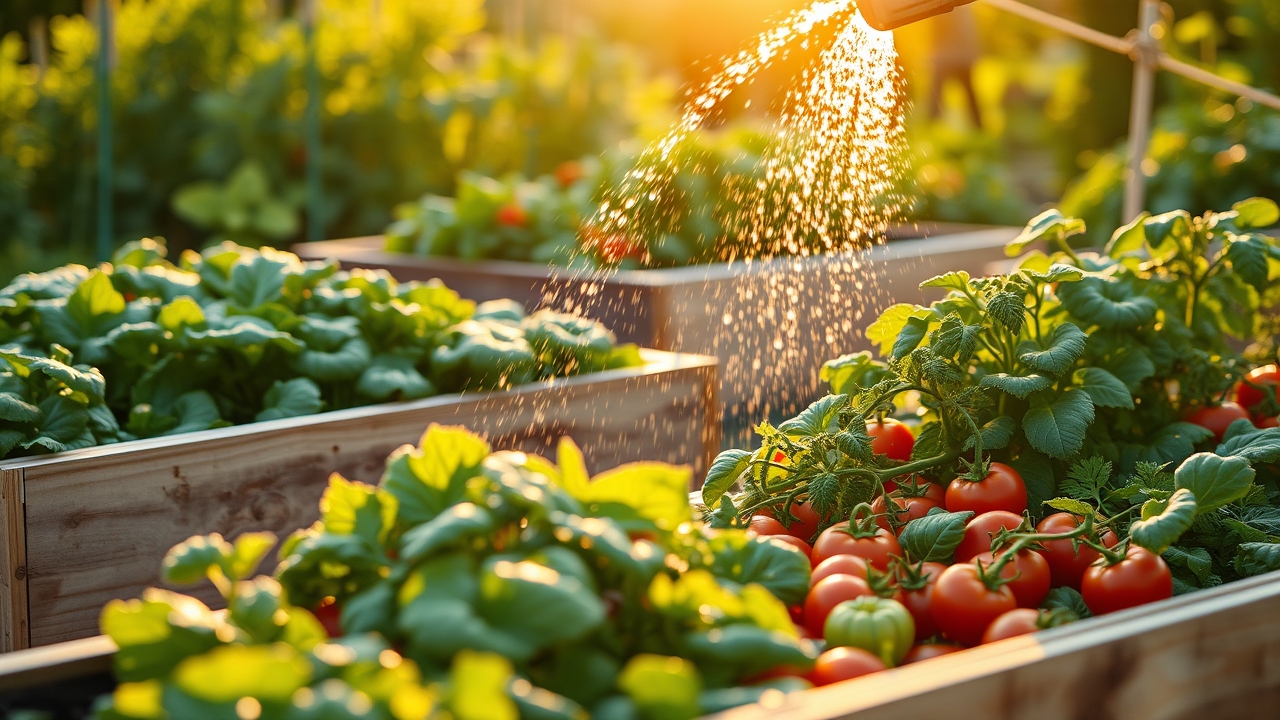
Water deeply and less often, water early in the morning, water the soil not the leaves, and mulch everything. Most vegetables want about 1–1.5 inches of water per week (more in extreme heat), delivered in 2–3 deep soaks rather than a daily sprinkle. The single biggest mistake is frequent shallow watering — it trains roots to stay near the hot, dry surface where they fry. (Free upgrade: plants genuinely prefer rainwater — a starter rain barrel pays for itself in one dry season.)
Buy it if
you want your garden to survive heatwaves with less effort — deep, morning, soil-level watering + mulch is the whole game
Skip it if
nothing to skip here — every vegetable garden needs a watering plan in summer
Try instead
Going away for a week? A simple drip line on a timer or self-watering containers will out-perform hand-watering anyway
Rule 1 — Deep and infrequent beats shallow and daily
This is the rule that fixes most struggling summer gardens. When you water a little every day, moisture only wets the top inch of soil, so roots grow shallow to reach it — right in the zone that dries out and overheats fastest. The plant becomes dependent on you and fragile in heat.
Instead, water deeply so moisture reaches 6–8 inches down, then let the top of the soil dry out before the next watering. Deep roots tap cooler, moister soil and ride out hot days far better.
- How to check depth: after watering, push a finger (or a screwdriver) into the soil — it should slide in easily 6+ inches. If it’s dry an inch down, you didn’t water enough.
- How to check when to water again: stick a finger 2 inches into the soil. Dry at 2 inches = time to water. Still damp = wait.
1–1.5 in/wk
Water most vegetables need weekly — as 2–3 deep soaks, not daily sprinkles
Rule 2 — Water in the early morning
Best: early morning (before ~9am). The soil soaks up water before the day’s heat evaporates it, leaves dry quickly as the sun rises (less disease), and plants go into the hot afternoon fully hydrated.
Worst: midday. Much of it evaporates before reaching roots, and you’re watering at the least efficient time.
Evening is the fallback if mornings are impossible — but water the soil only, because leaves that stay wet all night invite fungal disease (powdery mildew, blight).
If your plants wilt dramatically in afternoon heat but perk up by evening, that’s often heat stress, not thirst — don’t reflexively drown them. Check the soil first.
Rule 3 — Water the soil, not the plant
Wetting leaves does almost nothing useful and creates problems: it wastes water to evaporation and spreads fungal disease between leaves. Aim water at the base of the plant, into the soil.
The easiest ways to do this:
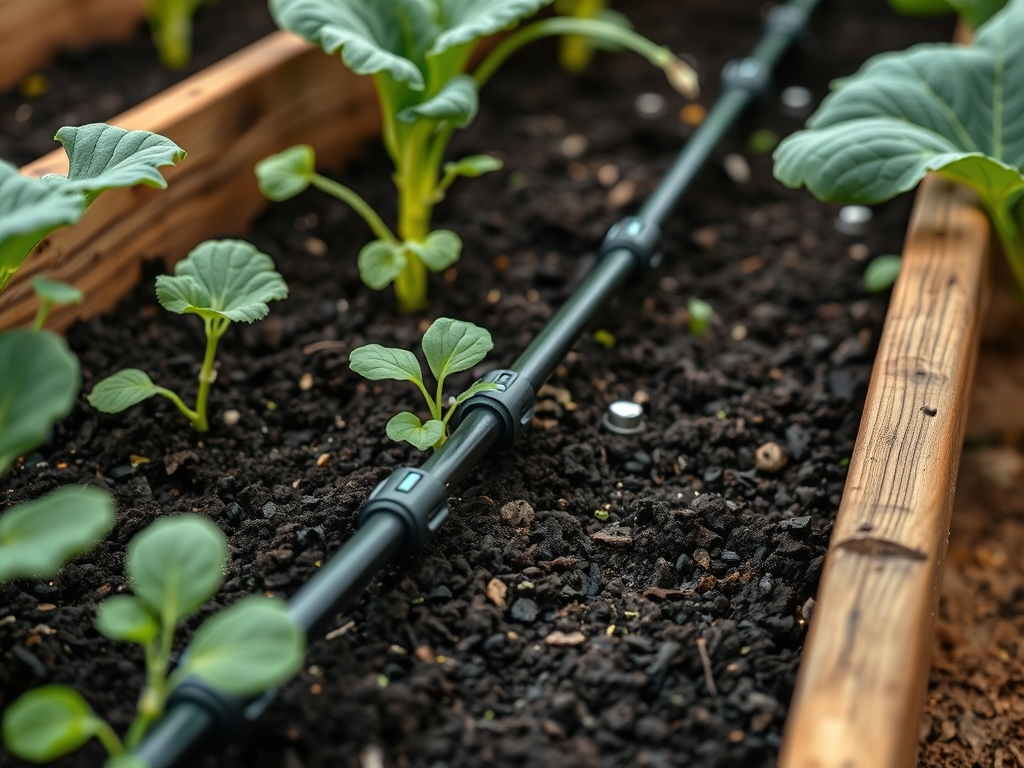
- Drip irrigation or soaker hose — the gold standard. Delivers water slowly right to the roots, near-zero evaporation, keeps leaves dry. Put it on a cheap timer and summer watering basically handles itself.
- Watering can / wand at the base — fine for small gardens; just aim low and water slowly so it soaks in instead of running off.
- Avoid overhead sprinklers for vegetables in summer — wasteful and disease-prone.
Rule 4 — Mulch is half your watering strategy
A 2–3 inch layer of mulch (straw, shredded leaves, grass clippings, wood chips) on the soil surface is the cheapest watering upgrade there is. It slashes evaporation, keeps roots cooler, and suppresses the weeds that compete for water — so you water less often and plants stay more evenly moist between waterings.
In a heatwave, the difference between mulched and bare soil is dramatic: bare soil can dry and crack in a day; mulched soil stays workably moist far longer. If you do one thing after reading this, mulch your beds. Uneven moisture doesn’t just stress plants — it’s the direct cause of tomato blossom-end rot and cracked fruit (both covered in our tomato problems guide).
Containers need their own rules
Pots and grow bags dry out much faster than ground beds — sometimes needing water once or even twice a day in peak summer heat, because the limited soil volume can’t buffer moisture. Check containers daily by lifting (light = dry) or finger-testing. Self-watering containers or a drip line on a timer are a lifesaver here. For more on container-friendly setups, see our small-backyard growing guide.
Common summer watering mistakes
What works
- Deep soaks 2–3x/week so roots grow down to cooler soil
- Water early morning, at the soil, not the leaves
- Mulch 2–3 inches to cut evaporation and weeds
- Drip + timer for hands-off, even moisture
What doesn't
- Daily shallow sprinkles that train weak surface roots
- Midday watering that mostly evaporates
- Overhead spraying that wets leaves and spreads disease
- Panic-drowning wilted plants without checking the soil first
Where water fits in a self-sufficient setup
Reliable summer watering is also where many growers start thinking about water independence — rain barrels, a cistern, or off-grid sources so a dry month or a water bill doesn’t dictate your garden. If that’s on your mind, our honest guide to off-grid water systems for homesteads covers what actually works (and which “unlimited water” gadgets oversell). And if you’re just getting started, the self-sufficient vegetable garden guide ties it all together.
FAQ
How often should I water my vegetable garden in summer?
For most in-ground vegetable gardens: 2–3 deep waterings per week totaling about 1–1.5 inches, more during extreme heat. The goal is deep, infrequent soaks — not a daily sprinkle. Check the soil 2 inches down; if it’s dry there, water; if still damp, wait. Containers are the exception — they often need water once or twice daily in peak heat.
What time of day is best to water in summer?
Early morning, before about 9am. The water soaks in before the heat evaporates it, leaves dry quickly (reducing disease), and plants enter the hot afternoon fully hydrated. Avoid midday (high evaporation). Evening works as a fallback but water only the soil — wet leaves overnight invite fungal disease.
Why are my plants wilting even though I water them?
Two common reasons. First, afternoon wilting in extreme heat is often heat stress, not thirst — many plants droop to conserve moisture and recover by evening, so check the soil before adding more water. Second, frequent shallow watering creates weak surface roots that can’t cope with heat; switch to deep, less frequent watering and add mulch. Constantly soggy soil can also suffocate and rot roots, which looks like wilting too.
Does mulch really reduce how much I need to water?
Yes, significantly. A 2–3 inch mulch layer cuts surface evaporation, keeps roots cooler, and suppresses water-stealing weeds, so soil stays evenly moist much longer between waterings. In a heatwave, mulched beds hold workable moisture far longer than bare soil. It’s the cheapest, highest-impact watering improvement you can make.
Is drip irrigation worth it for a home vegetable garden?
For summer, yes — it’s the most efficient option. Drip lines and soaker hoses deliver water slowly to the roots with almost no evaporation and keep leaves dry (less disease). Put one on an inexpensive timer and your garden gets even, consistent moisture with almost no daily effort — which is exactly what plants want and what’s hardest to do by hand in a heatwave.
Deep, early, at the soil, under mulch — four rules, and the hose becomes a twice-a-week tool instead of a daily hostage situation.
Keep reading
guides
12 Fast-Growing Vegetables to Plant in Summer (30–60 Days)
Started late or want a second harvest? 12 fast-growing vegetables that go from seed to plate in 30–60 days — perfect for summer planting.
guides
Container Vegetable Gardening: How to Grow Food in Pots (2026 Guide)
No yard? No problem. A practical guide to growing vegetables in containers — which pots, what soil, the best crops for pots, and how to keep container plants watered and thriving through summer.
guides
How to Protect Your Vegetable Garden in Extreme Heat (2026 Summer Guide)
A heatwave can wilt a garden in a day. How to protect vegetables from extreme heat — shade, mulch, smart watering, and the mistakes to avoid.