guides
Hugelkultur: The Buried-Wood Bed That Waters Itself for Years
Logs at the bottom, soil on top, decades of slow-release moisture and fertility — how to build a hugelkultur bed, why the wood works, which wood ruins it, and the honest first-year caveats.
Honest disclosure: Some links below are affiliate links — Glivox earns a commission if you purchase, at no extra cost to you. We pay full price for products we review and rankings are never paid. Read the full policy.
Every yard eventually produces a pile that has no good home: pruned branches, a storm-dropped limb, half-rotted logs from the back corner. Too woody for the compost pile (they’d take a decade), too good to pay someone to haul away.
Old European hill-culture gardening — hugelkultur, literally “mound culture” — looked at that pile and saw the foundation of the best garden bed on the property: bury the wood, plant on top. As the buried wood slowly rots, it soaks up water like a sponge and releases it back to roots through dry weeks, feeds the bed from below for five to twenty years, and warms the soil with slow decomposition. It’s the no-dig philosophy taken underground — and fall cleanup is exactly when the raw materials appear.
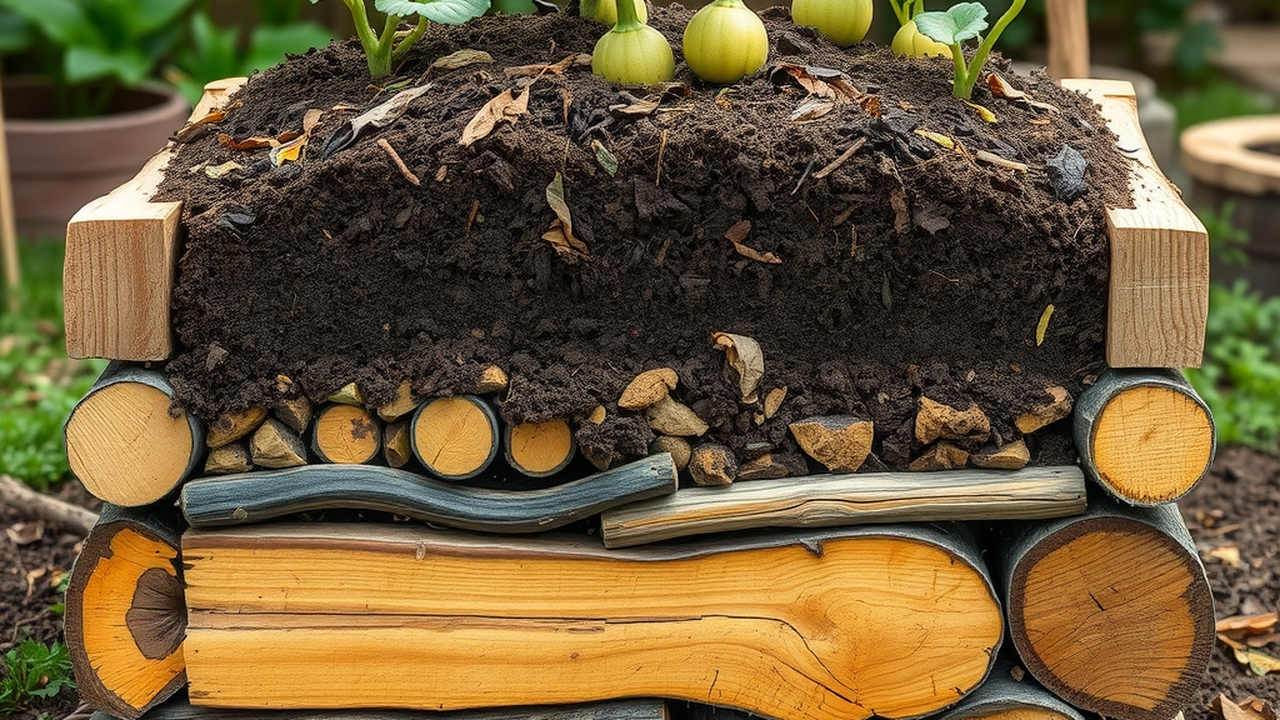
Why burying wood works (three jobs at once)
The sponge. Rotting wood is astonishingly absorbent — a soaked, half-decomposed log holds several times its weight in water and gives it back slowly by capillary action. A mature hugel bed shrugs off dry spells that force daily watering everywhere else; big established mounds in the tradition famously go unwatered most of the season.
The slow-release pantry. As fungi digest the wood over years, they steadily release nutrients into the root zone — a fertilizer subscription measured in years, not weeks. The bed gets better for the first several years as decomposition hits its stride.
The riser. All that buried mass makes a tall bed — traditional mounds run knee-to-shoulder height — which means more surface area, better drainage, an earlier-warming root zone in spring, and less bending. (A backyard-polite version inside a raised-bed frame captures most of the benefits without the alpine silhouette.)
5-20 yrs
How long a buried wood core keeps feeding and watering the bed as it slowly decomposes - a garden project that appreciates
The build (one honest afternoon)
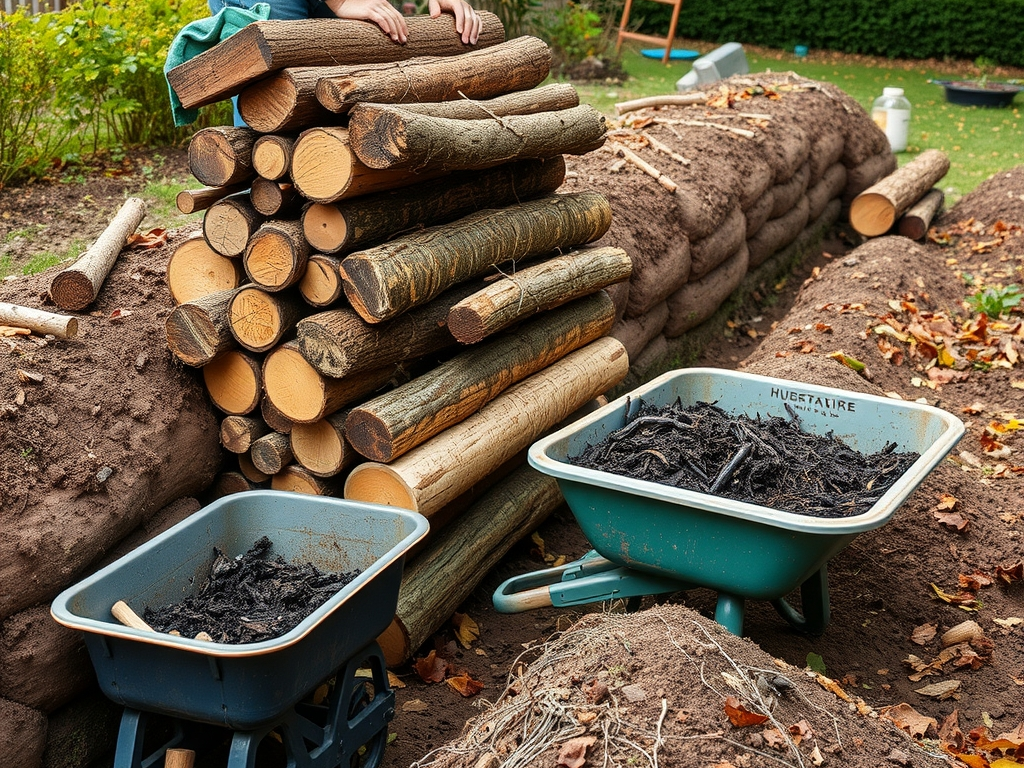
- Mark the footprint — 1–1.2 m wide, any length, sun rules as usual. Optional but worthwhile: dig down a spade’s depth and set the topsoil aside — sinking the wood makes a lower, tidier bed and jump-starts moisture contact.
- Wood, biggest first. Logs and thick branches at the bottom, packed tight; smaller branches and twiggy material wedged into the gaps above. Half-rotted wood is treasure — it’s already spongy and skips the first slow years. Soak everything with the hose as you stack; dry wood buried dry stays inert for a season.
- Stuff the voids. Upside-down turf from the dig, autumn leaves, straw, grass clippings, kitchen-scrap-grade greens — pack every air gap, because gaps become soil-swallowing sinkholes later.
- Nitrogen blanket. A generous layer of manure, fresh grass clippings or finished compost over the wood — the down payment that keeps early decomposition from borrowing nitrogen out of your topsoil (more on that below).
- Cap with soil and compost, 15–20+ cm — the dig-out soil plus compost. Mulch the surface, water deeply, and either plant immediately (see the first-year notes) or — the classic move — build in fall, plant in spring, letting winter settle and soak the whole structure.
The wood list (this part actually matters)
Excellent: hardwoods generally — oak, maple, birch, apple and most fruit woods, poplar, alder. Anything already punky and half-rotted, of any species, moves to the front of the line.
Use with thought: fresh pine and other resinous softwoods work but decompose slower and slightly acidify early on — fine mixed in, less ideal as the whole base. Willow and poplar can resprout from fresh green wood; let them dry a season first, or bury them deep.
Never: black walnut (juglone poisons vegetables for years — the same warning as mulch), black locust and cedar (so rot-resistant they defeat the entire premise), anything pressure-treated, painted, or salvaged from construction, and diseased orchard wood, which belongs out of the garden entirely.
The honest first-year story (where most write-ups oversell)
Internet hugelkultur promises “never water again, instant super-bed.” The real curve is more interesting:
Year one, the bed is still a construction site. Fresh wood hasn’t become a sponge yet, decomposition microbes are borrowing nitrogen at the wood-soil boundary (your blanket layer covers most of this debt — heavy feeders may still want a feeding assist), and the mound will settle, sometimes dramatically — build taller than you want, and top up the dips with compost without embarrassment. Plant year one with the tolerant crowd: squash and pumpkins (the traditional hugel crops — they adore the warmth), potatoes, beans (bring their own nitrogen), and greens on the lower slopes.
Years two through five, the promises come true. The wood turns spongy, the nitrogen ledger flips positive, settling stops, and the bed starts out-growing and out-lasting-drought everything around it. Hugelkultur is the rare garden project that appreciates — which is exactly why the right time to bury the wood is this fall, not the spring you suddenly want the benefits.
One more honest note: rodents occasionally like the idea too — a loosely-stacked mound with big voids can shelter voles. Tight packing and stuffed gaps (step 3, done properly) is the real prevention; in vole country, a layer of hardware cloth under the whole footprint settles the question.
FAQ
What is hugelkultur and why bury wood in a garden bed?
Hugelkultur (“mound culture”) is the old European practice of building beds over a core of buried logs and branches. As the wood slowly rots it acts as a sponge — soaking up rain and releasing moisture to roots through dry spells — while feeding the bed with slowly released nutrients for five to twenty years and lifting the planting surface into a tall, early-warming mound. It’s simultaneously a garden bed, a water reserve, a slow fertilizer, and the most productive possible use of woody debris you’d otherwise haul away.
What wood should you not use for hugelkultur?
Skip black walnut entirely (its juglone chemical suppresses vegetables and persists for years), rot-resistant species like black locust and cedar (they refuse to break down, defeating the purpose), anything pressure-treated or painted, and diseased wood from fruit trees. Fresh willow and poplar can resprout — dry them first. Nearly all other hardwoods are excellent, resinous softwoods are acceptable mixed in, and half-rotted wood of almost any safe species is the best material there is.
Can you plant a hugelkultur bed right away?
Yes, with matched expectations: year one the wood hasn’t yet become the water-holding engine, decomposition briefly ties up some nitrogen near the wood layer, and the mound settles as gaps close. The buffer layers (manure, grass clippings, compost over the wood) cover most of the nitrogen debt, and tolerant crops — squash, pumpkins, potatoes, beans, salad greens — do well immediately. The classic rhythm sidesteps all of it: build the bed in fall, let winter settle and saturate it, plant in spring, and enjoy the compounding years after.
Does hugelkultur really mean you never have to water?
That’s the oversold version. A mature mound (year two onward, especially the tall traditional builds) genuinely holds enough moisture to skip watering for long stretches and to sail through dry spells that stress ordinary beds — but “never water” depends on your climate, the mound’s size, and its age. A modest backyard hugel bed in a hot dry summer still appreciates an occasional deep soak, and a first-year bed waters like any raised bed. Think “dramatically less watering, improving annually,” not “no watering, ever.”
The pile of branches was never waste — it was a bed waiting for a shovel.
Keep reading
guides
No-Dig Garden Beds: The Lazy Method That Out-Performs Tilling
Stop digging. Layer cardboard and compost on top of the ground, plant into it, and let soil life do the tillage. The honest how-to, costs, and where no-dig struggles.
guides
Leaf Mold: The Free Soil Conditioner Falling Out of Your Trees
Fall leaves + a wire cage + patience = the best moisture-holding soil amendment money can't easily buy. How to make leaf mold, the 12-month shortcut, and what it is (and isn't).
guides
Fall Garden Cleanup: What to Remove, What to Leave (Most People Clean Too Much)
The honest fall checklist: pull the diseased and the pest hotels, leave the roots and the leaves — why a too-tidy garden costs you soil, pollinators, and next spring's head start.