guides
Leaf Mold: The Free Soil Conditioner Falling Out of Your Trees
Fall leaves + a wire cage + patience = the best moisture-holding soil amendment money can't easily buy. How to make leaf mold, the 12-month shortcut, and what it is (and isn't).
Honest disclosure: Some links below are affiliate links — Glivox earns a commission if you purchase, at no extra cost to you. We pay full price for products we review and rankings are never paid. Read the full policy.
Every autumn, the average tree-lined yard produces bags and bags of the best soil conditioner in horticulture, and almost everyone pays to have it hauled away. Professional growers call the finished product leaf mold — dark, crumbly, forest-floor material that holds several times its weight in water — and the entire recipe is: pile leaves somewhere, wait.
It’s not compost (different biology, different job, and the compost pile wants only a fraction of your leaves anyway). It’s slower, simpler, and impossible to get wrong in any way that matters. With fall a few weeks out, now is exactly when to build the cage — so here’s the honest guide: what leaf mold actually is, the two-minute setup, the tricks that cut a two-year wait to one, and where to use something this good.
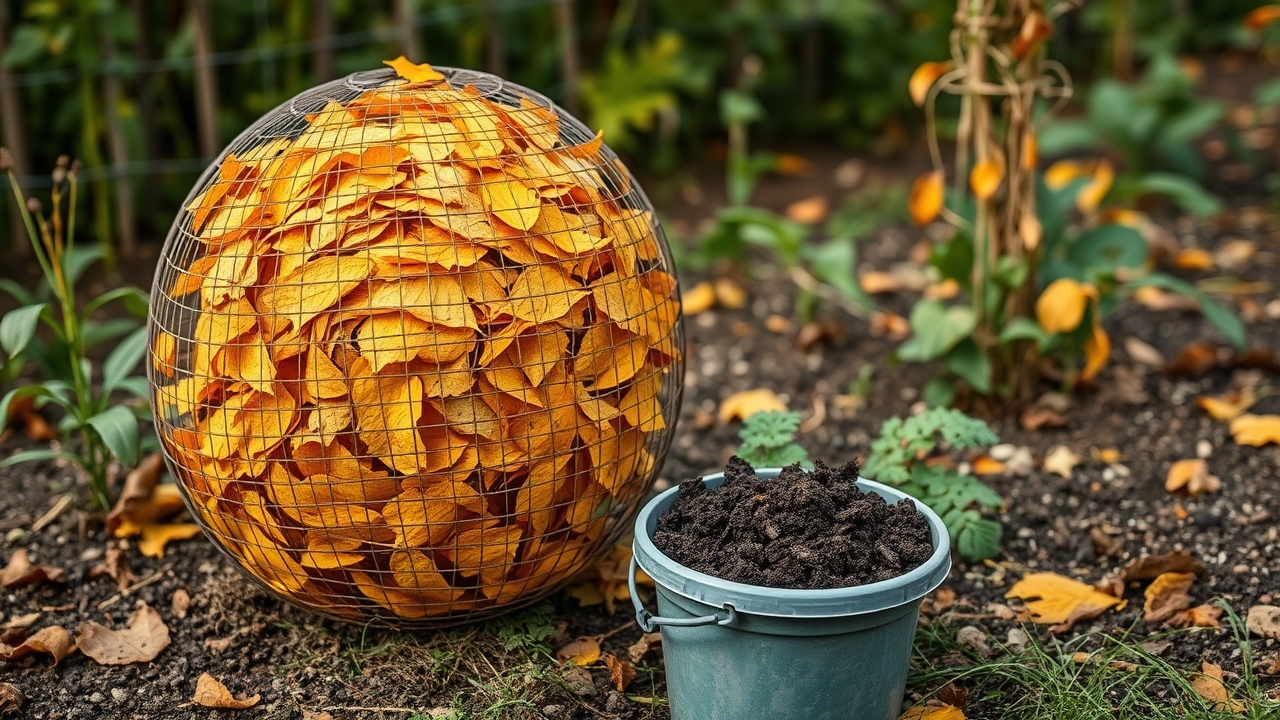
TL;DR — the whole craft in one paragraph
Corral fall leaves in a wire-mesh cage (or pierced garbage bags), wet them down, and walk away. Fungi — not the hot bacteria that run compost — slowly digest them into dark, crumbly leaf mold: whole leaves take ~2 years, but shredding them first (one mower pass) plus keeping the pile damp cuts it to ~12 months. The result isn’t fertilizer — it’s a soil conditioner: it holds moisture like a sponge, loosens heavy soil, and makes the best seed-starting base and mulch layer in the garden. Cost: a few dollars of chicken wire, once. Effort after setup: essentially none. It is the laziest excellent thing in gardening.
Buy it if
your yard (or street) produces autumn leaves and you have one out-of-the-way corner — leaf mold is free soil improvement on autopilot
Skip it if
expecting it to feed plants like compost or fertilizer — leaf mold conditions soil structure and moisture; its nutrient content is modest by design
Try instead
No space for a cage? Stuff wet shredded leaves into garbage bags, stab air holes, hide them behind the shed — same result in bag form
Leaf mold vs compost (they’re colleagues, not rivals)
The compost pile is a bacterial operation: hot, fast, hungry for a balanced brown-green diet, and produces a nutrient-rich soil food. Leaf mold is a fungal operation: cold, slow, runs on leaves alone, and produces something compost can’t — a fibrous, spongy material whose superpower is structure and water retention rather than nutrition.
That difference is why you want both, and why “just compost the leaves” is only half right: a compost pile can absorb maybe a few bags of leaves as browns before the balance tips (and stalls it); the rest of the autumn windfall — the bulk of it — belongs in its own dedicated pile, becoming leaf mold. Two piles, two products, zero waste stream.
~12 months
Shredded + kept damp — versus ~2 years for whole dry leaves. The mower pass is the entire speed upgrade
The setup (two minutes, one-time)
- Make a corral: a cylinder of chicken wire or hardware cloth, ~1 m across, stakes optional — its only job is stopping wind from redistributing your project. Pallet corners, a spare raised-bed frame, or heavy-duty garbage bags (stuffed, moistened, stabbed with air holes) all work identically.
- Fill it with leaves. Yours, the neighbors’, the ones in bags at the curb — autumn leaves are a free commodity nobody guards (the same heist that feeds no-dig beds). Your own fall cleanup delivers the first loads.
- Shred first if you want speed: run the mower over the pile and collect, or use a string trimmer inside a barrel. Shredded leaves pack denser, wet evenly, and finish in half the time. Whole leaves work too — they just take the scenic route.
- Soak the pile as you build it. Fungi work damp; a dry pile is a paused pile. That’s also the entire ongoing maintenance: if you remember it during a summer drought, throw a bucket of water on it.
- Wait. Check in a year. Done looks like dark chocolate crumbs and smells like a forest after rain.
Leaves to go easy on: black walnut (juglone — compost it separately or skip), and big waxy evergreen leaves (they take forever; a few mixed in is fine). Oak’s reputation for “too acidic” is a myth worth retiring — oak leaves make superb leaf mold; they’re just slow unshredded.
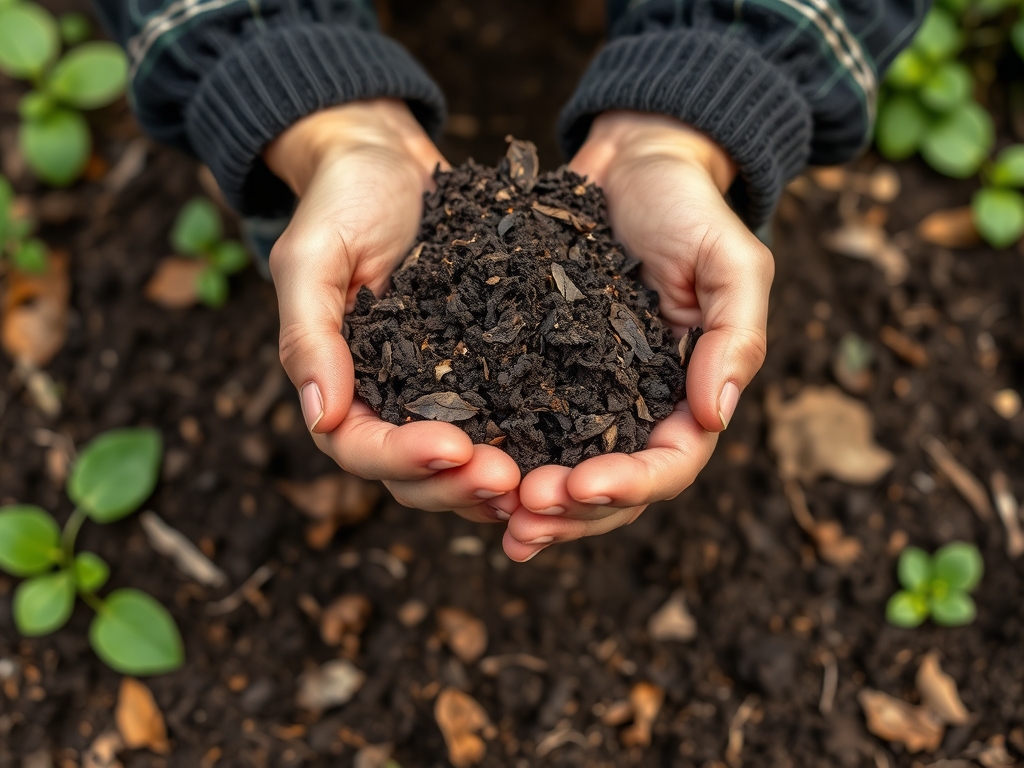
Where leaf mold earns its keep
- Seed-starting mix: sieved leaf mold + compost + a little grit is the classic homemade blend — moisture-steady and fine-textured, exactly what germination wants.
- The moisture blanket: as mulch around vegetables, leaf mold outperforms almost everything at evening out soil moisture — the blossom-end-rot insurance nobody sells.
- Heavy soil therapy: worked into (or layered onto, no-dig style) clay soil, its fibrous structure opens drainage and air channels; in sandy soil it does the opposite job, holding water that would otherwise vanish.
- Container refresh: tired potting mix + a third leaf mold = revived structure for another season.
What it won’t do: replace fertilizer or compost’s nutrition. Leaf mold is the sponge and scaffold; feeding remains compost’s job. Together they’re the whole free soil program.
Quick wins vs. classic mistakes
What works
- Shred with one mower pass — it halves the wait to ~a year
- Soak the pile at build time; re-wet in droughts (fungi work damp)
- Raid curbside leaf bags in fall — free raw material, zero competition
- Run leaf mold AND compost piles — different biology, different products
What doesn't
- Dumping all leaves into the compost pile (tips the balance, stalls it)
- Expecting fertilizer numbers from a soil conditioner
- A dry, fluffy, wind-scattered pile (nothing happens for years)
- Black walnut leaves in the mix (juglone suppresses vegetables)
FAQ
What is leaf mold and how is it different from compost?
Leaf mold is decomposed leaves — broken down slowly by fungi rather than the fast, hot bacteria that drive a compost pile. The end products differ accordingly: compost is a nutrient-rich soil food; leaf mold is a soil conditioner — dark, crumbly, fibrous material whose strengths are moisture retention (it holds several times its weight in water) and improving soil structure. A garden benefits from both: compost feeds, leaf mold shapes. And since a compost pile can only absorb a fraction of autumn’s leaves as browns, a dedicated leaf pile is where the rest belongs.
How long does leaf mold take to make?
Whole, dry leaves in an untended pile: about two years. Shredded leaves (one lawnmower pass) kept damp: roughly 12 months, sometimes less in mild wet climates. The two speed levers are surface area and moisture — fungi work faster on small damp pieces. There’s no turning schedule, no ratio, no thermometer; the only “failure mode” is a pile so dry nothing happens, fixed with a bucket of water. Check after a year: finished leaf mold is dark, crumbly, and smells like forest floor.
What do you use leaf mold for in the garden?
Its best jobs: mixed into homemade seed-starting blends (moisture-steady, fine-textured), spread as a moisture-holding mulch around vegetables, worked into heavy clay or sandy soil to fix structure in opposite directions (drainage in clay, retention in sand), and refreshing tired container potting mix. It contains modest nutrients, so it complements rather than replaces compost and feeding — think of leaf mold as the sponge that makes everything else in the soil work better.
Can I just leave leaves on my garden beds instead of making leaf mold?
Partly, yes — a shredded-leaf layer directly on beds is excellent winter mulch and slowly becomes leaf mold in place, feeding worms all the while; that’s standard no-dig practice. Whole unshredded leaves are the caveat: they can mat into a wet, air-blocking blanket on beds, so shred them or keep whole-leaf layers thin. The dedicated pile still earns its place because it produces finished, sieved-quality leaf mold for seed mixes and containers — jobs surface mulch can’t do. Many gardens sensibly run both: mulch the beds, cage the surplus.
Glivox publishes practical, honest guides for homesteaders and backyard growers — the trees do the work; the cage just holds the paycheck.
Keep reading
guides
How to Start Composting at Home (2026 Beginner's Guide)
Turn kitchen scraps and yard waste into free, rich soil. A beginner's guide to composting at home — what to compost, the simple browns-to-greens method, and how to fix a smelly or slow pile.
guides
Compost Troubleshooting: Why Your Pile Smells, Stalls, or Crawls (and Every Fix)
Smelly pile? Nothing breaking down? Rats, flies, ants? Every common compost problem diagnosed with its cause and the fix that works — no composting guilt included.
guides
No-Dig Garden Beds: The Lazy Method That Out-Performs Tilling
Stop digging. Layer cardboard and compost on top of the ground, plant into it, and let soil life do the tillage. The honest how-to, costs, and where no-dig struggles.