guides
No-Dig Garden Beds: The Lazy Method That Out-Performs Tilling
Stop digging. Layer cardboard and compost on top of the ground, plant into it, and let soil life do the tillage. The honest how-to, costs, and where no-dig struggles.
Honest disclosure: Some links below are affiliate links — Glivox earns a commission if you purchase, at no extra cost to you. We pay full price for products we review and rankings are never paid. Read the full policy.
Gardening has a strange tradition: every spring, millions of people dig up their soil, flip it over, break their backs — and then wonder why the weeds explode and the ground turns to concrete by July. Meanwhile, the no-dig crowd spreads compost on top of the ground, plants into it, and gets equal or better harvests for a fraction of the labor.
No-dig (or “no-till”) isn’t a hack or a trend — it’s how forest floors have built soil for millions of years. And late summer through fall is the perfect time to start one: build the bed now, let it settle over winter, plant into finished soil in spring. Here’s the honest how-to, what it costs, and the cases where digging still wins.
TL;DR — the whole method in one paragraph
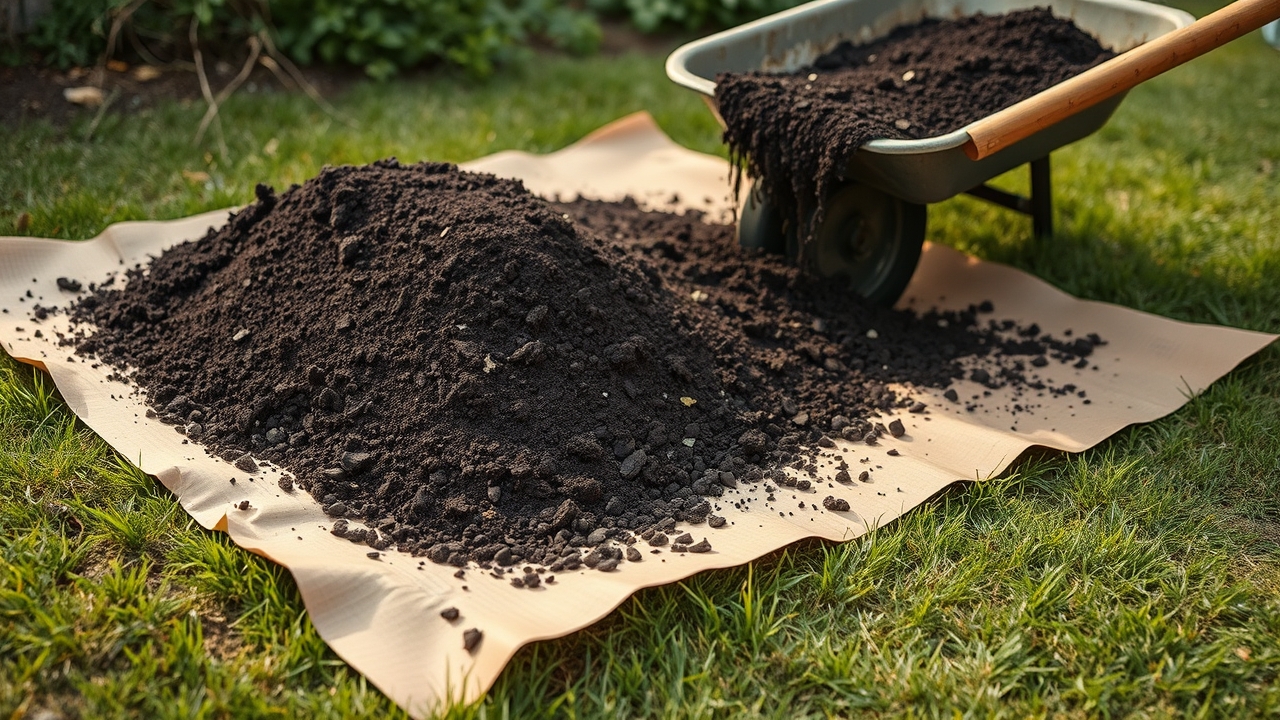
Mow the spot short. Lay plain cardboard (tape and staples removed) directly on the grass, overlapping generously so no light sneaks through. Soak it. Pile 10–15 cm (4–6 in) of compost on top. Done — that’s a bed. The cardboard smothers the grass and weeds beneath (then rots away), worms rise to digest the buffet and till the soil for you, and you plant straight into the compost layer. Build it in fall and it’s fully settled by spring; build it in spring and you can plant the same day into the compost. The only real cost is the compost — everything else is trash-day materials.
Buy it if
you're starting a new bed on grass or weeds, hate digging, or your soil turns to brick every summer — no-dig builds better soil with a fraction of the work
Skip it if
your ground is badly compacted subsoil or builder's rubble (one initial dig/broadfork pass helps first), or you need a bed TODAY and have no compost source
Try instead
Already have raised beds? You're 90% no-dig already — just stop turning the soil and top up with compost yearly
Why not digging works (the 60-second soil science)
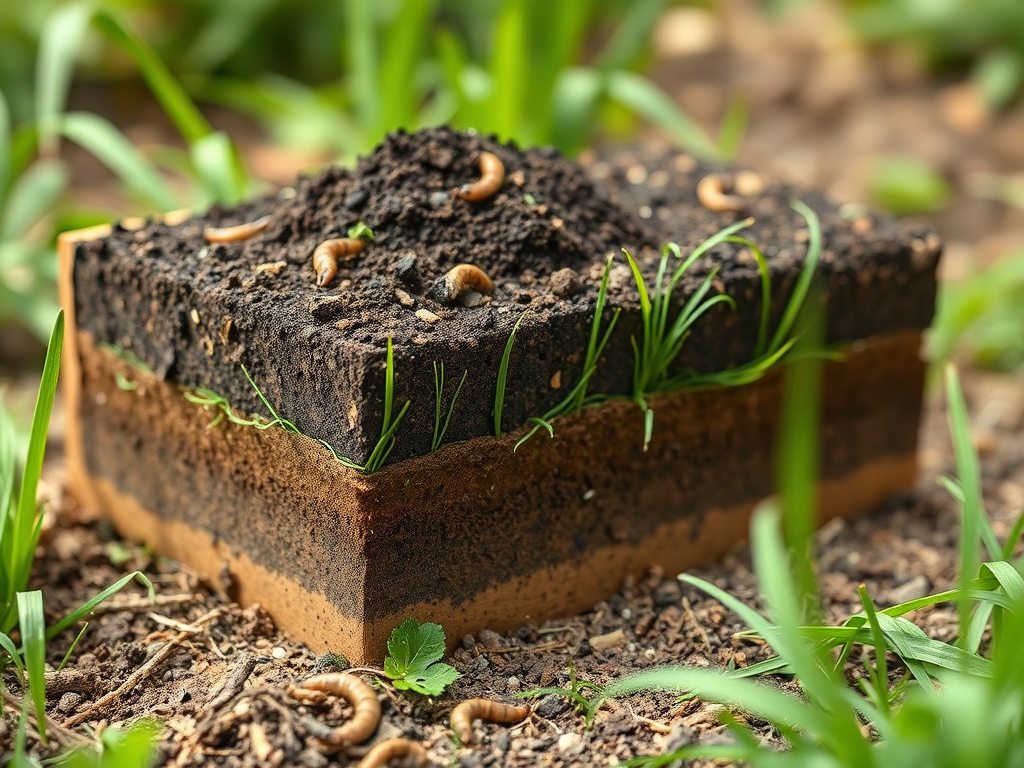
Soil isn’t dirt — it’s infrastructure. Fungal networks move water and nutrients. Worm tunnels are drainage and aeration. Bacteria glue particles into crumbs that hold moisture without waterlogging. Every dig demolishes all of it, and the soil spends weeks rebuilding what the shovel broke — which is why tilled beds feel fluffy in April and set like concrete by July.
Digging also has a second cost nobody warns beginners about: soil is full of dormant weed seeds that need light to germinate. Every turn of the spade is a weed-seed lottery draw. No-dig leaves them buried in the dark, which is why established no-dig beds are famously low-weed.
Leave the structure alone, keep feeding the top (exactly like a forest floor), and the soil life does the tillage — permanently, for free.
10-15 cm
Compost depth (4-6 in) over cardboard to start a bed on grass — the one real cost of no-dig, and worth every bag
Building your first no-dig bed, step by step
- Pick and mow. Choose the spot (sun rules still apply) and cut whatever grows there as short as possible. Leave the clippings — they’re the first layer of food.
- Cardboard blanket. Plain brown cardboard, tape/labels/staples off, overlapped 15+ cm at every seam — gaps are grass escape tunnels. Skip glossy printed boxes. One layer is enough for lawn; stubborn weeds (bindweed, couch grass) earn a double layer.
- Soak it. Wet cardboard hugs the ground, starts decomposing, and doesn’t blow into the neighbor’s yard while you fetch the compost.
- Compost on top, 10–15 cm. This is the planting layer. Homemade compost is ideal, municipal compost is the budget play (often free or ~$30/cubic yard), bagged works for small beds. It doesn’t need to be perfect — it finishes in place.
- Edge it or don’t. Boards, logs, bricks — or just a neatly raked mound. Edging is aesthetics and mowing convenience, not function.
- Plant. Spring build: transplant seedlings straight into the compost the same day (their roots reach soil by the time cardboard softens). Fall build: walk away, let winter settle it, plant into gorgeous crumb in spring — or tuck in garlic through the compost right now if the season fits.
Yearly maintenance, in full: spread 2–3 cm of fresh compost on top each fall or spring. Pull the odd weed. That’s the entire program — no digging, ever again.
The honest problems (no method is magic)
- The compost bill is real. A 3×6 m garden wants roughly a cubic meter-plus to start. Municipal compost and making your own are how no-dig stays cheap; buying it all in small bags is how it gets expensive. This is THE constraint — plan compost supply before bed count.
- Root-invaders test it. Bindweed and couch grass laugh at a single cardboard layer. Double up, accept a season of pulling escapees at the edges, and persist — even these lose to persistent light-blocking eventually.
- Slugs like mulch layers. The moist cardboard boundary is slug housing during year one. If slugs are your local plague, keep mulch thinner in spring and hunt at dusk while the bed matures.
- Truly wrecked ground needs one dig. Compacted builder’s subsoil or rubble benefits from one deep loosening (fork or broadfork, lift-and-crack, no flipping) before you never dig again. On such ground no-dig on top of a single loosening beats both pure approaches. If drainage is truly hopeless, that’s what raised beds are for.
- Root crops in year one are lumpy. Carrots and parsnips hitting the decomposing boundary layer fork and bend. Grow them from year two, or grow them in the deepest-compost corner. Everything else — greens, brassicas, squash, beans, tomatoes — thrives from day one.
No-dig + the rest of the soil program
No-dig plays perfectly with the rest of the soil-health toolkit: cover crops in the off-season feed the same underground workforce (cut them down and leave them as surface mulch — no digging in required, despite the old advice), and your compost system becomes the engine that feeds every bed’s annual top-up. If the compost pile misbehaves, the troubleshooting guide covers every symptom. The whole loop — kitchen scraps → compost → bed surface → food — is the cheapest soil-building machine there is.
Quick wins vs. classic mistakes
What works
- Build in fall — winter settles the bed into spring-ready crumb for free
- Overlap cardboard seams 15+ cm — gaps are how grass wins
- Source compost in bulk (municipal/homemade) before planning bed sizes
- Top up 2-3 cm of compost yearly — that is the entire maintenance program
What doesn't
- Digging or rototilling the bed "just once to loosen it" (undoes everything)
- Using glossy/taped cardboard or landscape fabric (fabric never rots — permanent barrier)
- A thin 3 cm compost layer over lawn (grass punches through, verdict: no-dig does not work)
- Planting carrots into a 3-month-old bed and blaming the method for forks
FAQ
Does no-dig gardening actually work?
Yes — it’s one of the best-documented methods in gardening. Multi-year side-by-side trials (most famously Charles Dowding’s, running since 2013) consistently show no-dig beds matching or out-yielding dug beds with dramatically less labor and fewer weeds. The mechanism is boring and reliable: undisturbed soil keeps its fungal networks, worm channels and crumb structure intact, and a yearly surface layer of compost feeds the system (its big sibling, the hugelkultur bed, buries whole logs underneath for years of stored moisture) exactly the way leaf-fall feeds a forest floor — a process you can bottle directly by making leaf mold from the autumn windfall.
Can I really just put cardboard and compost on top of grass?
That’s genuinely the method. Mowed grass + overlapping plain cardboard + 10–15 cm of compost = a bed you can plant the same day (transplants) or leave to settle over winter. The cardboard blocks light until the grass beneath dies and becomes worm food, then rots away entirely — by next season there’s no trace of it, just deep, dark soil where lawn used to be. The two failure modes are thin compost and gappy cardboard seams; be generous with both.
When is the best time to start a no-dig bed?
Fall is ideal: build it after the season winds down, let winter rain and worms settle everything, and plant into finished soil in spring — plus garlic can go straight into a fresh fall build. Spring works fine too; you just plant transplants the day you build instead of waiting. Honestly, though, the best time is whenever you have cardboard and compost in the same place — the method has no bad season, only a compost budget.
How much compost do I need for a no-dig bed?
For the initial build over grass: 10–15 cm deep, which works out to roughly 1 cubic meter per 8–10 m² of bed (about 1 cubic yard per 80–100 sq ft). After year one, maintenance drops to 2–3 cm per year — a fifth of the starting amount. Bulk sources (municipal compost programs, a local farm, your own bins) make this affordable; buying it all in 40-liter bags makes it painful. Most people size their first bed to their compost supply, not the other way around — that’s the right instinct.
Glivox publishes practical, honest guides for homesteaders and backyard growers — the laziest method won the trials.
Keep reading
guides
How to Start Composting at Home (2026 Beginner's Guide)
Turn kitchen scraps and yard waste into free, rich soil. A beginner's guide to composting at home — what to compost, the simple browns-to-greens method, and how to fix a smelly or slow pile.
comparisons
Raised Beds vs. Containers vs. In-Ground: Which Should You Choose?
An honest comparison of the three ways to grow vegetables — real costs, effort, yields, and which setup actually fits your space, soil, and budget.
guides
Cover Crops for Beginners: Feed Your Soil While You Take the Winter Off
What cover crops actually do, the 5 easiest for a home garden, when to sow them after harvest, and the spring question everyone worries about — killing them off.