guides
How to Fertilize a Vegetable Garden: Organic Basics Without the Product Hype
N-P-K in plain words, when each crop actually wants feeding, and why the #1 beginner mistake is too much — an honest organic fertilizing guide with compost at the center.
Honest disclosure: Some links below are affiliate links — Glivox earns a commission if you purchase, at no extra cost to you. We pay full price for products we review and rankings are never paid. Read the full policy.
Walk the fertilizer aisle and you’d think growing a tomato requires a chemistry degree and six bottles. Meanwhile, the actual science of feeding vegetables fits on an index card, the best all-purpose fertilizer is the free one you can make from trash, and the most common feeding mistake in beginner gardens isn’t starvation — it’s overfeeding, which grows magnificent leaves, few fruits, and occasionally burns the roots outright.
This is the honest organic fertilizing guide: what N-P-K actually means in plant terms, when each crop genuinely wants feeding (much less often than the bottle says), what the organic options really are at each price, and the signals that tell you to stop.
TL;DR — the index card version
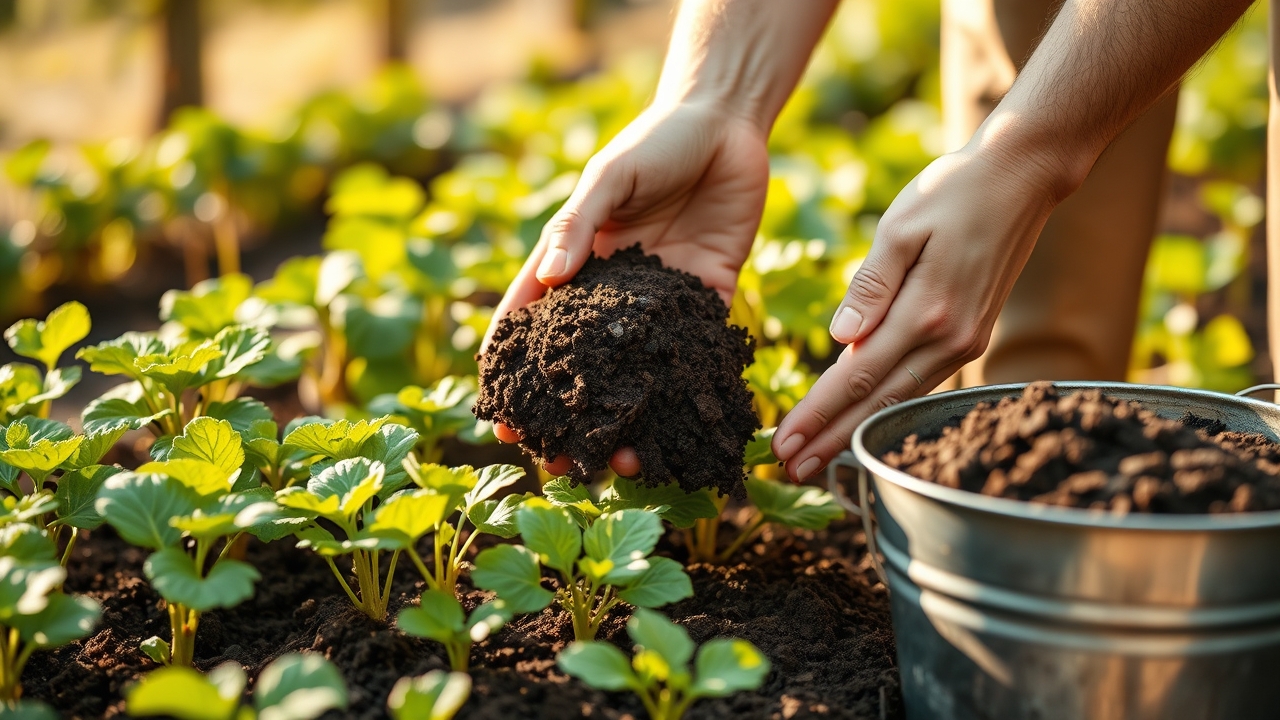
Feed the soil, not the plant: 2–3 cm of compost on every bed once or twice a year is the foundation that covers most needs in decent soil. N-P-K in plant terms: Nitrogen = leaves, Phosphorus = roots and flowers, Potassium = fruit quality and resilience. The rhythm: leafy crops (lettuce, kale) mostly just want the compost baseline plus maybe one nitrogen top-up; fruiting crops (tomatoes, squash) want restraint on nitrogen early, then steady modest feeding once flowering starts; root crops want the least of all — excess nitrogen gives you leafy carrot tops over pencil roots. The mistake to fear is too much: overfed gardens outgrow underfed ones in problems, not harvests. When in doubt, don’t.
Buy it if
your garden gets a yearly compost layer and you feed fruiting crops lightly from flowering onward — that's the whole winning formula
Skip it if
weekly blanket feeding of everything because the bottle said so — surplus nitrogen = all leaves, no fruit, and aphids love the tender growth
Try instead
Not sure anything is wrong? Run the free soil checks first — most 'needs fertilizer' gardens actually need water consistency or sunlight
N-P-K translated into vegetables
Every fertilizer label carries three numbers — the percent by weight of the big three nutrients. What they do is the part worth memorizing:
- N — Nitrogen — the leaf builder. Drives green, leafy growth. Lettuce’s best friend; a tomato’s frenemy — generous nitrogen on fruiting crops buys you a gorgeous bush that forgets to set fruit, plus soft growth that aphids and pests adore.
- P — Phosphorus — roots and flowers. Supports establishment, root systems, flowering and fruit set. Deficiency shows as stunted plants with purple-tinged leaves — but note: cold soil mimics phosphorus deficiency every spring, and warms itself right.
- K — Potassium — the quality nutrient. Water regulation, disease resilience, fruit flavor and keeping quality. Fruiting crops draw serious potassium through harvest season.
Organic sources deliver these slowly via soil microbes — a feature, not a lag: it’s why organic feeding is hard to burn plants with, and why it builds soil while synthetic-only feeding slowly depletes it.
2-3 cm
Yearly compost layer per bed — the baseline that quietly covers most of a garden's fertility before any product enters the story
The organic menu, priced honestly
Tier 0 — Compost (free–cheap, the foundation). Modest N-P-K numbers but the complete package: every micronutrient, plus the organic matter and microbial life that make all other nutrients available. A garden running its own compost loop plus a no-dig top-up rhythm covers a startling share of its fertility for $0. This is the answer to “what fertilizer should a beginner buy”: start with none — start with compost.
Tier 1 — The single upgrade ($10–20/season). One balanced organic granular fertilizer (look for something in the 4-4-4 to 5-5-5 range) covers the gaps compost leaves in hungry beds and containers. Scratch it lightly into the surface, water in, done. A beginner garden truly needs nothing beyond Tier 0 + Tier 1.
Tier 2 — The specialist meals (optional, by symptom). Blood or feather meal (fast nitrogen — for genuinely pale, stalled leafy crops), bone meal (phosphorus — most useful at transplant in poor soil), kelp or greensand (potassium and micros). Buy these to fix a diagnosed problem, not as a starter kit.
Watch-outs, honestly: fresh manure burns roots and carries pathogen risk — compost it or buy it composted, and apply in fall for spring beds. Wood ash adds potassium but raises pH fast — thin dustings only, never on already-alkaline soil. And “organic” on a label doesn’t mean “can’t overdo it” — it just fails more gently.
When each crop actually wants feeding
- Leafy greens (lettuce, spinach, kale, chard): compost-amended soil usually carries them start to finish. Pale color + slow growth mid-season = one light nitrogen top-up. That’s the entire program.
- Fruiting crops (tomatoes, peppers, squash, cucumbers): restraint until flowering — nitrogen-rich starts delay fruit. From first flowers: a modest balanced or lower-N feed every 3–4 weeks through harvest. Consistent watering matters more than any feed — blossom-end rot, the classic “fertilizer” panic, is a water-consistency problem, not a deficiency you can bottle away.
- Root crops (carrots, beets, radishes): least food of anything in the garden. Compost from last season is ideal; fresh nitrogen grows show-off tops over forked, skinny roots.
- Heavy feeders vs light feeders shortcut: corn, squash, brassicas and tomatoes eat seriously; beans and peas make their own nitrogen (feeding them is paying someone to eat your lunch); herbs mostly prefer lean soil — overfed basil trades flavor for bulk.
- Containers are the exception to “rarely feed”: constant watering rinses nutrients out of pots, so container crops genuinely need little-and-often — half-strength liquid feed every 1–2 weeks once established. What sounds like overfeeding in a bed is maintenance in a pot.
Reading the plant (the only test that’s always free)
Underfed looks like: uniformly pale or yellowing older leaves first (nitrogen moves to new growth), small leaves, stalled growth in warm weather with adequate water. Response to a light feed within a week confirms the diagnosis.
Overfed looks like: lush deep-green foliage with no flowers or fruit (nitrogen excess), brown scorched leaf edges (salt burn), white crust on soil or pot rims, and a pest population boom on all that soft growth. The treatment is embarrassing in its simplicity: stop feeding, water deeply to flush, wait.
Looks-like-deficiency-but-isn’t: cold spring soil (purple leaves, fixes itself), drought stress (mimics everything), pH problems locking up nutrients that are already present — which is why the free soil checks beat reflex-buying another bottle.
Quick wins vs. classic mistakes
What works
- Compost every bed yearly FIRST — then judge what (if anything) is missing
- Hold nitrogen on tomatoes and peppers until first flowers, then feed modestly
- Feed containers little-and-often — pots rinse themselves nutrient-poor
- Diagnose from the plant (old-leaf yellowing = N) before buying anything
What doesn't
- Weekly blanket feeding of everything ("more food = more harvest" — it is not)
- High-nitrogen feed on root crops (pretty tops, pencil carrots)
- Fresh manure straight onto growing beds (root burn + pathogen risk)
- Fertilizing your way out of a watering-consistency problem (see: blossom-end rot)
FAQ
What is the best fertilizer for a vegetable garden?
For most gardens: compost as the yearly foundation (2–3 cm on every bed), plus one bag of balanced organic granular fertilizer (4-4-4 to 5-5-5 range) for hungry crops and containers. That two-item program covers the large majority of home-garden fertility needs. Specialist products — blood meal, bone meal, kelp — earn their place only for diagnosed deficiencies. If forced to pick a single “best fertilizer,” it’s compost: modest numbers on paper, but it feeds plants, microbes and soil structure simultaneously, for free.
How often should I fertilize my vegetable garden?
Far less than product labels suggest. In compost-amended beds: leafy greens and root crops often need nothing further all season; fruiting crops like tomatoes benefit from a modest feed every 3–4 weeks starting at first flower. Containers are the exception — constant watering rinses pots nutrient-poor, so feed them half-strength every 1–2 weeks. Watch the plants, not the calendar: pale older leaves say feed; lush foliage with no fruit says stop.
Why does my tomato plant have lots of leaves but no fruit?
Almost always excess nitrogen — the plant is being fed leaf-building food, so it builds leaves instead of flowering. Common causes: high-nitrogen fertilizer applied early and often, or planting into heavily manured soil. The fix: stop all feeding, keep watering consistent, and wait — most plants rebalance and set fruit within a few weeks. Extreme heat also pauses fruit set temporarily. Once flowering starts, if you feed at all, use a balanced or low-nitrogen formula.
Can I just use compost instead of fertilizer?
In reasonable soil, largely yes — a yearly compost application carries light and medium feeders through a whole season, and gardens run this way for years while their soil actually improves. Where compost alone falls short: heavy feeders (corn, brassicas, big tomato plantings) in their peak weeks, sandy soils that leach quickly, and containers, which need supplemental liquid feeding regardless. The honest framing: compost is the diet, fertilizer is the supplement — most gardens over-supplement and under-diet.
Glivox publishes practical, honest guides for homesteaders and backyard growers — the fertilizer aisle is longer than the science.
Keep reading
guides
Container Vegetable Gardening: How to Grow Food in Pots (2026 Guide)
No yard? No problem. A practical guide to growing vegetables in containers — which pots, what soil, the best crops for pots, and how to keep container plants watered and thriving through summer.
guides
How to Start a Self-Sufficient Vegetable Garden (2026 Beginner's Guide)
A step-by-step guide to starting a backyard vegetable garden that actually feeds you — site, soil, what to plant first, and mistakes to avoid.
guides
How to Start Composting at Home (2026 Beginner's Guide)
Turn kitchen scraps and yard waste into free, rich soil. A beginner's guide to composting at home — what to compost, the simple browns-to-greens method, and how to fix a smelly or slow pile.