comparisons
Raised Beds vs. Containers vs. In-Ground: Which Should You Choose?
An honest comparison of the three ways to grow vegetables — real costs, effort, yields, and which setup actually fits your space, soil, and budget.
Honest disclosure: Some links below are affiliate links — Glivox earns a commission if you purchase, at no extra cost to you. We pay full price for products we review and rankings are never paid. Read the full policy.
Every beginner hits this fork in the road before a single seed goes in: build raised beds, buy containers, or just dig up the yard? The internet answers with a confident “raised beds!” — usually next to a photo of someone’s $2,000 cedar garden. The honest answer is more useful: each of the three has a situation where it clearly wins, and picking by your soil, budget, and commitment level beats copying anyone’s Instagram.
Here’s the real comparison — costs included — and a decision framework that takes about two minutes.
TL;DR — the two-minute decision
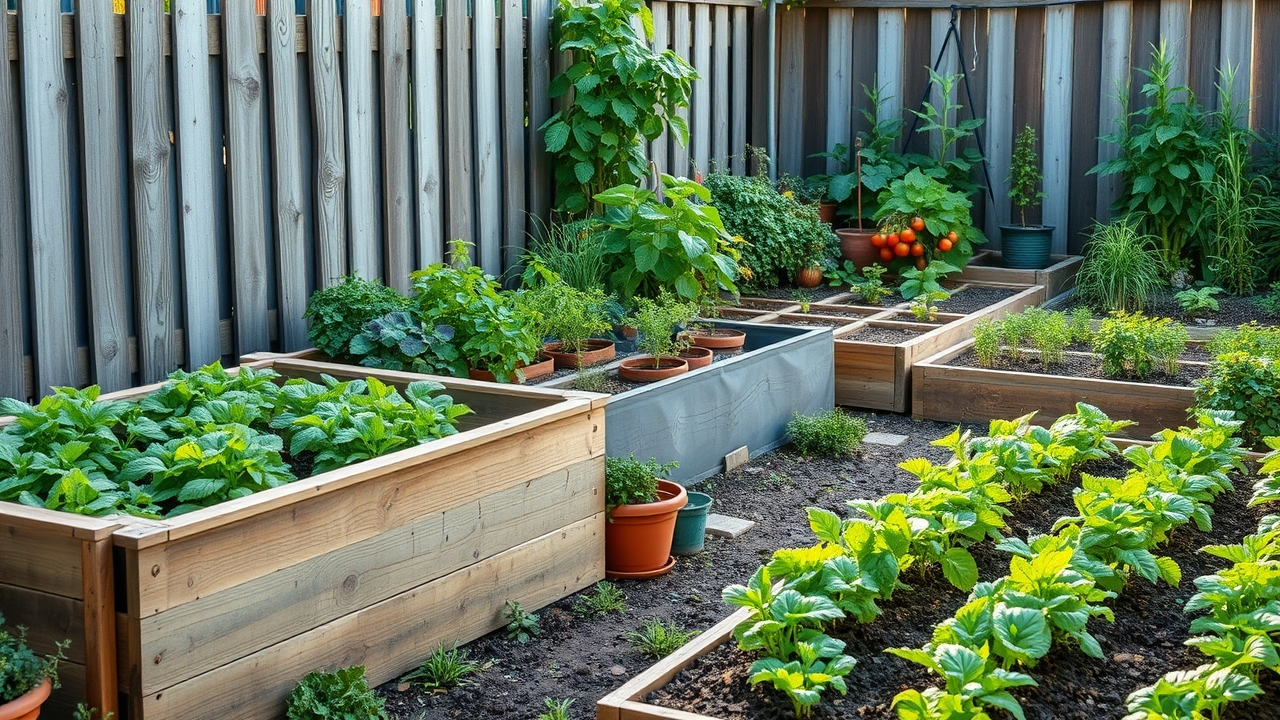
Bad or unknown soil, want low maintenance long-term, staying put? → Raised beds (highest upfront cost, best working height, total soil control). Renting, small patio/balcony, or just testing the hobby? → Containers (cheapest entry, movable, but daily watering in summer). Decent soil, biggest space, smallest budget? → In-ground (almost free, most room to expand, more weeding and slower spring start). Many of the best gardens mix all three.
Buy it if
you match one of the three profiles above — choosing the setup that fits your soil, budget and mobility beats any 'best' answer
Skip it if
agonizing over it — a $15 grow bag of lettuce this month teaches more than a month of comparison videos
Try instead
Mix and match: one raised bed for the main crops, a few containers for herbs by the door, in-ground for space-hungry squash
Raised beds — control, comfort, and the biggest bill
A raised bed is a frame (usually wood or metal) filled with soil you choose. That one sentence explains both its superpower and its price tag.
Where raised beds genuinely win:
- Bad native soil stops mattering. Clay, sand, rocks, contamination worries — irrelevant; you fill the bed with good soil-compost mix from day one. This is the #1 legitimate reason to choose them.
- They warm up earlier in spring and drain better after rain — you often plant 1–2 weeks sooner.
- Working height. A 12–24” bed dramatically reduces bending; at 30”+, gardening from a chair becomes practical.
- Fewer weeds and clean edges — a defined box is easier to keep on top of, and the lawn can’t creep in.
The honest downsides:
- Cost. This is the big one. A single 4×8 ft bed = frame ($50–150 DIY lumber, $100–400 pre-made kits) plus ~1 cubic yard of soil ($100–200 bagged). First-bed totals of $200–500 are normal, and the soil bill surprises everyone. (Wondering if a paid garden blueprint changes that bill? It doesn’t — here’s the honest math.)
- They dry out faster than ground soil in hot weather (though far slower than containers).
- Semi-permanent. You don’t take a raised bed with you when you move.
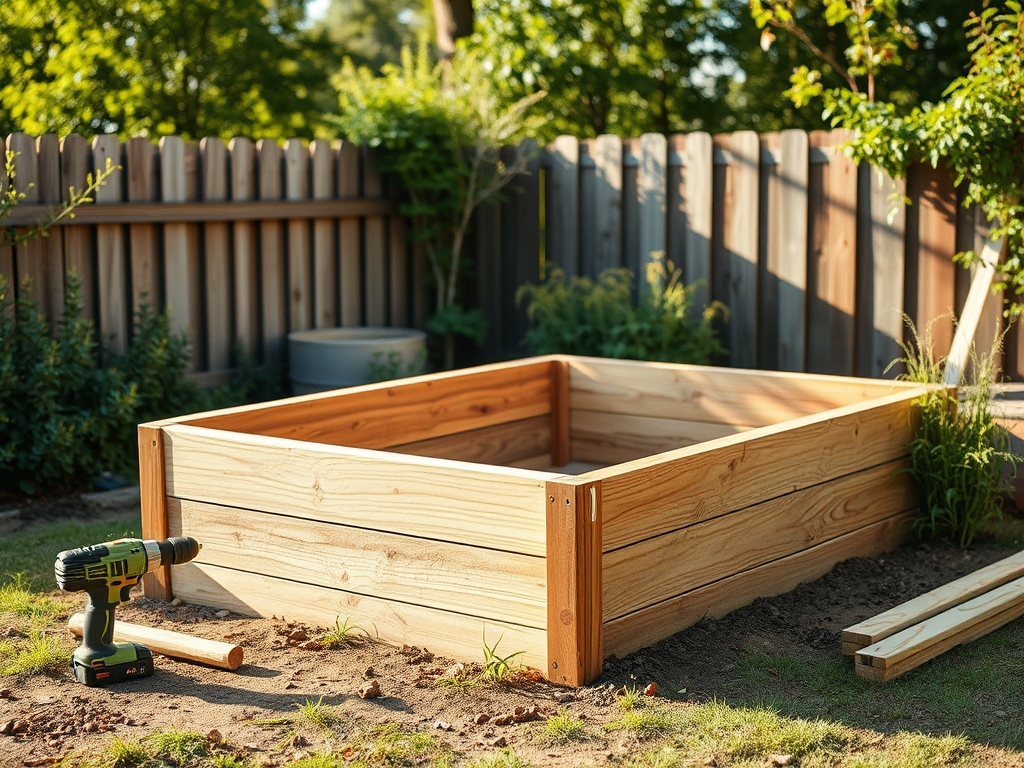
Cutting the cost: building your own from lumber roughly halves the price, and simple beds are a genuine beginner woodworking project — a drill, a saw, and an afternoon. If you want cut lists and step-by-step plans (beds, trellises, compost bins and the rest of the homestead build list), we’ve reviewed the popular Ted’s Woodworking plans bundle honestly — including who shouldn’t buy it. Cheaper still: untreated scaffold boards, cinder blocks, or galvanized stock tanks.
$200-500
Realistic first-bed total (frame + soil) for a 4x8 raised bed — soil is the cost everyone forgets
Containers — the cheapest ticket in, with a daily catch
Pots, grow bags, buckets, window boxes — anything that holds soil and drains.
Where containers genuinely win:
- Lowest cost of entry. A $10–15 fabric grow bag + a bag of potting mix grows real tomatoes. Testing whether you even like gardening costs under $30.
- Renters and small spaces. Balcony, patio, doorstep, fire escape — if it gets 6+ hours of sun, it’s a garden. And it all moves with you.
- You chase the sun. Shade-locked yard? Wheel the pots to wherever the light is this month.
- Zero digging, zero lawn sacrificed.
The honest downsides:
- Watering is relentless. Small soil volume = fast drying. In July heat, containers often need water every single day, sometimes twice. This is the #1 reason container gardens die (our container guide covers self-watering setups that ease it).
- Size limits yields. Big croppers (squash, indeterminate tomatoes, corn) sulk in small pots; you need 10+ gallon containers for them, and big pots + potting mix erode the cost advantage.
- Potting mix isn’t optional — garden soil compacts in pots. Quality mix runs $10–15 per large container.
In-ground — the free option nobody promotes
Digging a bed in your existing yard: no frame, no purchased soil, just your ground improved with compost.
Where in-ground genuinely wins:
- Nearly free. Remove sod, loosen soil, add compost (ideally your own), plant. Total spend can be a bag of seeds.
- Most space for the money. Scaling from 50 to 500 sq ft costs effort, not dollars — which is why serious self-sufficiency gardens are mostly in-ground.
- Ground soil holds moisture longest — deepest root runs, least watering of the three in a heatwave.
- Nothing to build or replace. Frames rot; dirt doesn’t.
The honest downsides:
- Your soil is what it is — heavy clay or pure sand takes a few seasons of compost to become good (it does get there).
- More weeds, especially year one after removing lawn.
- Slower, wetter spring start than raised beds; bending is constant work.
- Skip it entirely if you suspect contamination (old industrial sites, pre-1978 house paint zones) — that’s a genuine raised-bed situation.
Side-by-side: the numbers that matter
| Raised beds | Containers | In-ground | |
|---|---|---|---|
| Startup cost (real) | $200–500 per 4×8 bed | $25–50 to start tiny | ~$0–50 (compost) |
| Ongoing cost | Soil top-ups, frame repair | Potting mix each year | Compost (free if homemade) |
| Watering load | Moderate | Heavy — daily in summer | Lightest |
| Weeding | Light | Almost none | Most |
| Best for | Bad soil, ergonomics, tidy yards | Renters, patios, testing the hobby | Space, budget, scaling up |
| Worst for | Tight budgets, renters | Thirsty big crops | Bad/contaminated soil |
| Portability | None | Total | None |
The decision framework (answer honestly)
- Is your soil workable? Dig a hole; if it’s rock, builder’s rubble, or you have contamination concerns → raised beds. If it grows healthy weeds, it’ll grow vegetables → in-ground is on the table.
- Do you own the place and plan to stay 3+ years? No → containers (your garden moves with you).
- What’s the honest budget? Under $50 → containers or in-ground. A few hundred and you value comfort → raised beds.
- How much do you want this year? A few herbs and salads → containers. Feeding the household → in-ground or multiple beds — see how far a small backyard can realistically go.
- Can you water daily in July? No → avoid an all-container garden, whatever else you pick.
Quick wins vs. expensive mistakes
What works
- Start with ONE bed or a few containers this season — expand what works next year
- DIY the frame and halve the raised-bed bill (a genuine beginner build)
- Mix systems: bed for main crops, pots for herbs, ground for space-hogs
- Budget the SOIL before the frame — it is half the raised-bed cost
What doesn't
- Building 4 raised beds before growing a single vegetable (test with one)
- Filling a raised bed with cheap topsoil that arrives full of weed seeds
- Putting an indeterminate tomato in a 5-gallon pot and expecting a harvest
- All-container gardens for people who travel every summer weekend
FAQ
Are raised beds really better than growing in the ground?
Better for some situations, not universally. Raised beds win when your native soil is bad or contaminated, when drainage is poor, when you want an earlier spring start, or when bending is a problem. In-ground wins on cost (nearly free), scale, and summer water retention. If your yard soil already grows healthy grass and weeds, in-ground plus a few inches of compost performs close to a raised bed for a fraction of the price.
How much does it cost to start a raised bed garden?
Realistically $200–500 for the first 4×8 ft bed: $50–150 for a DIY lumber frame (or $100–400 pre-made), plus roughly a cubic yard of soil-compost mix at $100–200 bagged. The soil is the cost people forget. You can cut it sharply by building the frame yourself, using cinder blocks or stock tanks, filling the bottom third with logs and branches (hügelkultur style), and topping up with homemade compost.
Is container gardening cheaper than raised beds?
To start, yes — dramatically. A fabric grow bag ($10–15) plus a bag of potting mix grows real food for under $30, versus $200+ for a first raised bed. The economics flip at scale: ten large containers with fresh potting mix each season can cost more over three years than one well-built bed. Containers are the cheapest way to test gardening; beds or in-ground are cheaper ways to scale it.
What vegetables grow badly in containers?
Space-hungry and deep-rooted crops: sprawling winter squash and pumpkins, corn (needs a block for pollination), full-size indeterminate tomatoes in anything under 10 gallons, and long-rooted parsnips or full-size carrots in shallow pots. Container stars are lettuce and greens, herbs, peppers, bush beans, radishes, compact “patio” tomato varieties, and even potatoes in deep grow bags.
Can I mix raised beds, containers, and in-ground?
Not only can you — it’s usually the best setup. A typical smart layout: one or two raised beds for the daily-harvest crops (greens, tomatoes, peppers), containers by the kitchen door for herbs, and an in-ground patch for the space-hogs (squash, corn, potatoes). Each system does what it’s best at, and you spread the startup cost over seasons instead of paying it all up front.
Glivox publishes practical, honest guides for homesteaders and backyard growers — including the real prices the pretty photos leave out.
Keep reading
guides
Container Vegetable Gardening: How to Grow Food in Pots (2026 Guide)
No yard? No problem. A practical guide to growing vegetables in containers — which pots, what soil, the best crops for pots, and how to keep container plants watered and thriving through summer.
guides
How to Grow a Year's Worth of Food in a Small Backyard (2026)
A realistic plan for growing serious amounts of food in a small backyard — space-efficient layouts, the highest-yield crops per square foot, and how to stretch the harvest across all four seasons.
guides
How to Start a Self-Sufficient Vegetable Garden (2026 Beginner's Guide)
A step-by-step guide to starting a backyard vegetable garden that actually feeds you — site, soil, what to plant first, and mistakes to avoid.