guides
Off-Grid Water Systems for Homesteads: A Realistic 2026 Guide
Rainwater, wells, springs, and air-to-water: the real off-grid homestead water options for 2026 — what each costs, delivers, and where they oversell.
Honest disclosure: Some links below are affiliate links — Glivox earns a commission if you purchase, at no extra cost to you. We pay full price for products we review and rankings are never paid. Read the full policy.
Water is the part of off-grid living people romanticize least and need most. You can grow food and generate power, but without a reliable water source none of it matters. The good news: a homestead has several real off-grid water options. The bad news: the internet is full of gadgets promising “unlimited free water from thin air,” and a beginner can waste money chasing the wrong one.
This guide lays out the actual options — rainwater, wells, springs, and atmospheric (air-to-water) — what each really costs, what it really delivers, and where the marketing gets ahead of the physics.
TL;DR — the honest hierarchy
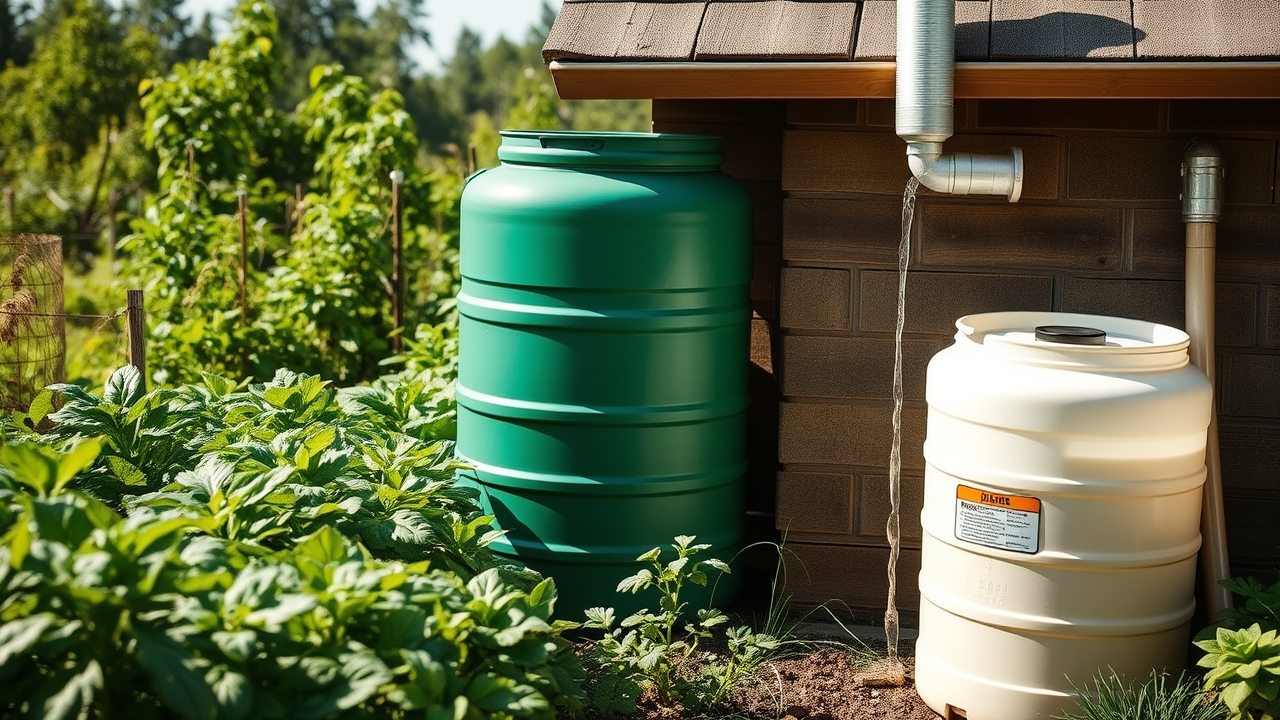
For most homesteads, the order of value is: rainwater harvesting first (cheapest, most reliable per dollar — the barrel-to-tank starter guide covers the build), a well or spring if your land has one (best long-term but higher upfront), and atmospheric water generation last — useful as an emergency backup concept in humid climates, not as a primary supply, despite what the sales pages claim.
Buy it if
you want a layered water plan — rain catchment as the workhorse, a well/spring if available, and a stored two-week emergency supply underneath it all
Skip it if
you're hoping a single cheap gadget will replace a real water source — that product doesn't exist
Try instead
If you're just starting, set up a simple rain barrel system this season before investing in anything bigger or fancier
Option 1 — Rainwater harvesting (start here)
For nearly every homestead, rainwater is the highest-return water project. A roof is a large catchment surface you already own, and the math is generous: roughly 600 gallons per inch of rain per 1,000 sq ft of roof. Even a modest roof in a moderate-rainfall area collects thousands of gallons a year.
What a basic-to-serious setup looks like:
- Starter: rain barrels at downspouts (50–100 gallons each) — cheap, great for garden irrigation.
- Intermediate: larger IBC totes (275 gallons) or a poly cistern, with a first-flush diverter to dump the dirty initial runoff.
- Serious: a buried or large above-ground cistern (1,000–10,000+ gallons) with filtration for household use.
For drinking, rainwater needs filtration and disinfection (sediment filter → carbon → UV or boiling). For garden and livestock use, minimal treatment is fine.
~600 gal
Collected per inch of rain per 1,000 sq ft of roof — your cheapest water source
Check local rules: a few regions restrict rainwater collection, though most encourage it. Verify before building a big system.
Option 2 — Wells and springs (best long-term, higher upfront)
If your land has groundwater or a spring, that’s the gold standard for off-grid water — a continuous supply independent of rainfall.
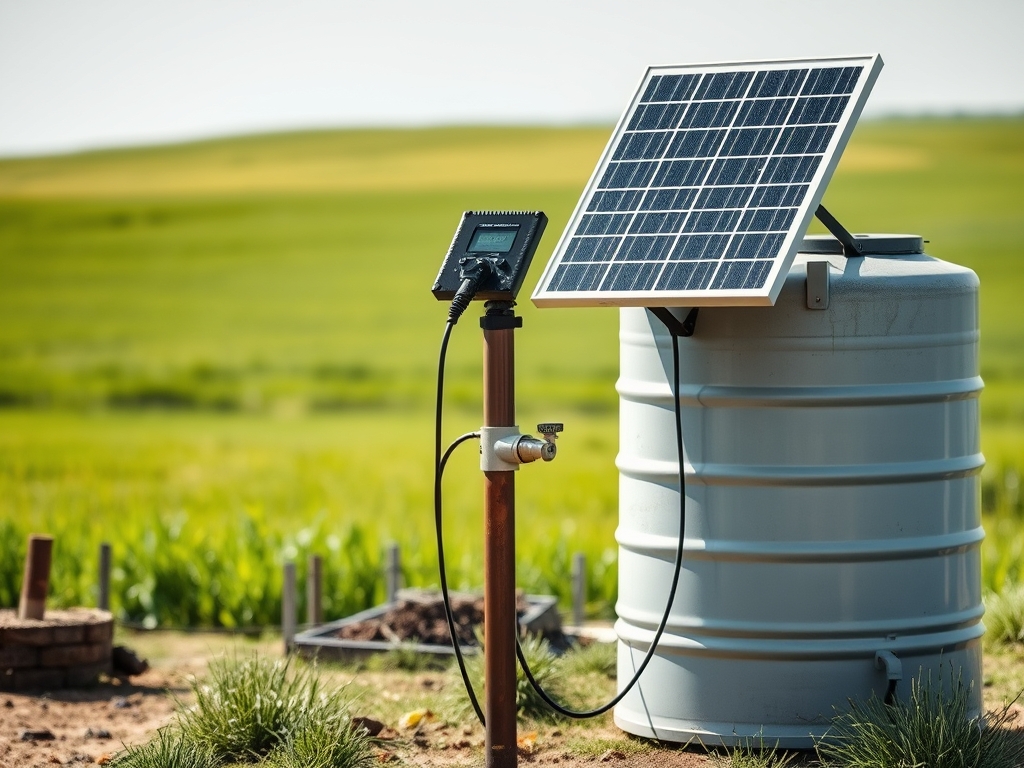
- Drilled well: the most reliable, but drilling is a professional job and the single biggest water expense on most homesteads (cost varies enormously by depth and region). Off-grid, you pair it with a solar pump or hand pump so it works without grid power.
- Spring: if you have a reliable spring, a simple spring box + gravity-fed line can deliver water with no pump at all — the lowest-maintenance setup that exists. Rare and location-dependent, but unbeatable when you have it.
Wells and springs are infrastructure, not gadgets — they’re worth it for permanent homesteads, overkill for a renter or a “just in case” prepper.
Option 3 — Atmospheric water (air-to-water): the honest take
This is the category the internet oversells, so here’s the straight story. Atmospheric water generation (AWG) is real science — water vapor in the air condenses on a cold surface, the same way dew forms or an air conditioner drips. Commercial AWG units genuinely produce drinking water. The question is never “does the concept work” — it’s “does a cheap DIY version produce enough water to matter.”
Two popular ClickBank products — Water Freedom System and Air Fountain — sell DIY plans for building a small air-to-water device. Both are inexpensive digital guides ($39 range, ClickBank-backed 60-day refund). Here’s the buyer-honest verdict:
What’s true: the underlying method works, and as a concept guide for emergency preparedness in a humid climate, a cheap plan is a low-risk way to learn it. What’s overstated: the sales pages imply near-unlimited “water for pennies” that solves your whole supply. In reality, DIY output is modest and depends heavily on humidity and temperature — in dry air, output drops to a trickle, and the device needs power to run. It’s a backup concept, not a primary source — and for actual emergency readiness, two weeks of stored water beats any gadget at a fraction of the price.
What works
- The atmospheric-water concept is legitimate, established science
- Cheap digital plans ($39) with a ClickBank 60-day refund = low risk to learn
- Useful as an emergency/backup idea in humid climates
- No land, well, or roof required
What doesn't
- Sales pages oversell it as near-unlimited "free water" — it is not
- Real DIY output is modest and collapses in dry/cool air
- Needs electricity to run the cooling
- It is plans you build yourself, not a finished machine
- Should never be your only water source
Disclosure: Glivox earns a commission if you buy through our links. We’d rather tell you the truth — these are backup-concept guides, not a miracle supply — than oversell you something you’ll feel burned by.
If you do want to explore the concept as a cheap prep project, Air Fountain is the slightly lower-priced of the two, and Water Freedom System comes from the same lineage. Treat either as a $39 learning guide, not a water utility.
Putting it together: a layered water plan
Resilient homestead water isn’t one source — it’s layers, so no single failure leaves you dry:
- Primary: rainwater catchment (cheap, scalable, start this season)
- Backbone: a well or spring if your land supports it (permanent supply)
- Storage: enough cistern/tank capacity to ride out dry spells
- Treatment: sediment → carbon → UV/boil for anything you’ll drink
- Backup concept: atmospheric or other emergency methods, kept in perspective
Start with layer 1 this season. Add layers as your homestead and budget grow.
FAQ
What’s the cheapest way to get off-grid water?
Rainwater harvesting, by a wide margin. A roof you already own collects roughly 600 gallons per inch of rain per 1,000 sq ft, so even rain barrels at your downspouts give you free irrigation water immediately. It scales from a $30 barrel up to a multi-thousand-gallon cistern as your needs and budget grow — far cheaper per gallon than drilling a well or buying a gadget.
Does atmospheric water generation (air-to-water) actually work?
The science is real — water vapor condenses on a cold surface, just like dew or an AC unit dripping. Commercial units produce drinking water. But cheap DIY versions like Water Freedom System or Air Fountain produce modest amounts that depend heavily on humidity and temperature, and they need power to run. Treat them as an emergency-backup concept in humid climates, not as a primary water source — the “unlimited water” marketing is overstated.
Is the Water Freedom System or Air Fountain worth buying?
As a cheap ($39-range) digital guide to learn the atmospheric-water concept for emergency prep, it’s a low-risk buy thanks to ClickBank’s 60-day refund window. As a real solution to your water supply, no — output is too modest and humidity-dependent to rely on. Buy it understanding it’s a concept guide you build yourself, not a finished machine or a water utility. For actual supply, rainwater and wells win.
How much water storage does a homestead need?
It depends on household size, climate, and how much dry-spell buffer you want, but a common planning rule is to store enough to cover several weeks of use between reliable refills. Rainwater systems pair best with large cisterns (1,000+ gallons) so you can bank wet-season rain for dry months. Start with what you can afford and expand — even a few hundred gallons of buffer meaningfully improves resilience.
Do I need to treat off-grid water before drinking it?
Yes, for anything you’ll drink. A standard chain is sediment filter → activated carbon → UV sterilizer (or boiling). Rainwater picks up roof debris and airborne contaminants; well water can carry minerals or bacteria. For garden irrigation and livestock, minimal or no treatment is usually fine. Always test a new well or spring source before relying on it for drinking.
Glivox publishes independent, buyer-first guides for homesteaders and backyard growers. We tell you what actually works — including when a popular product is overhyped.
Keep reading
reviews
DIY Home Energy Review: Is the $49 Solar Course Worth It? (2026)
An honest review of DIY Home Energy — what the $49 video course actually teaches about home solar, where the savings claims oversell, and whether it's a smart first step before you buy panels.
guides
How to Stop Pests Eating Your Vegetable Garden (Naturally)
Bugs destroying your summer harvest? A practical, no-spray-first guide to identifying common vegetable pests and stopping them with barriers, beneficial insects, and targeted organic fixes.
guides
How to Water a Vegetable Garden in Summer (Without Killing It)
Summer watering makes or breaks a vegetable garden. How much, how often, what time of day, and the watering mistakes that quietly kill plants in the heat — a practical 2026 guide.