guides
Season Extension for Beginners: Row Covers, Cold Frames, and 8 More Weeks of Harvest
Frost doesn't have to end the garden. How row covers, low tunnels and cold frames add weeks or months of harvest — what each really does, and what to build in August.
Honest disclosure: Some links below are affiliate links — Glivox earns a commission if you purchase, at no extra cost to you. We pay full price for products we review and rankings are never paid. Read the full policy.
The first frost date on your calendar isn’t a wall — it’s a negotiation. With a few dollars of fabric and some bent pipe or an old window, backyard gardeners routinely harvest salads in November and kale in December from the same beds their neighbors abandoned in September. The tools are old, cheap, and unglamorous: row covers, low tunnels, and cold frames.
August is exactly when to set this up — the fall crops you sowed in July are growing, and the protection they’ll need in October is easiest to build now, before you need it. Here’s what each tool actually does (in honest degrees, not marketing), and which to start with.
TL;DR — season extension in one paragraph
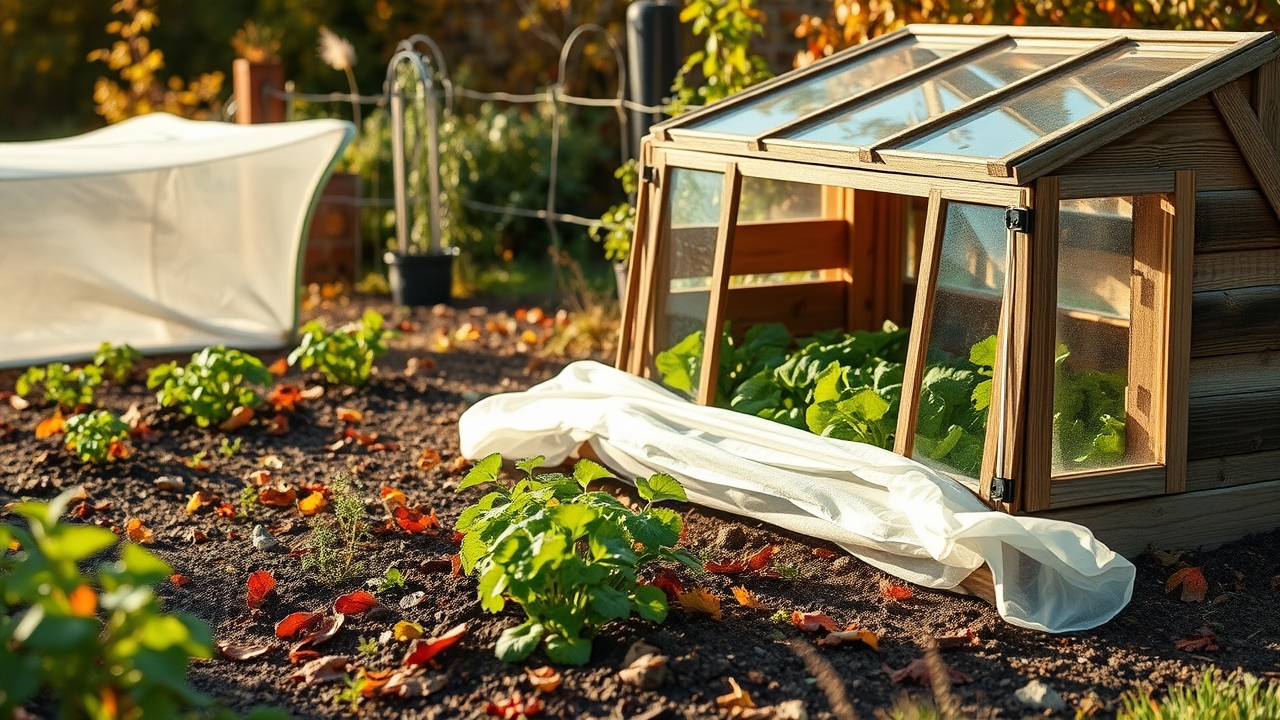
Three tools, escalating protection: floating row cover (spun fabric laid right on plants or over hoops) buys 2–4°F of frost protection and wind shelter for pennies — enough to survive the first light frosts that end most gardens weeks early. A low tunnel (the same fabric or plastic over wire/pipe hoops) adds more margin and rain control. A cold frame (a bottomless box with a clear lid — classically an old window) creates a genuinely warmer microclimate that keeps cold-hardy greens alive deep into winter. None of them grow tomatoes in January — they extend cool-season crops: lettuce, spinach, kale, chard, Asian greens, carrots. Start with a $15 roll of row cover; graduate to a cold frame if you catch the bug.
Buy it if
you sowed fall crops and want 4-8+ more weeks of harvest — row cover is the cheapest yield insurance in gardening
Skip it if
trying to overwinter tomatoes and peppers under fabric — heat-lovers are done at frost no matter what you drape on them
Try instead
Zero budget? Old bedsheets over hoops on frost nights (removed by day) save a bed in a pinch — the principle is the same
Tool 1: Floating row cover — the $15 miracle fabric
Spun-bonded polyester fabric (“frost blanket,” Reemay, Agribon) light enough to lay directly on most crops. It traps a few degrees of ground warmth overnight and blocks wind — which is most of what kills plants in early frosts.
- What it honestly buys: lightweight grades give ~2–4°F of protection; heavier winter grades ~4–8°F. That’s the difference between a garden ending at the first 30°F night and cruising to Thanksgiving.
- Bonus jobs: it’s the same fabric that blocks pest insects in spring and shades summer seedlings — one roll, three seasons of use.
- The rules: secure the edges (wind is relentless — bury, rock, or pin them), and on flowering crops remove it during pollination hours. For fall greens, none of that matters — cover and leave it.
- Light passes through (70–85% for light grades), so plants keep growing under it — this isn’t a tarp.
2-8°F
Honest frost protection from row cover, by grade — the cheapest weeks-of-harvest money buys
Tool 2: Low tunnels — row cover with a skeleton
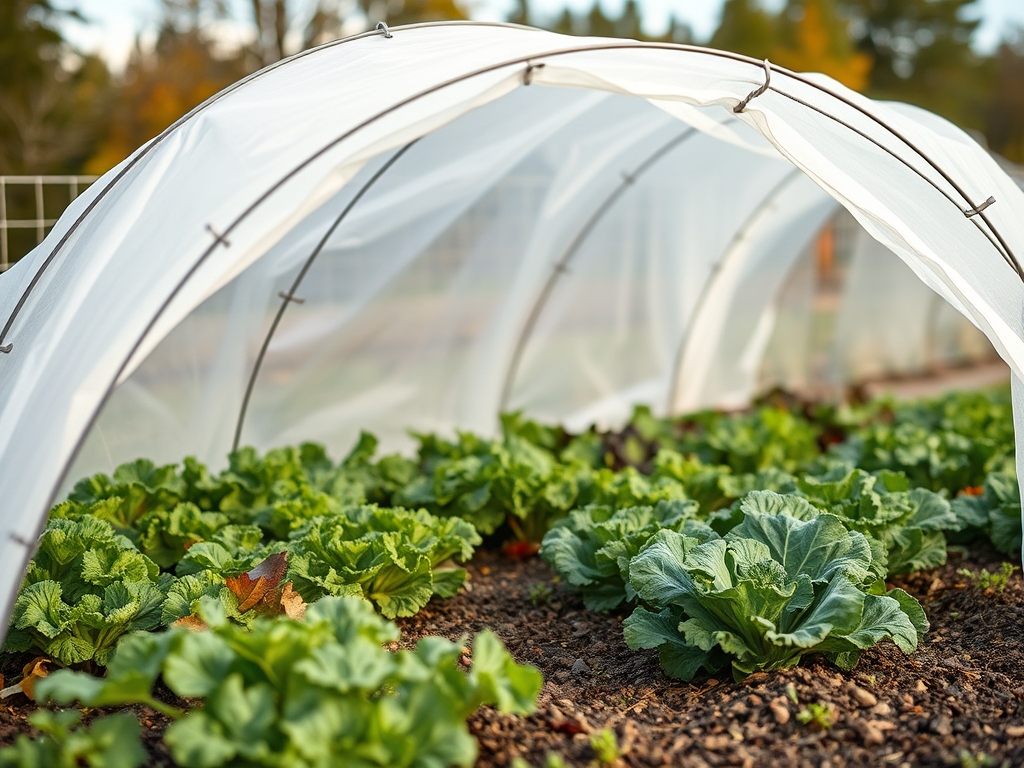
Bend 9-gauge wire or ½-inch PVC/metal conduit into hoops over the bed, clip fabric (or greenhouse plastic) over them, and you’ve built a low tunnel:
- Why bother with hoops: fabric touching leaves can freeze to them in hard frosts; an air gap insulates better, sheds snow, and stops wind-whipping damage.
- Fabric vs. plastic: fabric breathes and needs no babysitting; clear plastic runs warmer by day but must be vented on sunny days (a closed plastic tunnel hits cooking temperatures shockingly fast) and closed by night.
- Cost honesty: hoops + fabric for a 4×8 bed ≈ $20–35. A November salad bed pays that back in two harvests.
Tool 3: The cold frame — a wooden box that grows December salad
A cold frame is a bottomless box (wood, straw bales, even bricks) with a transparent sloped lid — the classic build reuses an old window or storm door. It’s the strongest passive protection short of a greenhouse:
- What it does: captures solar heat by day, holds soil warmth by night, blocks all wind. Inside a frame, cold-hardy greens (spinach, mâche, winter lettuce, kale seedlings) stay harvestable through genuinely cold weather — often all winter in moderate climates.
- The build: back wall ~30–45 cm, front ~20–30 cm (the slope faces south), lid hinged. A weekend, basic tools, and scrap or cheap lumber — it’s a classic first woodworking project, and if you want cut lists and plans, the Ted’s Woodworking library we’ve reviewed includes cold frames among its usable plans (our honest review covers its real caveats too).
- The one operating rule: vent on sunny days. Even in winter sun, a closed frame overheats and cooks plants. Prop the lid a few centimeters when the day warms; close it by late afternoon. (An “automatic vent opener” arm — ~$20 — does this for you and is the single best upgrade.)
- Bonus career: in spring it hardens off seedlings; in fall it shelters seed-saving plants you’re overwintering.
What actually survives out there (and what doesn’t)
Extends beautifully: lettuce and salad mixes, spinach (the winter champion), kale and collards (frost improves them), chard, Asian greens, arugula, carrots and beets in the ground under mulch+cover, scallions, mâche and claytonia (the true winter specialists).
Doesn’t, stop trying: tomatoes, peppers, cucumbers, squash, basil — heat-lovers die at frost regardless of covers. Season extension means extending cool-season crops, not cheating summer. (Cover the last tomatoes for one borderline night to finish ripening, then call it — and send the rest to ripen indoors or the preserving pipeline.)
The August action list: sow the cold-hardy list now (the fall math still works for quick greens), buy or build protection before the forecast forces you, and put cover crops on any bed you won’t protect — every bed should go into winter either producing or covered.
Quick wins vs. season-extension mistakes
What works
- One $15 roll of row cover = the cheapest extra month of harvest in gardening
- Build the cold frame in August, not the night before the first freeze
- Slope the frame lid south; vent it on every sunny day (or fit a $20 auto-opener)
- Focus on spinach, kale and mache — plants that WANT to be there in November
What doesn't
- Draping covers on tomatoes and hoping (frost ends heat-lovers, full stop)
- Closed plastic tunnels on sunny days (they cook plants by noon)
- Unsecured fabric edges (the first windy night relocates your investment)
- Letting fabric rest on leaves through a hard freeze (contact = freeze damage)
FAQ
How much frost protection does a row cover really give?
Lightweight floating row cover honestly buys about 2–4°F (1–2°C) of protection; heavyweight winter grades reach roughly 4–8°F (2–4°C), mostly by trapping ground warmth and killing wind chill. That’s frequently the whole difference between losing the garden at the first 30°F night and harvesting for another month or two — early frosts are usually brief and marginal, exactly the kind a few degrees defeats. It is not a greenhouse; sustained hard freezes need a cold frame or the winter-hardy crops list.
What vegetables can I keep growing after frost?
The cool-season crew: spinach (the champion — sweetens with cold), kale and collards, winter lettuces, chard, arugula, Asian greens like tatsoi and mizuna, mâche and claytonia (edible well below freezing), plus carrots and beets stored right in the ground under mulch and cover. Under a cold frame or tunnel, many of these harvest into December and beyond even in cold climates. Heat-lovers — tomatoes, peppers, cucumbers, squash, basil — cannot be extended past frost by fabric; they’re finished.
How do I build a cheap cold frame?
The classic: a bottomless wooden box with a back wall around 30–45 cm, front around 20–30 cm, so the clear lid slopes toward the south sun. Hinge an old window, storm door, or twin-wall polycarbonate sheet as the lid. Straw bales with an old window laid on top make an even faster zero-carpentry version. Site it against a south-facing wall if you can, and add the one non-negotiable habit: prop the lid open on sunny days so it doesn’t overheat, and close it before evening.
When should I put row covers on fall crops?
Have them ready by early fall but deploy based on forecast, not calendar: cover when nights start dipping toward your crops’ limits (below ~40°F/4°C for tender greens, at frost warnings for the hardy list). In practice most gardeners install hoops in September while the weather’s pleasant, then clip fabric on as the first frost approaches. Buying fabric in August — before the seasonal rush — is the cheap, calm version of this plan.
Is a cold frame better than a greenhouse?
Different tools. A cold frame costs $0–50, takes a weekend, needs no foundation, and reliably overwinters cold-hardy greens — it’s the right scale for extending a family garden. A greenhouse costs hundreds to thousands, needs siting and maintenance, and only outperforms the frame if you’ll heat it or grow at real volume. The honest sequence: master a cold frame and low tunnels first; if they’re bursting after a season or two, then the greenhouse conversation earns its price tag — and when it does, our beginner greenhouse tier guide maps what each budget actually buys.
Glivox publishes practical, honest guides for homesteaders and backyard growers — frost is a negotiation, and fabric is your lawyer.
Keep reading
reviews
Ted's Woodworking Review: Are 16,000 Plans Worth $67 in 2026?
An honest look at Ted's Woodworking — what the 16,000-plan library actually contains, the real complaints about quality and refunds, and whether it's worth $67 for homestead DIY builds.
guides
What to Plant in July for a Fall Harvest (2026 Guide)
It's not too late — July is prime time for a second planting. What to sow now for a fall harvest, the frost-date math, and how to get seeds up in hot soil.
guides
Cover Crops for Beginners: Feed Your Soil While You Take the Winter Off
What cover crops actually do, the 5 easiest for a home garden, when to sow them after harvest, and the spring question everyone worries about — killing them off.