guides
Cover Crops for Beginners: Feed Your Soil While You Take the Winter Off
What cover crops actually do, the 5 easiest for a home garden, when to sow them after harvest, and the spring question everyone worries about — killing them off.
Honest disclosure: Some links below are affiliate links — Glivox earns a commission if you purchase, at no extra cost to you. We pay full price for products we review and rankings are never paid. Read the full policy.
Here’s what happens to a vegetable bed left bare over winter: rain compacts it, weeds colonize it, and the top layer of the soil life you spent all season feeding slowly starves and washes away. Farmers have known the fix for centuries — never leave soil naked. Cover crops are plants you grow for the soil instead of the table: they blanket beds through the off-season, then get cut down to feed the ground they grew in.
For a home gardener it’s the least-effort soil upgrade there is — composting without the pile. August and September, as summer beds empty out, is exactly when to sow. Here’s the beginner version.
TL;DR — cover crops in one paragraph
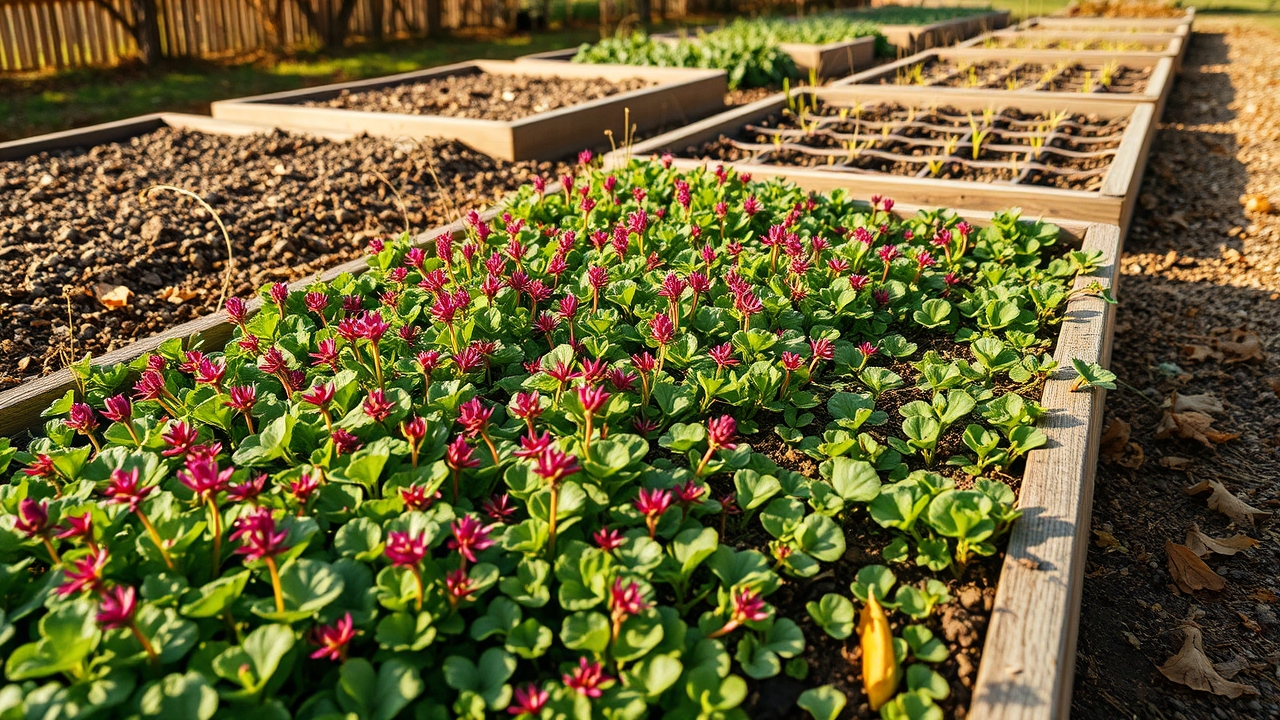
As each bed finishes its harvest, scatter cover crop seed, rake it in, water once, and walk away. Legumes (crimson clover, field peas) add nitrogen from the air; grains (winter rye, oats) build organic matter and smother weeds. The beginner-friendliest choice is one that winter-kills (oats, field peas in cold climates): frost kills it, the dead mulch protects the bed all winter, and in spring you just rake it aside and plant — no fighting a living crop. Cut any survivor down before it sets seed, leave the roots in the ground, and plant 2–3 weeks later.
Buy it if
any bed that will sit empty more than a month — cover crops turn dead time into free fertility
Skip it if
beds where you'll plant garlic or fall crops — those ARE the cover; see the fall planting guide instead
Try instead
Too late to sow (ground freezing)? A thick mulch of shredded leaves does half the job — cover is the point
What cover crops actually do (no romance, just mechanics)
- Stop erosion and compaction — roots hold soil, leaves soften rain. Bare beds lose their best layer every winter.
- Feed soil life — living roots leak sugars that keep the microbe workforce fed through the cold, so beds wake up alive in spring.
- Add nitrogen (legumes only): clover, vetch and peas host bacteria that pull nitrogen from the air — free fertilizer for the next crop, the same trick beans pull in summer.
- Build organic matter (grains): rye and oats grow big root systems fast; when they die, all of it becomes soil food.
- Smother weeds — a dense stand outcompetes winter weeds that would otherwise seed your spring.
Aug–Sep
The home-garden sowing window — as each summer bed finishes, cover it the same week
The 5 easiest cover crops for a home garden
- Oats — the beginner’s #1 in cold climates: grows fast in fall, then winter-kills at hard frost, leaving a tidy dead mulch you rake aside in spring. Zero spring fight.
- Field peas — legume nitrogen, also winter-kills in cold zones; often sold mixed with oats (the classic beginner blend).
- Crimson clover — beautiful, nitrogen-fixing, overwinters in mild zones (kill it in spring before flowering finishes); bees adore it if you let a strip bloom.
- Winter rye — the toughest: germinates in cold soil (sow as late as October), survives brutal winters, holds soil like a carpet. The trade: it’s alive in spring and needs decisive killing — better for confident gardeners.
- Buckwheat — the summer special: not for winter (frost kills it instantly) but perfect for a bed empty 4–6 weeks in warm weather — sprouts in days, smothers weeds, flowers in a month. Cut it at flowering, before seed.
Cold climate beginner? Oats + field peas. Mild winters? Crimson clover. Gap in summer? Buckwheat.
How to sow (this is the whole job)
- Pull the finished crop and big weeds; rough the surface with a rake.
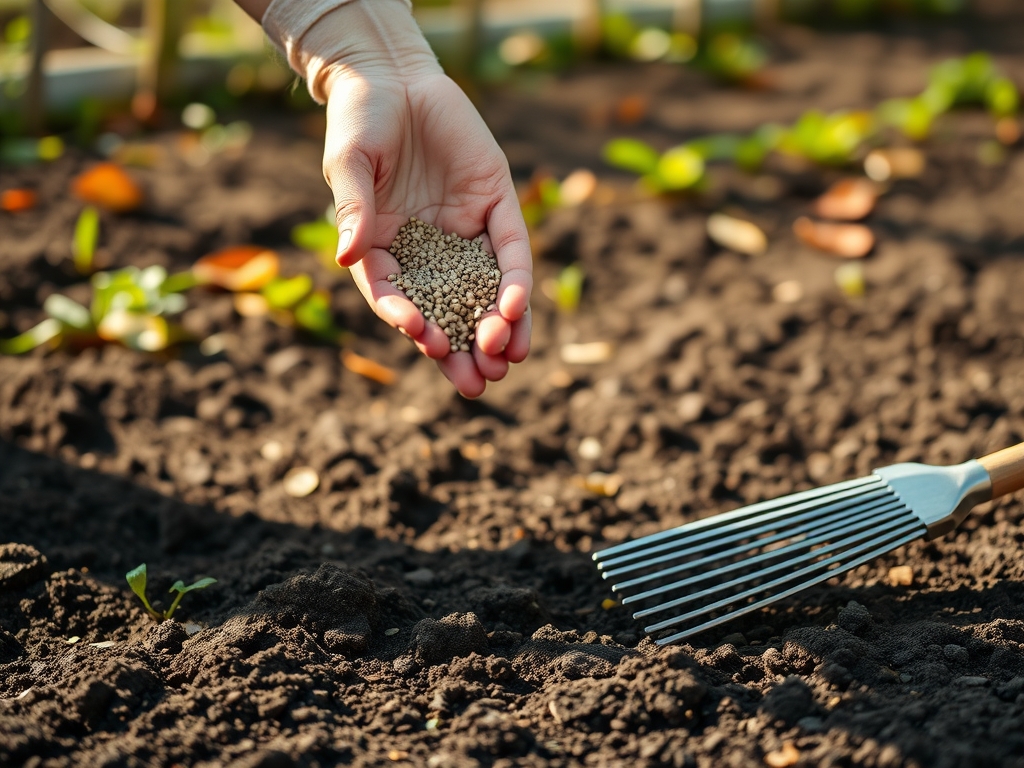
- Broadcast seed generously — thin stands invite weeds; err on thick.
- Rake lightly to cover, water once, and let fall rains take over.
- That’s it. You’re done until spring.
Sow each bed as it empties rather than waiting to do everything at once — an August-sown cover is twice the plant an October one is (winter rye being the late-sowing exception). This slots naturally into the fall cleanup triage: each bed’s cut-and-cover moment is its sowing date.
Spring: the part everyone worries about
The question that stops beginners — “how do I get rid of it?” — has a boring answer:
- Winter-killed covers (oats, field peas): rake the dead mulch aside (or leave it as mulch) and plant. This is why they’re the beginner pick.
- Living covers (rye, clover, vetch): cut them down at the base — mower, string trimmer, or shears — 2–3 weeks before planting, ideally when flowering starts but before seed set. Leave the roots in the ground (that’s where the soil-building happens) and either leave the tops as mulch or compost them. Notice what’s missing: digging anything in. The old “till in your green manure” advice is obsolete — cover crops slot straight into a no-dig system, roots feeding the soil right where they grew.
- The two real mistakes: letting a cover go to seed (congratulations, you’ve planted rye forever) and planting vegetables the same day you cut (decomposing residue can briefly suppress germination — hence the 2–3 week wait).
Quick wins vs. cover crop mistakes
What works
- Sow each bed the week it empties — August covers beat October covers
- Beginners: pick winter-kill types (oats, field peas) and skip the spring fight
- Sow thick — a dense stand is the weed control
- Leave roots in the ground at termination; that is the payload
What doesn't
- Letting any cover crop set seed (rye especially — it will haunt you)
- Winter rye on a whim — great crop, but it fights back in spring
- Sowing thin to save seed, then weeding all winter anyway
- Planting vegetables the day after cutting a living cover (wait 2-3 weeks)
FAQ
What is the easiest cover crop for beginners?
Oats, usually mixed with field peas. Sown in August–September they grow a thick green blanket, then die at the first hard freeze in cold climates — the dead mulch protects soil all winter, and in spring you simply rake it aside and plant. No cutting battle, no regrowth. In mild-winter areas where oats survive, crimson clover (cut in spring before it finishes flowering) is the equivalent easy choice.
When should I plant cover crops in a vegetable garden?
Sow each bed as soon as its summer crop finishes — for most gardens that’s August through September, giving covers 4–8 weeks of growth before frost. Winter rye is the late-window exception: it germinates in cold soil and can go in through October. In warm weather, buckwheat fills short 4–6 week gaps between crops. The principle is simple: the same week a bed empties, cover it.
Do cover crops really add nitrogen to soil?
Legume covers do — crimson clover, field peas, and vetch host rhizobia bacteria on their roots that fix nitrogen from the air, meaningfully feeding the next crop when the plants decompose. Grasses and grains (rye, oats) don’t add nitrogen but build organic matter, feed soil microbes, and prevent the winter losses that would otherwise erase your summer soil-building. The classic mix — a legume plus a grain — does both jobs at once.
How do I kill cover crops before spring planting?
Winter-kill types (oats, field peas in cold climates) die on their own — rake aside the residue and plant. For overwintering covers like rye or clover, cut plants at the base 2–3 weeks before your planting date, ideally at early flowering and always before seed set. Leave roots in the soil, use the cut tops as mulch or compost, and after the 2–3 week decomposition window, plant normally. No-till, no herbicide, no drama — just don’t let it go to seed.
Can I use cover crops in raised beds?
Yes — raised beds benefit even more, since their soil is a contained investment you’d otherwise leave exposed. Sow a small amount of oats/peas or clover after the fall harvest, cut or rake off in spring, and the bed’s organic matter and structure improve year over year. In small beds, hand shears make termination a five-minute job, and buckwheat is ideal for summer gaps between succession plantings.
Glivox publishes practical, honest guides for homesteaders and backyard growers — soil you keep covered is soil that keeps you fed.
Keep reading
guides
How to Start a Self-Sufficient Vegetable Garden (2026 Beginner's Guide)
A step-by-step guide to starting a backyard vegetable garden that actually feeds you — site, soil, what to plant first, and mistakes to avoid.
guides
How to Start Composting at Home (2026 Beginner's Guide)
Turn kitchen scraps and yard waste into free, rich soil. A beginner's guide to composting at home — what to compost, the simple browns-to-greens method, and how to fix a smelly or slow pile.
guides
What to Plant in July for a Fall Harvest (2026 Guide)
It's not too late — July is prime time for a second planting. What to sow now for a fall harvest, the frost-date math, and how to get seeds up in hot soil.