guides
Freezing Vegetables A to Z: What to Blanch, What to Skip, What Not to Bother
The freezer is the easiest preservation tool you own — if you blanch right. Times for every common vegetable, the tray-freeze trick, and the crops that turn to mush.
Honest disclosure: Some links below are affiliate links — Glivox earns a commission if you purchase, at no extra cost to you. We pay full price for products we review and rankings are never paid. Read the full policy.
Of the five preservation methods, freezing is the one you already own the equipment for — no canner rules, no brine math, just cold. Which is exactly why it’s also the method people ruin most casually: bags of unblanched green beans that thaw into gray rubber, whole tomatoes fused into a red iceberg, zucchini soup where zucchini slices used to be.
The difference between freezer treasure and freezer regret is about four small habits. Here’s the complete playbook, crop by crop, for the August flood.
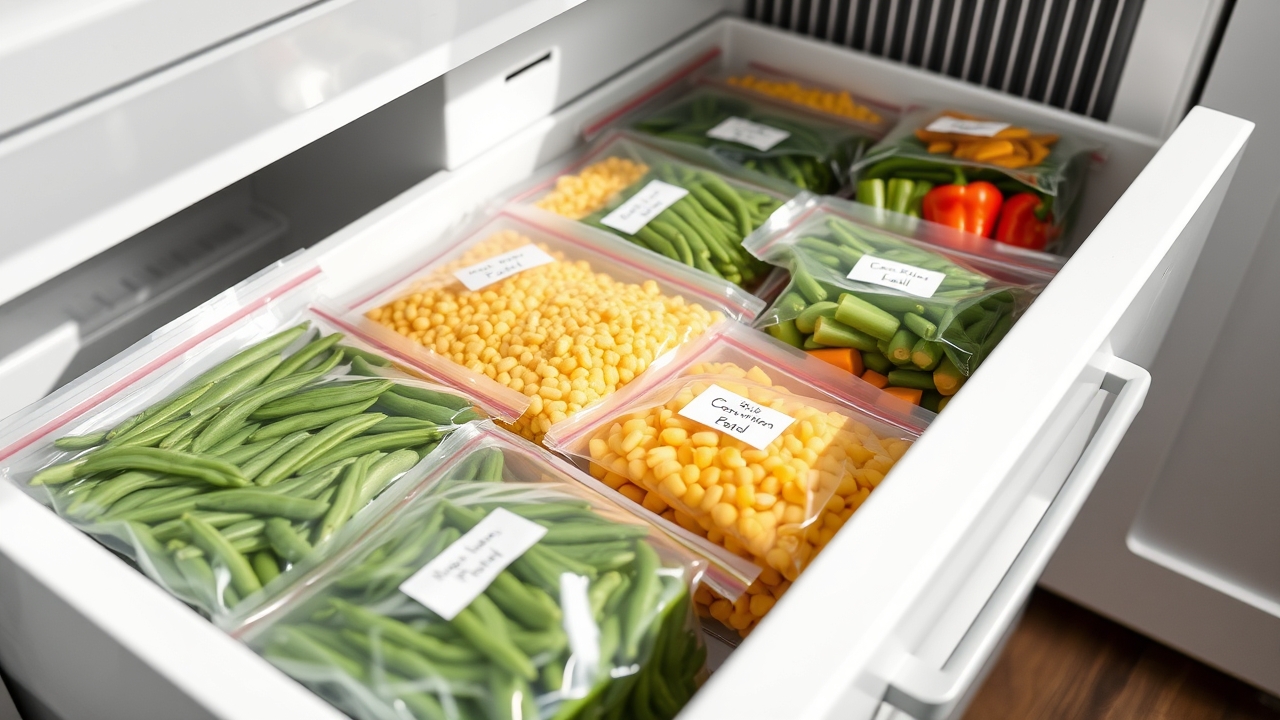
TL;DR — the four habits that decide everything
1) Blanch most vegetables — a short boiling-water dip then an ice bath stops the enzymes that destroy color, texture and nutrients in the freezer (times below; skipping this is the #1 mistake). 2) Dry, then tray-freeze: spread pieces on a sheet pan, freeze solid, then bag — no clumps, pour out what you need. 3) Squeeze the air out (air = freezer burn; a straw works if you don’t have a vacuum sealer). 4) Label contents + date and eat within 8–12 months at 0°F/-18°C. A handful of crops skip blanching entirely (peppers, onions, herbs), and a few should never meet your freezer raw (lettuce, cucumbers, whole tomatoes for slicing).
Buy it if
your harvest is outrunning your kitchen — freezing is the fastest, most forgiving way to bank it
Skip it if
freezing salad crops (lettuce, cucumber, radish) expecting them to come back crisp — cell walls burst, physics wins
Try instead
Freezer already full? That's what canning, drying, fermenting and the root cellar are for — see the five-method overview
Why blanching isn’t optional (for most crops)
Vegetables are full of active enzymes that keep “ripening” — softening, dulling, turning bitter — even at freezer temperatures. Blanching (30 seconds to 3 minutes in boiling water, then straight into ice water) switches those enzymes off, locking in color, texture and vitamins. Unblanched vegetables are edible but decline fast: gray beans, rubbery broccoli, off flavors within weeks.
The rhythm is easy once you’ve done it twice: big pot boiling, big bowl of ice water beside it, work in batches, drain thoroughly (wet vegetables = ice crystals = mush).
1-3 min
Typical blanching window — short dip, ice bath, dry well. The single habit that separates good freezer food from gray regret
The A-to-Z table (times are blanching in boiling water)
- Asparagus — 2–4 min by thickness. Freezes beautifully.
- Beans, green/wax — 3 min. The classic; blanching is non-negotiable here.
- Beets — cook fully first (roast/boil), then slice and freeze. Raw beets go grainy.
- Broccoli & cauliflower — 3 min florets. Salt-water soak first evicts hidden caterpillars.
- Cabbage — 90 sec wedges/shreds; destined for cooked dishes only. (Honestly better fermented.)
- Carrots — 2 min slices. Baby-cut whole: 5 min.
- Corn — 4 min on the cob, then cut kernels off. Summer in a bag.
- Greens (kale, chard, spinach, collards) — 2 min, squeeze into pucks. One puck = one soup/smoothie portion.
- Herbs — no blanch: chop into ice-cube trays, cover with olive oil, freeze. Basil especially (it blackens frozen dry). The woody crew — oregano, thyme, rosemary — is better dried than frozen.
- Onions — no blanch: dice raw, tray-freeze. Cooking use only, and your future self thanks you weekly.
- Peas — 90 sec. Arguably better than store-bought frozen.
- Peppers (sweet & hot) — no blanch: slice or dice raw, tray-freeze. The easiest crop in the freezer.
- Potatoes — parboil or fully cook first (mash, fries, hash); raw potatoes freeze grainy-sweet and weird.
- Summer squash/zucchini — shred raw, squeeze, bag in 2-cup portions (bread/fritters), or blanch slices 3 min for soups. Slices stay soft either way — plan for cooked dishes.
- Tomatoes — no blanch needed: freeze whole in bags; skins slip off under warm water when thawed. Sauce-bound only. (The full glut playbook is in the preserving guide.)
- Winter squash & pumpkin — cook fully, purée, freeze in 1-cup portions. Pie insurance.
Never freeze expecting crispness: lettuce and salad greens, cucumbers, radishes, whole raw tomatoes for slicing — high-water crops whose cell walls burst on freezing. It’s not technique; it’s physics.
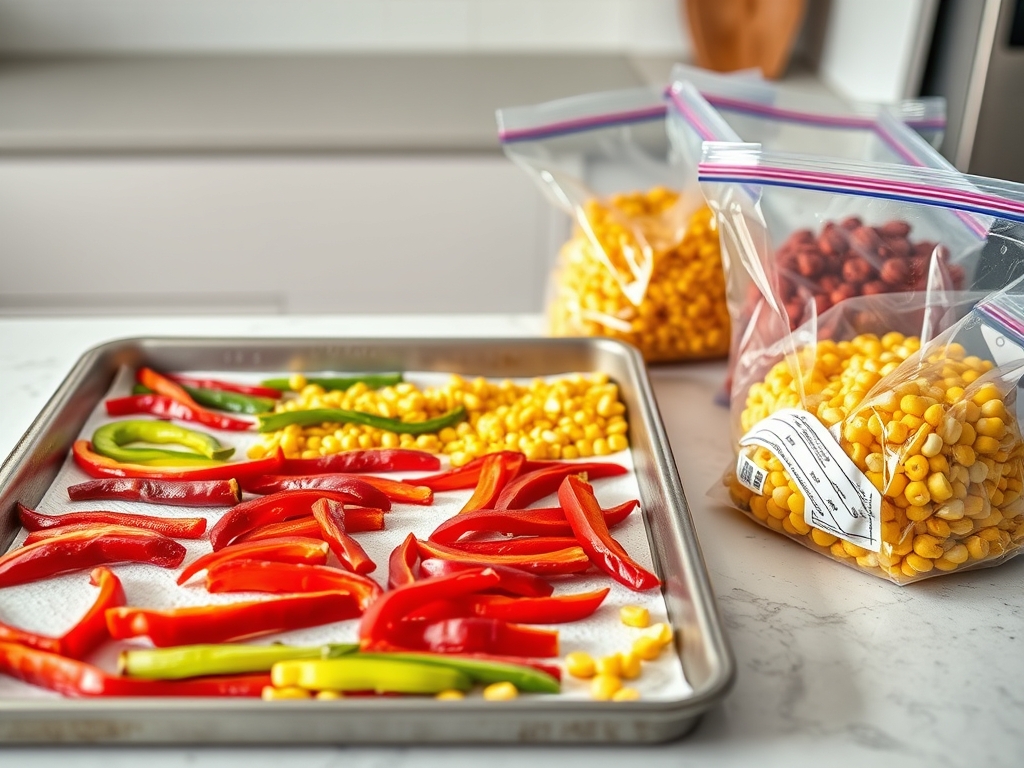
The tray-freeze trick (do this for everything)
Bag vegetables wet and warm and you get a monolith you’ll need a hammer for. Instead: after blanching and drying, spread pieces in one layer on a sheet pan, freeze 1–2 hours until solid, then pour into bags. Every piece stays separate — grab a handful of beans or three pepper strips without thawing a brick. It adds ten minutes and upgrades every future meal.
Air is the other enemy: press bags flat and squeeze air out (flat bags also stack like files and thaw fast), suck the last air out with a straw, or use a vacuum sealer if volume justifies one. Label everything — contents and month. The freezer archaeologist who finds “mystery green puck, undated” throws it away.
How long things really keep
At a steady 0°F / -18°C, most blanched vegetables hold quality 8–12 months — conveniently, until next harvest. Cooked purées and herb-oil cubes: ~6 months at best quality. These are quality windows, not safety cliffs — food frozen solid stays safe far longer, it just slowly gets boring. Freezer-burned patches (dry, pale, leathery) are harmless: trim and cook on.
Two practical upgrades: keep the freezer full (a full freezer holds temperature better — fill gaps with water bottles, which double as emergency ice), and keep a cheap freezer thermometer honest about that 0°F claim.
Quick wins vs. freezer regrets
What works
- Blanch + ice bath + DRY thoroughly — the holy trinity of freezer quality
- Tray-freeze everything before bagging (pourable > brick)
- Freeze in meal-size portions: 2-cup shredded zucchini, single soup pucks of greens
- Peppers, onions, herbs-in-oil, whole tomatoes = the no-blanch shortcuts
What doesn't
- Bagging unblanched green beans (gray rubber by October)
- Freezing lettuce, cucumbers or radishes and blaming the freezer
- Wet vegetables straight into bags (one solid ice brick)
- No labels — February you will not remember, and will not risk it
FAQ
Do I really have to blanch vegetables before freezing?
For most, yes. Blanching — a brief boiling-water dip followed by an ice bath — deactivates the enzymes that keep degrading color, texture, flavor and vitamins even in the freezer. Unblanched vegetables are safe but decline noticeably within weeks. The convenient exceptions: bell and hot peppers, onions, and herbs (freeze those in oil) can go in raw, and tomatoes can be frozen whole for future sauce.
How long can I freeze vegetables and still eat them?
At a steady 0°F (-18°C), properly blanched vegetables keep best quality for 8–12 months — essentially until the next harvest. They remain safe beyond that; quality (texture, flavor) is what fades. Cooked purées and herb-oil cubes are best within about 6 months. Freezer burn spots are harmless — trim them off. The real spoilage risk is thawing and refreezing, so portion bags so you only open what you’ll use.
Why did my frozen zucchini turn to mush?
Water content. Zucchini is ~95% water; freezing bursts its cell walls, so thawed slices will always be soft — that’s physics, not a mistake. The fix is matching the format to the future meal: shred it raw, squeeze out the liquid, and freeze in 2-cup portions for bread, fritters and soups where softness doesn’t matter. The same logic applies to all high-water crops — cucumbers and lettuce simply have no good frozen form.
What’s the best way to freeze tomatoes?
Whole and raw — the lazy method is genuinely the best one. Wash, core if you like, and put whole tomatoes straight into freezer bags. When you need sauce, run the frozen tomato under warm water and the skin slips right off, no blanching kettle required. Frozen tomatoes are for cooking only (sauces, soups, stews) — thawed, they’re soft — but for the August glut it’s five minutes of work per bag.
Is it worth buying a vacuum sealer?
If you preserve serious volume every year, yes — vacuum-sealed vegetables resist freezer burn dramatically longer and stack neatly. For a casual harvest, the free version gets you 80% there: press bags flat, squeeze out air (a straw to suck the last bit works), tray-freeze so pieces don’t trap air pockets, and eat within the year. Upgrade when your freezer, not your curiosity, tells you to.
Glivox publishes practical, honest guides for homesteaders and backyard growers — the freezer is a time machine, but only for food you treated right on the way in.
Keep reading
guides
How to Preserve Your Vegetable Harvest (2026 Beginner's Guide)
Drowning in tomatoes and zucchini? A beginner's guide to preserving your vegetable harvest — freezing, canning, drying, root storage and fermenting, and which method suits each crop.
guides
Canning Safety 101: The Rules That Actually Keep Home-Canned Food Safe
Water bath vs pressure canning, the acid rule, botulism facts without the panic, and the 7 non-negotiable rules — a beginner's guide to canning food safely at home.
guides
Fermentation for Beginners: Sauerkraut, Pickles, and the Salt Math That Keeps It Safe
Turn cabbage and cucumbers into tangy, probiotic food with salt and time. The 2% rule, the submersion rule, and what's normal vs what to toss — honestly explained.