guides
Fermentation for Beginners: Sauerkraut, Pickles, and the Salt Math That Keeps It Safe
Turn cabbage and cucumbers into tangy, probiotic food with salt and time. The 2% rule, the submersion rule, and what's normal vs what to toss — honestly explained.
Honest disclosure: Some links below are affiliate links — Glivox earns a commission if you purchase, at no extra cost to you. We pay full price for products we review and rankings are never paid. Read the full policy.
Of the five ways to preserve a harvest, fermentation is the one that sounds the most like a science experiment and is actually the most forgiving. No canner, no electricity, no special equipment — cabbage, salt, and a jar made sauerkraut for centuries before refrigerators existed (the full first-jar kraut walkthrough takes one cabbage and 30 minutes). And unlike canning, where the safety rules are strict and non-negotiable, fermentation has just two: enough salt, and keep everything under the brine.
August is the perfect month to learn — cucumbers are flooding in, cabbage is cheap, and every counter has room for one jar. Here’s the beginner’s honest guide.
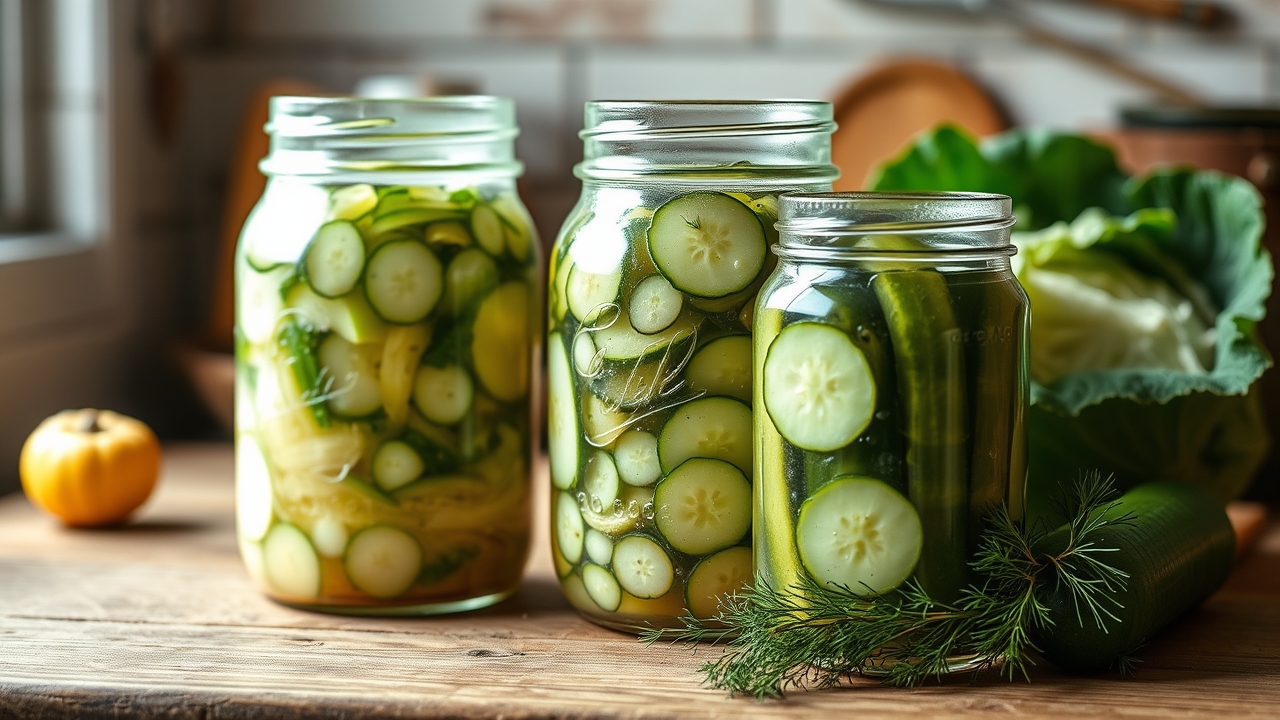
TL;DR — fermentation in one paragraph
Lactic acid bacteria (already on your vegetables) eat sugars and produce acid, which preserves the food and creates the tang. Your whole job is rigging the contest in their favor: salt at about 2% by weight (bad microbes hate it, good ones tolerate it) and everything submerged under liquid (oxygen is the enemy — mold needs air). Keep the jar at room temperature out of direct sun, taste after a few days, and refrigerate when it’s sour enough for you. White cloudy film = usually harmless kahm yeast, skim it. Fuzzy colored mold = something broke the rules; toss that batch and re-read the two rules.
Buy it if
you have surplus cabbage or cucumbers and a jar — fermentation is the cheapest, safest entry into food preservation
Skip it if
fermenting low-salt 'experiments' from random internet recipes — the 2% salt and submersion rules ARE the safety system
Try instead
Want shelf-stable instead of fridge-stable? That's vinegar pickling + water-bath canning — a different craft (see Canning Safety 101)
Why fermentation is safer than it sounds
The fear is understandable — you’re leaving food on the counter for days, on purpose. But properly salted, submerged vegetable ferments have a remarkable safety record, and the mechanism is simple chemistry: as bacteria produce lactic acid, the pH drops fast into territory where dangerous organisms — including the botulism bacteria that make canning rules so strict — can’t grow. Salt keeps the wrong crowd out in the early days; acid takes over as the bouncer after that. Follow the two rules and the process defends itself.
2%
Salt by weight — the ratio that lets good bacteria win. A kitchen scale makes it foolproof
Project 1: Sauerkraut (the perfect first ferment)
You need: a cabbage, non-iodized salt (kosher/sea/pickling), a clean wide-mouth jar, something to weigh the cabbage down (a small jar, a boiled rock, or a zip bag of brine).
- Shred the cabbage finely, reserving one whole outer leaf.
- Weigh it, then add 2% salt — e.g., 1,000 g cabbage → 20 g salt. (No scale? ~1 tablespoon per medium head gets you close, but a $10 scale removes all guesswork.)
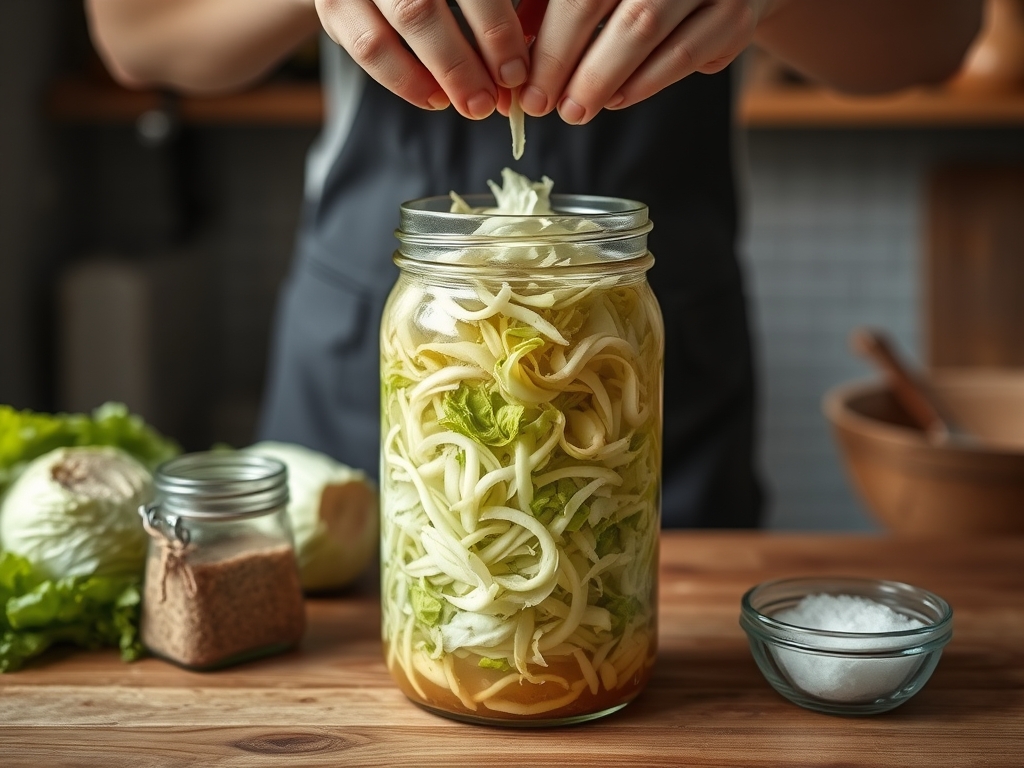
- Squeeze and massage for 5–10 minutes until the cabbage weeps enough brine to look wet and glossy.
- Pack into the jar hard, pressing out air pockets, until brine rises over the cabbage. Cap with the reserved leaf, add your weight, and make sure everything is under liquid.
- Lid loosely (gas must escape — or “burp” a tight lid daily), park at room temperature out of sunlight.
- Taste at day 5. Sour enough? Fridge. Want more? Keep going — 1 to 4 weeks is all normal; cooler rooms ferment slower and often tastier.
Bubbles, cloudy brine, and a sour smell are success. That’s the whole craft.
Project 2: Real sour pickles (what cucumber gluts are for)
Fermented “half-sours” are the deli classic — different animal from vinegar pickles:
- Make a brine: ~3.5% salt in water (35 g per liter) — cucumbers ferment in brine rather than their own juice.
- Use the freshest, smallest cucumbers you have (bitter stressed ones stay bitter). Trim the blossom end — it carries enzymes that soften pickles.
- Add garlic and dill, plus something tannic to keep them crisp: a grape leaf, oak leaf, horseradish leaf, or a pinch of black tea.
- Submerge everything under brine (weight on top), lid loose, room temperature.
- Taste at day 3–4 — “half-sour” comes fast; full sour in 1–2 weeks. Refrigerate when happy.
Honest note: home-fermented pickles are sometimes less crunchy than store ones — the tannin trick and small fresh cucumbers are most of the fix; softening comes with warm rooms and blossom ends.
What’s normal vs. what’s a problem
- Normal: bubbles and fizzing, cloudy brine, white sediment, sour/funky smell, brine pushing out of a tight jar (that’s why lids stay loose).
- Skim it: a flat, white, filmy layer on the surface = kahm yeast — harmless, common, slightly annoying. Skim what you can, make sure everything’s submerged, carry on.
- Toss it: fuzzy mold in colors (blue, green, black, pink), a truly rotten (not sour) stench, or slimy vegetables. This almost always traces to too little salt or something floating above the brine. Toss, wash, retry — a lost jar of cabbage is tuition, not tragedy.
Quick wins vs. fermentation mistakes
What works
- Buy a $10 kitchen scale — 2% by weight ends all salt guesswork
- Keep everything under the brine: a zip bag of brine makes a perfect cheap weight
- Taste every few days — "done" is your preference, not a date
- Trim cucumber blossom ends + add a tannic leaf for crunch
What doesn't
- Iodized table salt (can inhibit the ferment and discolor it)
- Winging the salt "by feel" on your first batches
- Tight lids never burped (pressure builds — jars can crack)
- Panicking at kahm yeast and tossing a healthy ferment
FAQ
How much salt do I use for fermenting vegetables?
The standard is about 2% salt by weight for self-brining ferments like sauerkraut (weigh the shredded vegetables, multiply by 0.02), and roughly 3.5% brine (35 g salt per liter of water) for whole vegetables like cucumbers that ferment submerged in liquid. Use non-iodized salt — kosher, sea, or pickling. A cheap kitchen scale makes both foolproof; too little salt is the root cause of most failed or unsafe ferments.
Is it safe to ferment vegetables at home?
Yes — properly done vegetable fermentation is one of the safest preservation methods, with an excellent historical track record. The salt suppresses harmful microbes early, then the lactic acid the good bacteria produce drops the pH into a range where dangerous organisms, including botulism bacteria, cannot grow. The two safety rules are simple: correct salt (about 2%) and everything submerged under brine. Fuzzy colored mold or rotten smells mean a rule was broken — discard that batch.
How do I know when my sauerkraut is done?
When it tastes right to you. Fermentation is active when you see bubbles and cloudy brine within the first days; from day 5 onward, taste a bit — mild and salty early, progressively more sour and complex over 1–4 weeks. Move the jar to the refrigerator when the flavor suits you; the cold nearly halts fermentation and the kraut keeps for months. Cooler rooms ferment slower, warm rooms faster (and softer) — there is no single correct day.
What is the white film on my ferment?
A flat, white, filmy or powdery layer on the surface is almost always kahm yeast — a harmless wild yeast that shows up when some surface is exposed to air. Skim off what you can, push everything back under the brine, and continue; the ferment underneath is fine. It’s different from mold, which is fuzzy and colored (blue, green, black, pink) — mold means the batch should be discarded and the salt/submersion rules revisited.
Why are my fermented pickles soft?
The usual culprits: cucumbers that were old or large when they went in, blossom ends left untrimmed (they carry softening enzymes), a room that ran warm, or a long full-sour ferment. For crunch: use the smallest, freshest cucumbers you can, trim blossom ends, add a tannin source (grape, oak or horseradish leaf, or a pinch of black tea), ferment somewhere cool, and pull them at the half-sour stage. Some texture trade-off versus store pickles is normal.
Glivox publishes practical, honest guides for homesteaders and backyard growers — the oldest food skills, minus the mystique.
Keep reading
guides
How to Preserve Your Vegetable Harvest (2026 Beginner's Guide)
Drowning in tomatoes and zucchini? A beginner's guide to preserving your vegetable harvest — freezing, canning, drying, root storage and fermenting, and which method suits each crop.
guides
Squash & Cucumber Problems: 6 Summer Killers and How to Fight Back
Vines wilting overnight, white powder on leaves, flowers but no fruit, bitter cucumbers — what's killing your squash and cucumbers in late summer, and what actually works.
guides
Canning Safety 101: The Rules That Actually Keep Home-Canned Food Safe
Water bath vs pressure canning, the acid rule, botulism facts without the panic, and the 7 non-negotiable rules — a beginner's guide to canning food safely at home.