guides
Canning Safety 101: The Rules That Actually Keep Home-Canned Food Safe
Water bath vs pressure canning, the acid rule, botulism facts without the panic, and the 7 non-negotiable rules — a beginner's guide to canning food safely at home.
Honest disclosure: Some links below are affiliate links — Glivox earns a commission if you purchase, at no extra cost to you. We pay full price for products we review and rankings are never paid. Read the full policy.
August is coming, the harvest is piling up, and canning season is about to start. Most canning content online is either grandma-folklore (“we’ve always done it this way”) or so terrifying about botulism that beginners give up before their first jar. This guide is neither. Canning is a safe, learnable skill practiced by millions — as long as you follow a short list of non-negotiable rules. Here they are, with the why behind each one, so the rules make sense instead of feeling arbitrary.
This is the companion deep-dive to our harvest preservation overview — read that first if you’re choosing between canning, freezing, and drying.
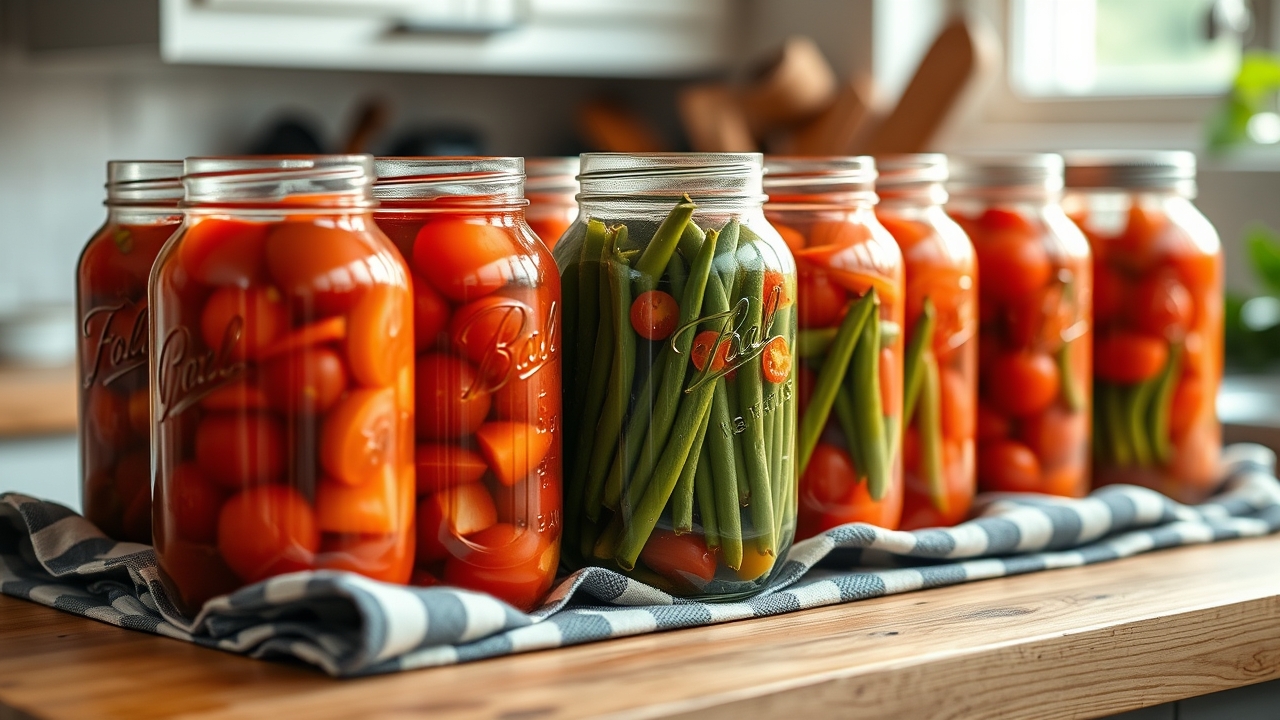
TL;DR — the whole safety story in one paragraph
Everything comes down to acidity. High-acid foods (most fruits, jams, pickles, and tomatoes with added acid) can be processed in a simple boiling water bath, because botulism spores can’t grow in acid. Low-acid foods (green beans, corn, carrots, potatoes, meats, soups) must be pressure-canned — only a pressure canner reaches the 240°F/116°C needed to destroy those spores. Use current, tested recipes (USDA, Ball, or your extension service), don’t invent or “adjust” them, adjust processing time for your altitude, and check every seal. Follow that paragraph and you’ve eliminated essentially all of the real risk.
Buy it if
you have a harvest to keep and you're willing to follow tested recipes exactly — canning is safe, satisfying, and shelf-stable for a year+
Skip it if
improvising: no oven canning, no dishwasher canning, no untested family recipes for low-acid foods — the rules exist because the shortcuts fail
Try instead
Not ready for pressure canning? Stick to high-acid water-bath projects (jam, pickles, acidified tomatoes) or just freeze the low-acid stuff this year
Why acidity is the whole game
The organism everyone fears — Clostridium botulinum — has one weakness that matters to canners: it cannot grow in acidic environments (below pH 4.6). That single fact splits all food into two worlds:
- High-acid world (pH below 4.6): fruits, jams and jellies, properly made pickles, and tomatoes with added lemon juice or citric acid. Boiling water (212°F/100°C) is enough, because you only need to kill molds and yeasts — acid handles the botulism risk for you.
- Low-acid world (pH above 4.6): almost all vegetables, meats, and broths. Botulism spores survive boiling all day long. Only pressure canning reaches the temperature that destroys them.
That’s it. That’s the rule that everything else hangs on. Tomatoes get special mention because modern varieties sit right at the borderline — which is why every tested tomato recipe says add acid (2 tbsp bottled lemon juice or ½ tsp citric acid per quart).
pH 4.6
The dividing line — below it, water bath works; above it, pressure canning is mandatory
The 7 non-negotiable rules
- Match the method to the food. High-acid → water bath. Low-acid → pressure canner. No exceptions, no “but my grandmother…” — many older practices predate what we now know.
- Use current, tested recipes only — USDA Complete Guide, Ball Blue Book, or the National Center for Home Food Preservation (nchfp.uga.edu, free). “Tested” means a lab verified heat penetrates that exact jar size, density, and time. Changing ingredients or jar sizes silently changes the math.
- Adjust for altitude. Water boils cooler up high, so processing times/pressures rise with elevation. Every tested recipe has an altitude table — find your elevation once and note it.
- Don’t thicken or pack tighter than the recipe says. Flour, cornstarch, extra-dense packing — all slow heat penetration to the jar’s center. That’s how “I followed the recipe, mostly” fails invisibly.
- Leave the specified headspace and remove air bubbles — too little or too much headspace can cause seal failures.
- Check seals after 12–24 hours (lid curved down, doesn’t flex or pop). Unsealed jar? Refrigerate and eat it — no drama. Store sealed jars without the screw rings so a failed seal is obvious.
- When in doubt, throw it out. Bulging lid, spurting liquid, off smell, mold — trash it (where nothing can get at it), don’t taste-test. And for extra insurance many canners boil low-acid canned food 10 minutes before serving — heat destroys the toxin itself.
Water bath canning — your starting point
The gear is minimal: a big pot with a rack (a stockpot with a folded towel on the bottom works), jars, new lids, a jar lifter. The process: hot food into hot jars, correct headspace, wipe rims, finger-tight rings, fully submerged in boiling water for the tested time, then cool undisturbed 12–24 hours and check seals.
Good first projects (all high-acid, all forgiving): berry jam, dill pickles, salsa from a tested recipe, and acidified crushed tomatoes. One afternoon, real shelf-stable food, zero specialized equipment.
Myth worth killing: you don’t need to pre-sterilize jars if the processing time is 10+ minutes (they sterilize in the pot) — clean and hot is what matters. And never “oven can” or “dishwasher can” — dry air and dishwashers don’t transfer heat into food the way boiling water does; those methods are how confident people fail.
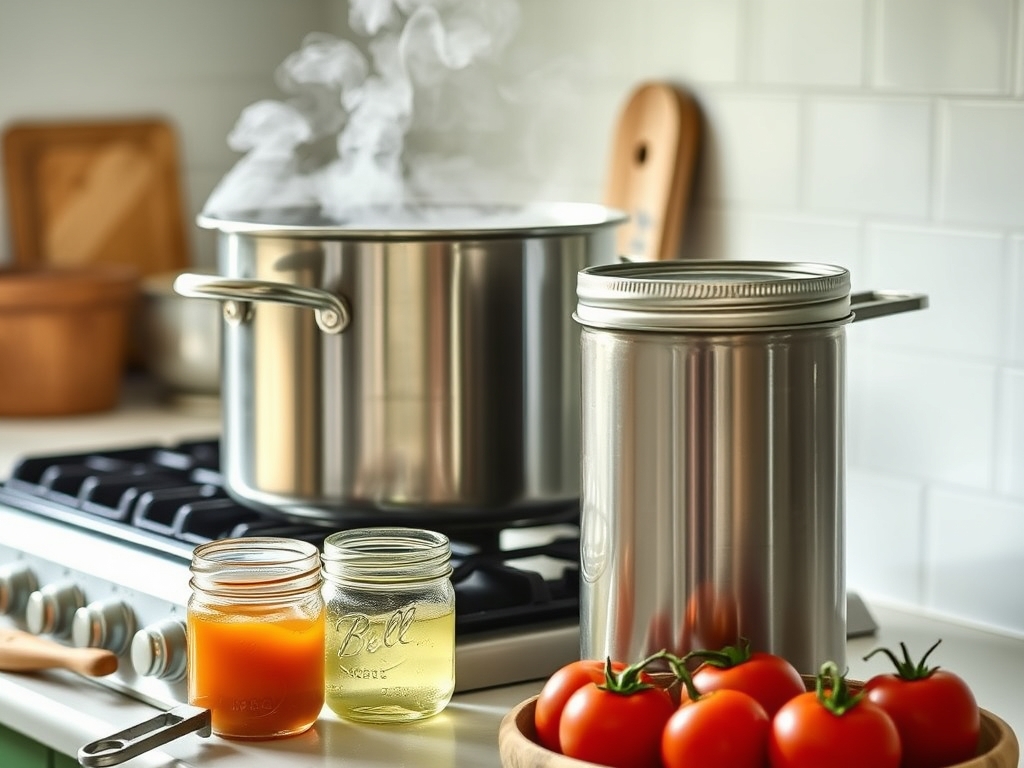
Pressure canning — for when you’re ready for vegetables
A pressure canner (not a pressure cooker — canners are bigger and gauged) traps steam to reach 240°F/116°C, the temperature that destroys botulism spores. That unlocks green beans, corn, carrots, potatoes, soups, and stock — the low-acid world.
Modern canners are boring in the best way: locking lids, overpressure valves, gauges. The workflow is the same as water bath plus managing pressure for the tested time. If you preserve a lot of vegetables, it pays for itself in one good season — but there is zero shame in spending your first year on water-bath projects and freezing the low-acid harvest instead.
Quick wins vs. dangerous shortcuts
What works
- Start with jam or pickles — high-acid, forgiving, minimal gear
- Bookmark nchfp.uga.edu — free tested recipes for almost everything
- Write your altitude on a sticky note inside your recipe book
- Store jars without rings so failed seals announce themselves
What doesn't
- Water-bathing green beans or corn because a relative always did (this is THE classic botulism source)
- Oven canning, dishwasher canning, or open-kettle canning — none reach safe temperatures
- Old paraffin-wax seals and inverted-jar tricks — obsolete for good reasons
- Tasting a suspect jar "just to check" — the toxin is potent in tiny amounts
FAQ
What foods can I water bath can safely?
High-acid foods only: most fruits, jams and jellies, fruit butters, properly brined or vinegar pickles, relishes, and tomatoes with added acid (2 tablespoons bottled lemon juice or ½ teaspoon citric acid per quart). The acid prevents botulism growth, so boiling water temperatures are enough. All plain vegetables, meats, and broths are low-acid and must be pressure-canned instead — no exceptions.
Do I really need a pressure canner for green beans?
Yes — this is the one rule most worth internalizing. Green beans, corn, carrots and other plain vegetables are low-acid, and botulism spores survive boiling water no matter how long you process. Only a pressure canner reaches the 240°F/116°C that destroys them. Improperly home-canned low-acid vegetables are the classic source of foodborne botulism. If you don’t have a pressure canner, freeze or pickle those vegetables instead.
How do I know if a jar of home-canned food is bad?
Trust the obvious signs: a bulging or unsealed lid, liquid spurting when opened, rising bubbles in the jar, mold, cloudiness that wasn’t there, or any off smell. Discard suspect jars where people and animals can’t reach them, and never taste to check — botulinum toxin is dangerous in tiny amounts. Also verify seals 12–24 hours after canning: a good lid is curved down and doesn’t flex when pressed.
Is canning tomatoes without lemon juice safe?
Not reliably. Modern tomato varieties often sit right at the pH 4.6 borderline, and ripeness pushes them less acidic — that’s why every current tested recipe requires adding bottled lemon juice or citric acid for both water-bath and pressure methods. It’s two tablespoons per quart, it doesn’t noticeably change flavor, and it moves tomatoes safely into high-acid territory. Old recipes that skip it reflect older, more acidic tomato varieties.
Can I use my grandmother’s canning recipes?
For high-acid things like jam, mostly yes — sugar and fruit are forgiving. For anything low-acid (vegetables, meats, soups) or borderline (tomatoes, salsa), use a current tested recipe instead, even if the family version “never hurt anyone.” Recipes tested by the USDA and extension services account for heat penetration, density, jar size and modern ingredients in ways kitchen tradition can’t. Keep the family flavor by tweaking only the seasonings a tested recipe marks as flexible.
Glivox publishes practical, honest guides for homesteaders and backyard growers — the rules that matter, the myths that don’t, and the difference clearly marked.
Keep reading
guides
How to Start a Self-Sufficient Vegetable Garden (2026 Beginner's Guide)
A step-by-step guide to starting a backyard vegetable garden that actually feeds you — site, soil, what to plant first, and mistakes to avoid.
guides
How to Preserve Your Vegetable Harvest (2026 Beginner's Guide)
Drowning in tomatoes and zucchini? A beginner's guide to preserving your vegetable harvest — freezing, canning, drying, root storage and fermenting, and which method suits each crop.
guides
What to Plant in July for a Fall Harvest (2026 Guide)
It's not too late — July is prime time for a second planting. What to sow now for a fall harvest, the frost-date math, and how to get seeds up in hot soil.