guides
Drying Herbs and Peppers at Home: Air, Oven, or Dehydrator (Honest Trade-offs)
The oldest preservation method is still the easiest — if you match it to the right crops. Hang-drying herbs, pepper ristras, oven and dehydrator honesty, and storage.
Honest disclosure: Some links below are affiliate links — Glivox earns a commission if you purchase, at no extra cost to you. We pay full price for products we review and rankings are never paid. Read the full policy.
Before freezers, before canning kettles, before anyone measured a brine percentage, people preserved food by hanging it somewhere dry. Drying is the oldest method in the preservation toolbox and still the most beginner-proof — no equipment required, no safety rules to memorize, and the failure mode is “it went a bit dull,” not “we lost the batch.”
It’s also the best method — not just an option — for the two crops flooding August gardens: herbs and peppers. Here’s the honest guide to air, oven, and dehydrator drying, and which is worth your counter space.
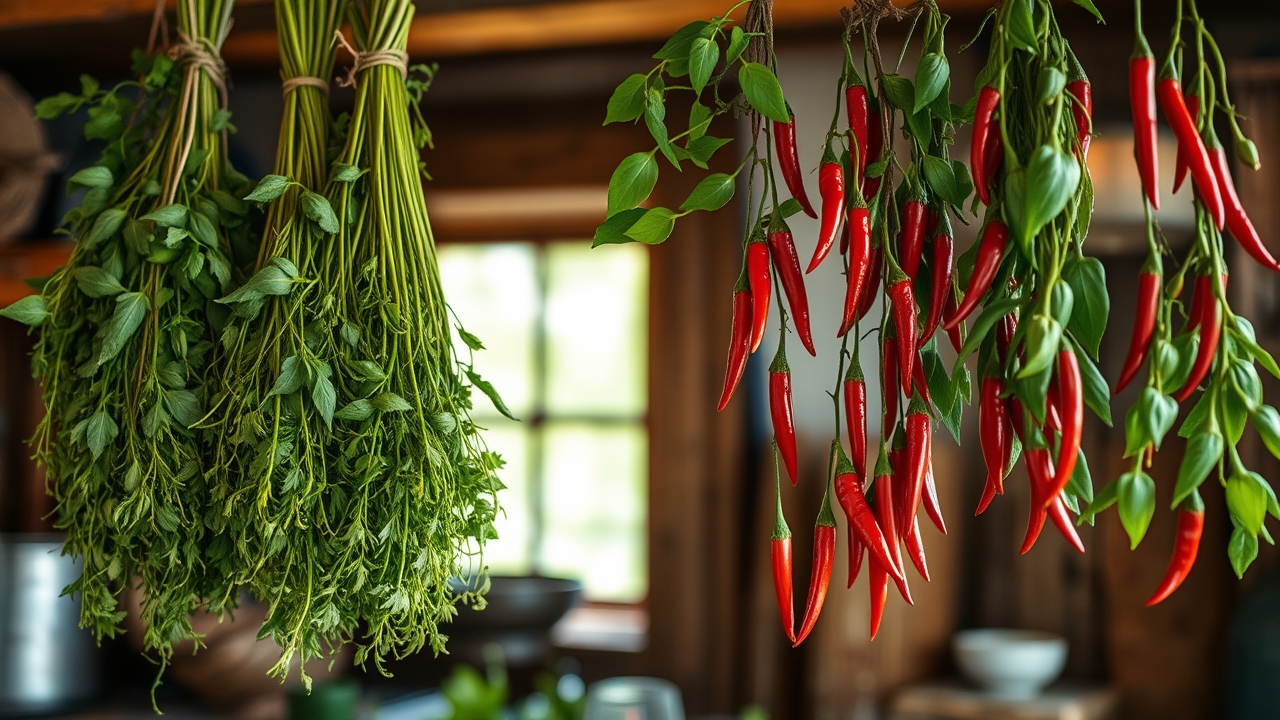
TL;DR — drying in one paragraph
Herbs: tie small bundles, hang upside-down somewhere warm, dry, and out of direct sun, wait 1–3 weeks, strip crumbly-dry leaves into jars — that’s the entire craft, and for oregano, thyme, rosemary, sage and mint it beats every other preservation method. (Basil is the exception: it dries dull — freeze it in oil instead.) Peppers: thin-walled chilies (cayenne, Thai, de árbol) air-dry beautifully on a string as a ristra; thick-walled peppers (jalapeño, bell) rot before they dry in air and need a dehydrator or low oven. Everything must be cracker-dry before jars — any bend or squish left = mold later. Store whole, crush when using, away from light.
Buy it if
your windowsill herbs and chili plants are producing faster than dinner uses them — drying is the zero-equipment answer
Skip it if
air-drying thick fleshy things (jalapeños, tomatoes, zucchini) in humid climates — that's a mold farm; those need heat assistance
Try instead
Humid climate ruining air-drying? A $40-60 basic dehydrator or your oven at its lowest setting does the same job on rainy weeks
Herbs: the hang-and-forget method
- Harvest mid-morning — after dew dries, before heat wilts (oil content peaks then; flavor = oils).
- Small bundles — 5–8 stems, tied with string or a rubber band (stems shrink as they dry; rubber bands keep gripping).
- Hang upside-down somewhere warm, dry, ventilated, and out of direct sun — sun bleaches flavor and color. A closet, pantry corner, or covered porch beats the pretty sunny window.
- Wait 1–3 weeks until leaves crumble between fingers — crumble, not bend.
- Strip and store whole in airtight jars, dark cupboard. Crush at cooking time — whole leaves hold flavor several times longer than pre-crushed.
The paper-bag upgrade for dusty rooms: hang bundles inside a paper bag with vent holes punched — catches falling leaves, blocks dust and light.
Who dries brilliantly: oregano (better dried than fresh, genuinely), thyme, rosemary, sage, mint, bay, marjoram, dill seed heads. Who doesn’t: basil, chives, parsley and cilantro lose most of their character dried — freeze those (the herb-in-oil cube trick) or eat fresh.
1-3 weeks
Air-drying time for herb bundles — the crumble test decides doneness, not the calendar
Peppers: the wall-thickness rule
One rule sorts every pepper into its correct method: thin walls air-dry; thick walls need help.
Thin-walled (air-dry champions): cayenne, Thai bird, de árbol, tabasco-type, most small hot chilies. Thread them on strong thread through the stem caps (the classic ristra), hang in a dry airy spot, and in 3–4 weeks you have decor that’s also dinner for a year. Fully dry pods rattle their seeds.
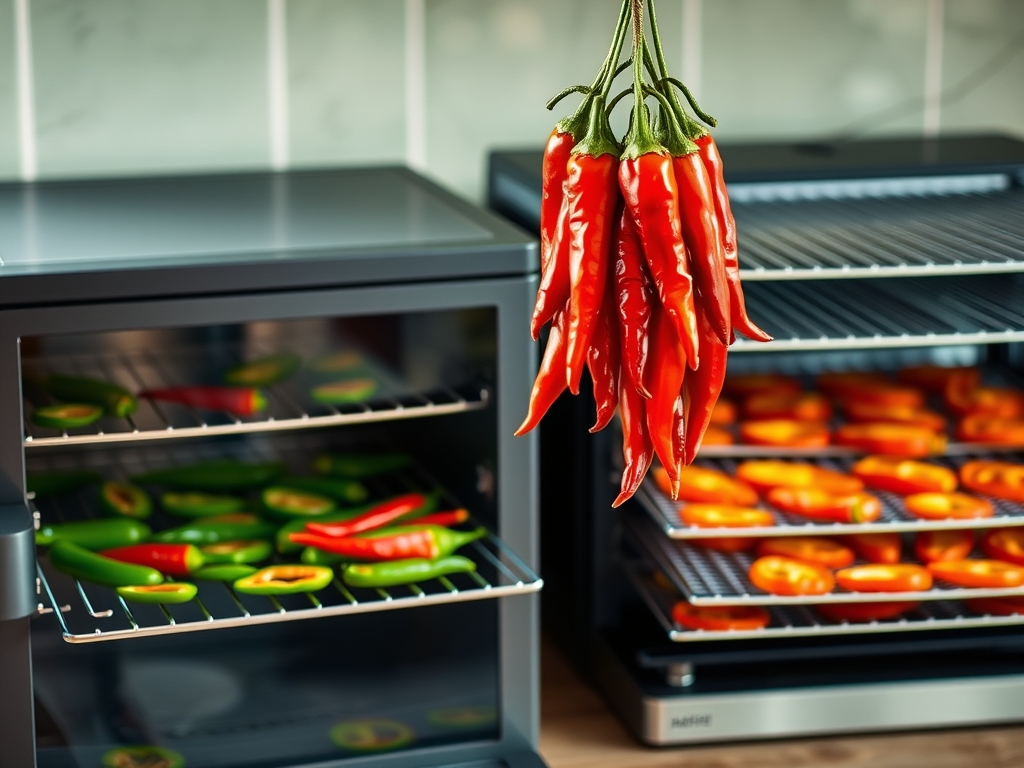
Thick-walled (dehydrator/oven only): jalapeño, serrano (borderline), poblano, and every sweet bell. Their flesh holds too much water — air-dried, the inside molds before the outside finishes. Slice or halve, then dehydrate at ~52–60°C / 125–140°F until leathery-to-brittle (8–12+ hours), or use the oven method below.
The oven method (no dehydrator needed): lowest setting (ideally ≤75°C/170°F), door propped open a crack with a wooden spoon (moisture must escape — this is the step everyone skips), pieces on a rack over a tray, check hourly-ish. It works; it just occupies the oven for an afternoon and costs more energy than a dehydrator doing the same job.
Glove honesty: handling quantities of hot peppers bare-handed is a mistake you make exactly once. Gloves, and don’t touch your face — capsaicin outlasts hand-washing.
Is a dehydrator worth buying?
The honest tiering: air costs nothing and handles all herbs plus thin chilies — most households need nothing more. A basic $40–60 dehydrator earns its shelf space when you (a) live somewhere humid, (b) grow thick-walled peppers in quantity, or (c) want to expand into dried tomatoes, apples, and jerky territory. The $200+ stainless towers are for people drying weekly, not deciding whether to start. And your oven already is a dehydrator — just an inefficient one that blocks dinner. There’s also the homestead classic: build a solar dehydrator for $30–70 and let the sun run the whole operation free all summer.
Sun-drying, the romantic option, honestly requires what most readers don’t have: days of 35°C+ heat with low humidity. In the right climate it’s free and traditional; elsewhere it’s a fruit-fly banquet.
Storage: where dried food is won or lost
- The cracker test before jarring: herbs crumble to dust-and-flakes; peppers snap or rattle. Anything flexible goes back to dry more — one under-dried piece molds the whole jar.
- Airtight glass, dark cupboard — light and air are flavor thieves. Whole pieces keep 1–3 years at useful strength; pre-crushed fades in months.
- The condensation check: first week after jarring, glance for fog inside the glass. Fog = moisture = re-dry everything now, mold later otherwise.
- Label with name and year — dried cayenne and dried de árbol look identical at 6 p.m. on a Tuesday.
Quick wins vs. drying mistakes
What works
- Hang herb bundles in the dark closet, not the pretty sunny window
- Sort peppers by wall thickness — thin = string, thick = dehydrator/oven
- Store everything WHOLE, crush at the pot — flavor lasts years, not months
- Rubber bands for bundles (stems shrink; string bundles drop to the floor)
What doesn't
- Air-drying jalapeños or bells (inside molds before outside dries)
- Oven drying with the door fully closed (steam just re-wets everything)
- Jarring anything that still bends (one damp piece = one moldy jar)
- Drying basil and wondering why it tastes like lawn (freeze it instead)
FAQ
How do you dry fresh herbs at home?
Tie small bundles of 5–8 stems with a rubber band, hang them upside-down somewhere warm, dry, ventilated and out of direct sunlight (a pantry or closet beats a sunny window — sun bleaches flavor), and wait one to three weeks until leaves crumble between your fingers. Strip the whole leaves into airtight jars, store dark, and crush only when cooking. Best candidates: oregano, thyme, rosemary, sage, mint. Skip drying basil, chives and cilantro — they lose their character; freeze those instead.
Which peppers can I air-dry on a string?
Thin-walled hot peppers: cayenne, Thai bird, de árbol, tabasco types and most small chilies — thread them through the stem caps into a ristra and hang in dry moving air for 3–4 weeks until the pods rattle. Thick-walled peppers (jalapeños, serranos, poblanos, all bells) hold too much moisture and typically mold inside before air can dry them — slice those and use a dehydrator or a low oven with the door cracked open instead.
Can I dry herbs and peppers in the oven?
Yes — set the lowest temperature (ideally at or under 75°C/170°F), prop the door open a crack so moisture escapes (the essential step), and spread material on a rack over a tray. Herbs finish in a few hours; sliced peppers take longer, often most of an afternoon. It works exactly like a dehydrator, just less efficiently and while occupying your oven. If you find yourself doing it monthly, a basic $40–60 dehydrator pays for itself in convenience.
How do I know when dried food is dry enough to store?
Use the texture tests, not the calendar: herbs should crumble into flakes — never bend — and peppers should snap or audibly rattle their seeds. Anything flexible or leathery (except intentionally leathery dehydrated slices heading for the fridge) needs more time, because a single under-dried piece can mold an entire sealed jar. After jarring, check the glass for interior fog during the first week — condensation means re-dry immediately.
How long do dried herbs and peppers last?
Stored whole in airtight jars in a dark cupboard: dried herbs hold useful flavor 1–3 years (they stay safe indefinitely; potency is what fades), and whole dried chilies similar or longer. Pre-crushed or ground versions fade several times faster — which is why the rule is store whole, crush at the pot. If a jar’s contents have gone scentless when crushed, they’re seasoning-dust; compost them and thank the garden for next year’s batch.
Glivox publishes practical, honest guides for homesteaders and backyard growers — the oldest methods survived for a reason.
Keep reading
guides
How to Preserve Your Vegetable Harvest (2026 Beginner's Guide)
Drowning in tomatoes and zucchini? A beginner's guide to preserving your vegetable harvest — freezing, canning, drying, root storage and fermenting, and which method suits each crop.
guides
Fermentation for Beginners: Sauerkraut, Pickles, and the Salt Math That Keeps It Safe
Turn cabbage and cucumbers into tangy, probiotic food with salt and time. The 2% rule, the submersion rule, and what's normal vs what to toss — honestly explained.
guides
Freezing Vegetables A to Z: What to Blanch, What to Skip, What Not to Bother
The freezer is the easiest preservation tool you own — if you blanch right. Times for every common vegetable, the tray-freeze trick, and the crops that turn to mush.