guides
Green Tomatoes: The Frost-Night Triage That Saves Half Your Harvest
Frost coming and the vine still loaded? The glossy-vs-matte sort, why windowsills are the wrong ripening spot, the speed dial trick, and what to cook with the rest.
Honest disclosure: Some links below are affiliate links — Glivox earns a commission if you purchase, at no extra cost to you. We pay full price for products we review and rankings are never paid. Read the full policy.
Every tomato season ends the same way: a frost warning, a loaded vine, and a gardener standing in the dusk doing math. A mature tomato plant carries a third or more of its total harvest as green fruit when the first freeze arrives — which means the frost-night decision isn’t whether to save them, it’s which ones and how. Get the sort right and you’ll eat vine-grown tomatoes into November. Get it wrong and you’ll compost a crate of fruit that was never going to ripen anyway.
This is the triage, in the order you’ll actually do it: sort, ripen, cook, and — for the borderline cases — the whole-plant trick that skips the sorting entirely.
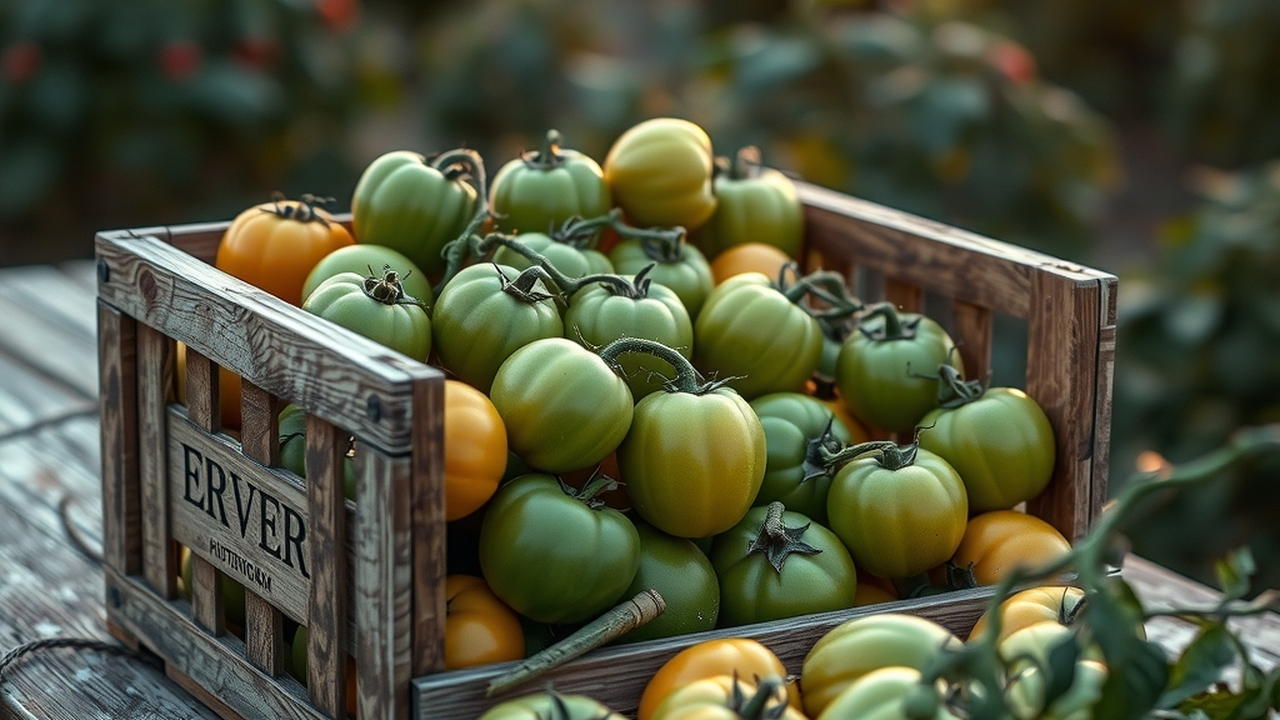
Step 1: the glossy-vs-matte sort (only half of them can ripen)
Here’s the fact the “just ripen them indoors!” advice skips: a green tomato can only ripen off the vine if it reached “mature green” before picking. The plant loads each fruit with everything ripening needs — then ripening runs on the fruit’s own internal chemistry, no vine required. But an immature fruit never got the full delivery, and no windowsill, bag, or prayer will finish it.
You can tell the two apart in your hand:
- Will ripen (mature green): full-sized for its variety, glossy skin, color shifted from deep grass-green toward pale green or whitish — often with a blush starting at the blossom end. Cut one in half as a test: seeds surrounded by gel, not solid flesh.
- Won’t ripen (immature): small for the variety, matte dark green, hard as an apple all the way through. These are cooking tomatoes now — and that’s genuinely fine (Step 3 is theirs).
Sort into two boxes. Anything frost-touched, split, or spotted goes to a third pile: eat this week or compost — damaged fruit rots before it ripens and takes its boxmates with it.
Step 2: ripen them — and skip the windowsill
The windowsill is the most popular wrong answer in gardening. Ripening tomatoes don’t need light — they need warmth and ethylene, the ripening gas the fruit produces itself. Sun through glass mostly makes shoulders leathery while the fruit cools every night against the pane.
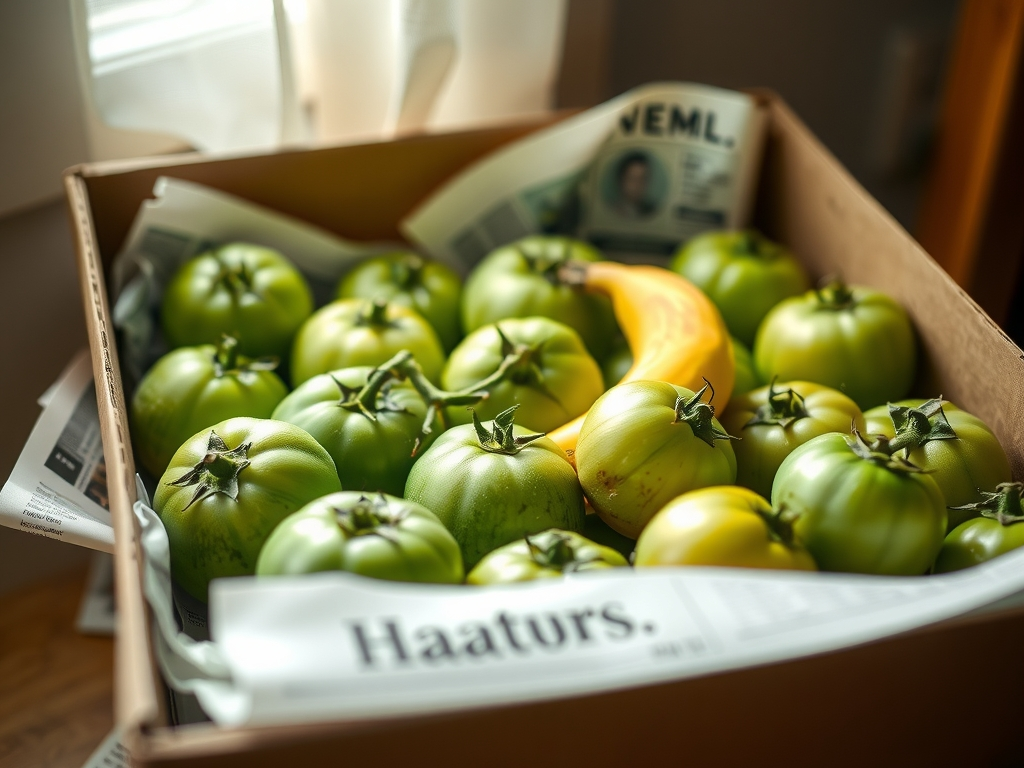
The better setup costs nothing: a cardboard box, one layer of fruit, newspaper between and over them, lid loosely closed, somewhere warm-ish indoors. The paper traps each fruit’s own ethylene and passes it around like a rumor. Want it faster? Add a ripe banana or apple to the box — both are ethylene fountains, and one banana will visibly accelerate a whole layer.
Then use temperature as a speed dial, because that’s what it is:
- Warm room (18–21°C / 65–70°F): ripe in roughly 1–2 weeks — your “eat soon” box.
- Cool room (13–16°C / 55–60°F): ripe in 3–4+ weeks — your “Thanksgiving tomatoes” box.
- Below ~10°C: don’t. Chilling damages the ripening machinery itself; a garage that cold turns mature greens into permanently mealy disappointments.
Split your mature greens between a warm box and a cool box and you’ve built a ripening schedule instead of a glut. Check weekly, pull anything softening wrong, and expect flavor a notch below vine-ripened — August tomatoes in November were never the deal; tomatoes at all in November is the deal.
The whole-plant shortcut (for the night you ran out of time)
Frost is tonight, the vine is huge, and sorting eighty fruits by gloss is not happening? Pull the entire plant, roots and all, shake off the soil, and hang it upside down in a garage, basement, or shed that stays above 10°C. The fruit continues ripening on the hanging vine over several weeks, drawing down what’s left in the stems — the old farmhouse method, and the ceiling of a late-October garage full of upside-down tomato plants is its own kind of pantry. Same rules apply: it rescues mature greens, not the matte little ones, so strip and cook those before hanging.
Step 3: cook the ones that will never turn
The matte, immature pile isn’t a consolation prize — green tomatoes are a legitimate ingredient with their own fan base: firm, tart, and built for heat.
- Fried green tomatoes: thick slices, cornmeal crust, hot skillet — the classic for a reason, and the best first use of the pile.
- Green tomato salsa: diced with onion, pepper and lime, or roasted salsa-verde style — green tomatoes stand in beautifully where tomatillos would go.
- Green tomato chutney: the traditional end-of-season answer — a spiced, vinegary preserve that cans safely thanks to all that vinegar, and turns a kilo of unripenable fruit into a year of cheese-board material.
- Pickled green tomato wedges: brined like any quick ferment or vinegar pickle — crunchy, sour, gone by Christmas.
- Freeze for cooking: chopped and bagged raw, they hold their tartness for winter stews and curries — the zero-effort preservation lane.
One warning for the curious: green tomatoes contain more solanine-family compounds than ripe ones, which is why they’re always cooked, pickled, or preserved rather than eaten raw by the bowlful. Every dish above handles that for you.
Step 4: strip the vines, then close the season
Once the plants are picked (or hanging in the garage), finish the job while you’re standing there: diseased vines skip the compost, supports get cleaned, and the bed moves into fall shutdown mode. If blight or leaf-spot visited this year, this is the single most valuable ten minutes of next season’s pest control — most tomato diseases overwinter on exactly the debris you’re deciding whether to deal with now.
What works
- Sort by gloss: glossy full-size greens ripen indoors; matte hard ones cook
- Box + newspaper + a banana beats any windowsill (ethylene, not light)
- Temperature is a speed dial: warm box eats soon, cool box hits November
- Hang whole plants upside down when frost beats your sorting time
What doesn't
- Windowsill ripening (leathery shoulders, cold nights against the glass)
- Ripening boxes below 10C - chilling breaks the ripening machinery for good
- One damaged fruit left in the box (it recruits the whole layer into rot)
- Eating unripe greens raw in quantity - they are a cooked ingredient
FAQ
Will green tomatoes ripen off the vine?
Only the ones that reached “mature green” before picking: full-sized for the variety, glossy rather than matte, with color shifted toward pale green or a first blush at the blossom end. Those carry everything ripening needs and will finish indoors reliably. Small, hard, matte-dark fruits were still being built when the season ended — they’ll never turn, and they’re better treated as a cooking ingredient (fried, chutney, salsa, pickles) than left to shrivel in a box.
What’s the fastest way to ripen green tomatoes indoors?
A cardboard box with one layer of fruit separated by newspaper, a ripe banana or apple tucked in, kept in a warm room around 18–21°C. The paper and lid trap the ethylene gas that drives ripening — the banana adds a strong extra source — and warmth sets the pace. Expect one to two weeks. Light is irrelevant to ripening, which is why the classic sunny windowsill underperforms: it adds leathery skin and cold nighttime glass, not speed.
How do I make green tomatoes last until Thanksgiving?
Use temperature as a delay timer. Mature green fruit stored in a single layer at a cool 13–16°C ripens over three to five weeks instead of one to two — so a box in a cool spare room becomes a slow-release tomato supply deep into November. Check weekly and promote anything blushing to the kitchen counter. Just keep the box above about 10°C: colder storage chills the fruit and permanently ruins both texture and its ability to ripen at all.
Is it safe to eat green tomatoes?
Cooked, pickled, or preserved — yes, and deliciously: fried green tomatoes, chutney, salsa and pickles are traditional for good reason. Unripe tomatoes do contain more of the bitter solanine-family compounds than ripe fruit, which is why green-tomato cooking traditions all involve heat, vinegar, or brine, and why they’re not a raw-snacking fruit in quantity. Once a tomato ripens indoors and turns red, it’s simply a ripe tomato — eat it any way you like.
The vine doesn’t know about frost dates. It just keeps making tomatoes — the box, the banana, and the skillet are how you keep the promise it couldn’t.
Keep reading
guides
How to Preserve Your Vegetable Harvest (2026 Beginner's Guide)
Drowning in tomatoes and zucchini? A beginner's guide to preserving your vegetable harvest — freezing, canning, drying, root storage and fermenting, and which method suits each crop.
guides
Common Tomato Problems in Summer (and How to Fix Each One)
Blossom-end rot, cracking, dropped flowers, hornworms, curling leaves — why each tomato problem happens and the fix that actually works, in one honest guide.
guides
Fall Garden Cleanup: What to Remove, What to Leave (Most People Clean Too Much)
The honest fall checklist: pull the diseased and the pest hotels, leave the roots and the leaves — why a too-tidy garden costs you soil, pollinators, and next spring's head start.