guides
Overwintering Herbs: Which Survive Outside, Which Come In, Which You Let Go
Chives laugh at winter, rosemary negotiates, basil was always leaving — the honest herb-by-herb winter plan, the mulch timing everyone gets backwards, and the potted-herb trap.
Honest disclosure: Some links below are affiliate links — Glivox earns a commission if you purchase, at no extra cost to you. We pay full price for products we review and rankings are never paid. Read the full policy.
Every fall, herb growers face a triage nobody warned them about in May: the frost forecast arrives and suddenly the herb bed is three different problems wearing one label. Some herbs are perennials that will shrug off a brutal winter and return in spring. Some are perennials on paper that die in your particular zone. And some were annuals all along, scheduled to die no matter what you do — which means the right winter plan isn’t one plan, it’s a sorting exercise.
Here’s the honest sort, herb by herb, plus the two mechanics that decide most outcomes: mulch timing (which almost everyone gets backwards) and the potted-herb trap (pots are a full zone or two colder than the ground — the quiet killer of container rosemary everywhere).
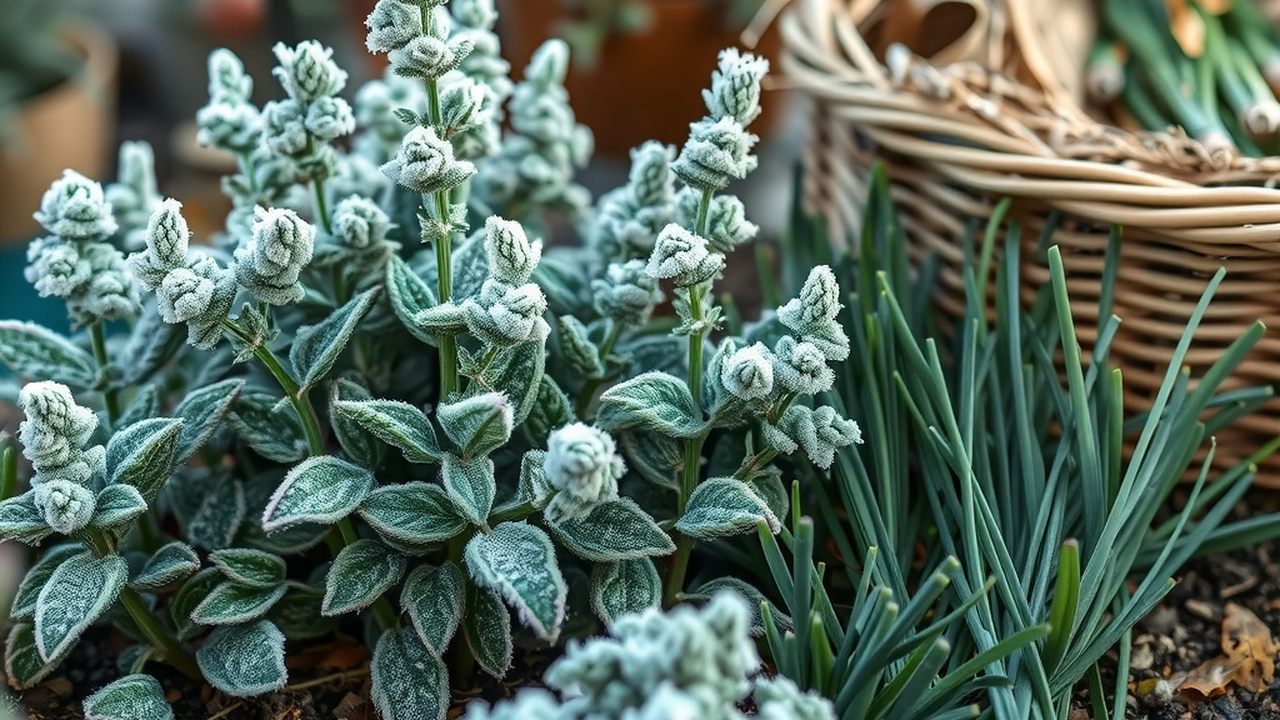
The three-pile sort
Pile 1 — The tanks (leave them; they’ll outlive us): chives, mint, oregano, thyme, sage, tarragon, lovage, and lemon balm are cold-hardy perennials through most gardening zones. Winter prep is nearly nothing: stop harvesting hard about six weeks before first frost (late cuts push tender regrowth straight into the freeze), let them stand, and resist the urge to tidy — the fall-cleanup rule applies doubly to herbs, because standing stems insulate crowns and shelter the beneficials.
Pile 2 — The negotiators (zone-dependent — this is where the work is): rosemary (reliably hardy only around zones 7–8+, variety-dependent), lavender (most varieties 5+, but hates winter wet more than cold), bay laurel (8+), and lemongrass (basically 9+). These survive outdoors in mild regions with drainage and shelter, and die in cold ones no matter the mulch. Your zone decides the strategy, not your optimism.
Pile 3 — The annuals (they were always leaving): basil dies at the first real chill — nothing personal, it’s biology. Cilantro and dill complete their lifecycle and quit. The right move is a graceful exit: dry the oregano-adjacent crew, freeze the basil in oil, let dill and cilantro drop seed where you want next year’s free plants, and pot a basil cutting for the indoor windowsill if you want winter pesto insurance.
The mulch timing everyone gets backwards
Instinct says mulch herbs before the cold arrives, like tucking them in. The old growers’ rule is the opposite: mulch perennial herbs after the ground has frozen, not before.
The reason changes how you see the job: winter mulch on perennials isn’t a heater — it’s a thermostat lock. The freeze-thaw-freeze cycling of early winter (and worse, late winter) is what actually kills borderline perennials, heaving crowns out of the soil and waking plants during warm spells only to freeze the new growth. Mulching after freeze-up holds the ground evenly frozen — boring, stable, safe — until real spring. Mulch too early and you trap warmth and moisture against the crown instead: hello rot, hello nesting voles.
The material rules match the general mulch playbook: 8–10 cm of loose straw or shredded leaves over the root zone, kept off the crown itself for the rot-prone Mediterranean crew (thyme, lavender, sage prefer their necks dry — some growers use gravel right at the crown for exactly this reason).
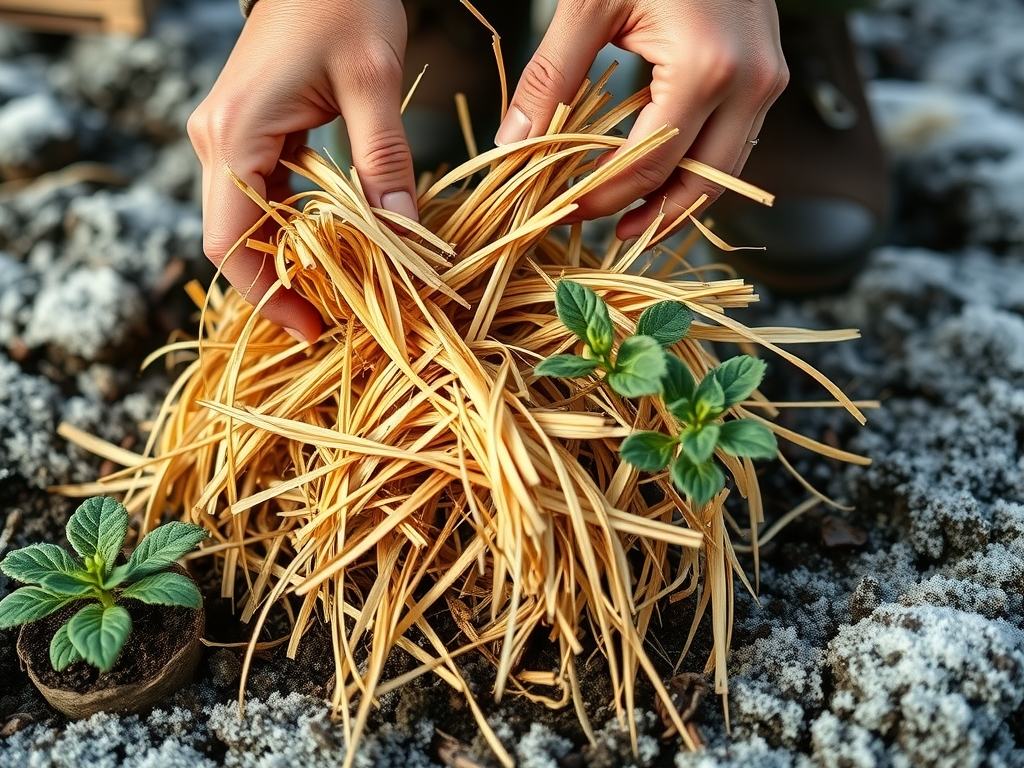
The potted-herb trap (and the three escapes)
Here’s the number that explains years of dead container rosemary: roots in an above-ground pot experience winter roughly one to two hardiness zones colder than roots in the ground. Soil mass insulates; a pot is a root-sicle mold. A zone-6-hardy herb in a pot on a zone-6 patio is effectively wintering in zone 4 — which is why the in-ground sage sails through while its potted twin dies in the same yard.
The escapes, cheapest first:
- Sink the pot — bury it rim-deep in a spare corner of a bed for the winter; the ground does the insulating. (Terracotta caveat: clay pots crack in freeze-thaw — sink plastic or fabric pots; slide clay-potted plants into a plastic nursery pot for the season.)
- Cluster and wrap — pots huddled together against a sheltered wall, gaps stuffed with straw or leaves, the whole family wrapped in burlap. Not as good as burial; far better than lone pots on open pavers.
- The cold-but-not-warm room — an unheated garage or shed near freezing is a fine dormancy dorm for potted hardy perennials: dark is fine, dormant plants need little light, and a splash of water monthly stops root death by drought.
Rosemary, the special case (a short intervention)
Rosemary kills more herb-grower confidence than every other plant combined, so here’s its honest options list. Mild zones (7–8+): leave it out — sharp drainage, sunny wall, gravel at the crown; wet feet kill more rosemary than frost. Cold zones: the cool porch or unheated bright room (around 2–10°C, some light, water sparingly) beats the warm living room every time — indoor winter rosemary in heated rooms dies of dry air and confusion by February, the classic heartbreak. Anywhere: take a few 10 cm cuttings in early fall and root them on a windowsill — free insurance policies that fit between the indoor herb crew. If the mother plant loses its negotiation with winter, spring starts with rooted replacements instead of a garden-center receipt.
What works
- Sort first: tanks stay, negotiators get strategy, annuals get preserved
- Mulch AFTER the ground freezes - it locks cold stable, not warmth in
- Sink or cluster pots (containers winter 1-2 zones colder than ground)
- Take fall cuttings of rosemary and lavender - free insurance
What doesn't
- Hard-harvesting perennials in late fall (tender regrowth meets frost)
- Early cozy mulching (crown rot + a vole hotel by January)
- Rosemary in the heated living room (dry air finishes it by February)
- Terracotta pots left out (freeze-thaw cracks them, plant and all)
FAQ
Which herbs survive winter outside?
The reliably hardy perennials: chives, mint, oregano, thyme, sage, tarragon, lovage and lemon balm come back in spring across most gardening zones with almost no help. The zone-dependent tier — rosemary (roughly zones 7–8+), lavender (5+ but intolerant of winter wet), bay (8+) — survives outdoors only in milder regions with sharp drainage. Basil, cilantro and dill don’t overwinter anywhere; they’re annuals whose ending is part of the design — preserve them and let dill and cilantro self-seed.
When should I mulch my herbs for winter?
After the ground freezes, not before — the opposite of most people’s instinct. Winter mulch on perennials works as a temperature stabilizer, preventing the freeze-thaw cycling that heaves crowns and tricks plants into growing during warm spells. Applied too early, it traps warmth and moisture at the crown (rot risk) and shelters rodents. Once the soil is frozen, lay 8–10 cm of loose straw or shredded leaves over root zones, keeping the material off the crowns of rot-prone Mediterranean herbs like thyme, sage and lavender.
How do I keep potted herbs alive over winter?
Solve the real problem: above-ground pots winter one to two zones colder than ground soil, so a “hardy” herb in a pot often freezes to death in a climate it would survive in the ground. Fixes, in order of effectiveness: sink the pot rim-deep into a garden bed for the season; cluster pots against a sheltered wall packed with straw and wrapped in burlap; or move dormant hardy herbs into an unheated garage or shed near freezing, watering lightly once a month. Move clay pots out of freeze-thaw entirely — they crack.
Can rosemary survive winter — inside or outside?
Depends on zone and setup. Outdoors it’s reliably hardy only around zones 7–8 and up, and even there it demands sharp drainage — winter-wet roots kill more rosemary than cold does. In colder regions, the winning indoor spot is cool and bright (an unheated sunroom, enclosed porch or cold windowsill at roughly 2–10°C, watered sparingly), not the warm living room, where dry heated air usually finishes it by late winter. Whatever your plan, root a few fall cuttings on a windowsill as free replacements in case the negotiation fails.
Winter doesn’t kill herb gardens — mis-sorting does. Three piles in October, and April looks after itself.
Keep reading
guides
Container Vegetable Gardening: How to Grow Food in Pots (2026 Guide)
No yard? No problem. A practical guide to growing vegetables in containers — which pots, what soil, the best crops for pots, and how to keep container plants watered and thriving through summer.
guides
Drying Herbs and Peppers at Home: Air, Oven, or Dehydrator (Honest Trade-offs)
The oldest preservation method is still the easiest — if you match it to the right crops. Hang-drying herbs, pepper ristras, oven and dehydrator honesty, and storage.
guides
How to Grow Food Indoors: The Apartment Guide That Respects Physics
What actually grows inside — and what dies pretending. The honest indoor roster, why windowsills fail, the $30 light that changes everything, and a realistic harvest forecast.