guides
Build a Cold Frame From an Old Window (One Saturday, ~$0-25)
An old window is 90% of a cold frame. The cut list, the slope rule, where to put it, and the venting habit that decides whether it grows salad or cooks it.
Honest disclosure: Some links below are affiliate links — Glivox earns a commission if you purchase, at no extra cost to you. We pay full price for products we review and rankings are never paid. Read the full policy.
Somewhere near you — a renovation dumpster, a garage rafter, a “free” listing — there’s an old window that is already 90% of a cold frame. The glass, the frame, the hinge-ready sash: done. All a cold frame actually is, is that window resting at an angle on a shallow box, turning low winter sun into a microclimate that runs 5–10°C warmer than the garden around it. Salad in December, seedlings in March, one Saturday of work in between.
Here’s the build, sized by whatever window you found, plus the two decisions that matter more than the carpentry: where it sits, and when it opens.
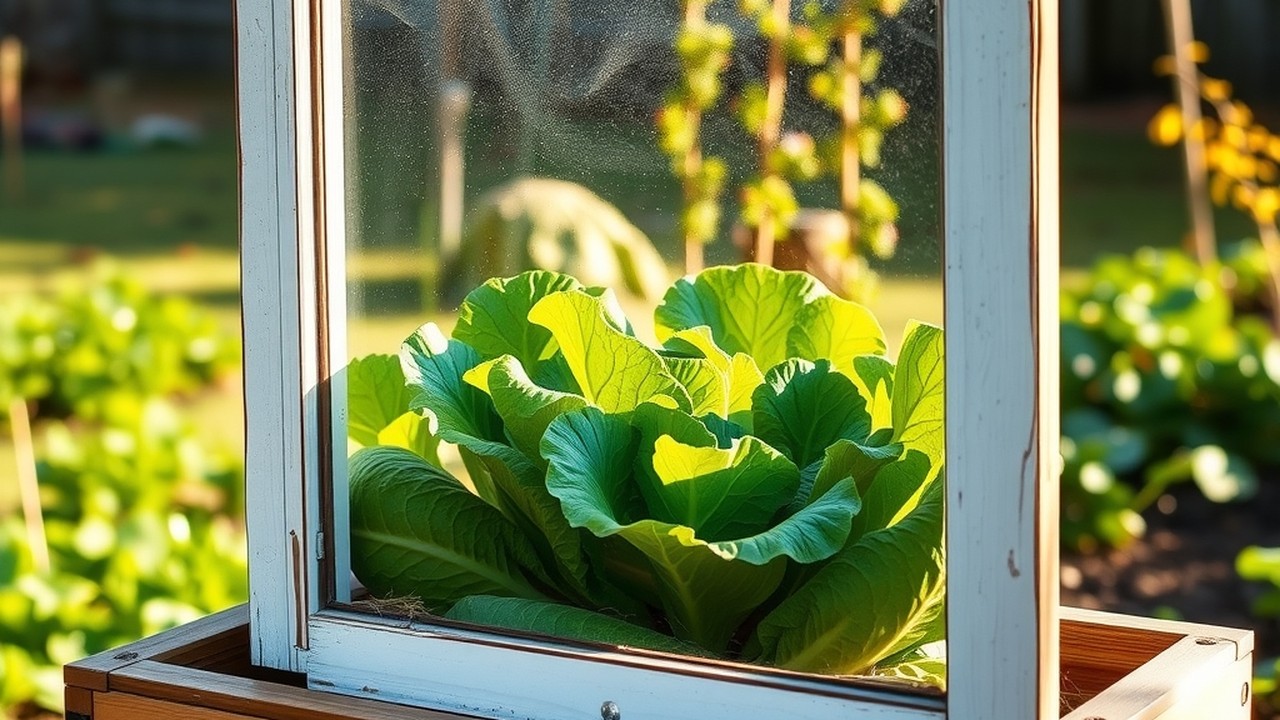
The window picks the size (you just build down from it)
Rule one: don’t design the box and then hunt for glass — let the window you found dictate everything. The box’s footprint is the window’s footprint, minus nothing. A 90×60 cm sash makes a 90×60 frame; two matching windows side by side make a double-wide with a plank down the middle.
Two window notes before you commit. First, weight is a feature: a heavy old wooden sash won’t blow open in wind and holds heat better than it has any right to. Second, if the window is old enough to have flaking paint, assume lead-era paint and either seal it (a fresh coat of exterior paint over the top) or pick a different window — you’re growing food under this thing.
No free window in your area? A sheet of twin-wall polycarbonate on a simple wood rim does the same job, insulates slightly better, and can’t shatter over your spinach — that’s the route if kids’ footballs share the yard.
The slope rule, and the cut list
A cold frame’s back wall is taller than its front, for two reasons that are really one reason: the glass must slope toward the winter sun (to catch low-angle light and shed rain) and away from the wind. The time-tested proportions:
- Back wall: ~30 cm (12″). Front wall: ~20 cm (8″). That difference across a 60 cm deep box gives roughly a 10–15° slope — plenty.
- Sides: cut once, diagonally. Take a board as tall as your back wall, mark the front-wall height on one end, and saw corner to corner — one cut produces the wedge shape, and doing it to a doubled board produces both matching sides.
The full materials list, honestly priced: the window (free), four boards — scrap 2.5 cm lumber, old decking, or a cut-down pallet crate (free–$15), a handful of exterior screws, and optionally two hinges and a cheap handle ($0–10). Cedar and larch last longest untreated; ordinary pine works fine and owes you nothing if it gives out in five years. Skip pressure-treated boards if you’d rather not debate them next to your salad — a coat of linseed oil on pine is the traditional compromise.
Assembly is four screws per corner: front and back walls screwed between the side wedges, window laid on top. Hinges along the back edge are optional but worth it — a hinged sash props open one-handed and never slides off in wind. No hinges? The window just rests on the frame, held by its own weight, and a brick keeps it honest.
Placement is half the harvest
The same box in two spots grows two different winters. The checklist, in order of importance:
- Face the slope south (toward the equator) — the entire design assumes it.
- Back it against something: a house wall, shed, or fence blocks north wind and — if it’s the house — leaks a little warmth all season. The classic spot is against a south-facing wall by the kitchen door, close enough that harvesting in the rain isn’t a hike (the same siting logic as every season-extension tool).
- Sink it 5–10 cm into the soil. Settling the box into a shallow trench seals the drafty gap along the bottom edge and borrows the ground’s thermal mass — the cheapest insulation upgrade there is.
- Avoid frost pockets: don’t put it at the bottom of a slope where cold air pools; mid-slope or high ground beats the hollow.
Inside, prep the bed like any fall planting: loosen, compost, sow. Cold-frame champions are the compact cold-lovers — lettuce, spinach, mache (corn salad), arugula, scallions, winter radishes — sown late summer through early fall so they’re established before light gets scarce.
The venting habit (cold frames fail by cooking, not freezing)
Here’s the counterintuitive operating manual: your cold frame’s main enemy is a sunny day, not a cold night. A closed frame in full sun can hit 35–40°C inside while the air outside sits at 10°C — and one such afternoon wilts a month of lettuce. The rule of thumb that prevents it:
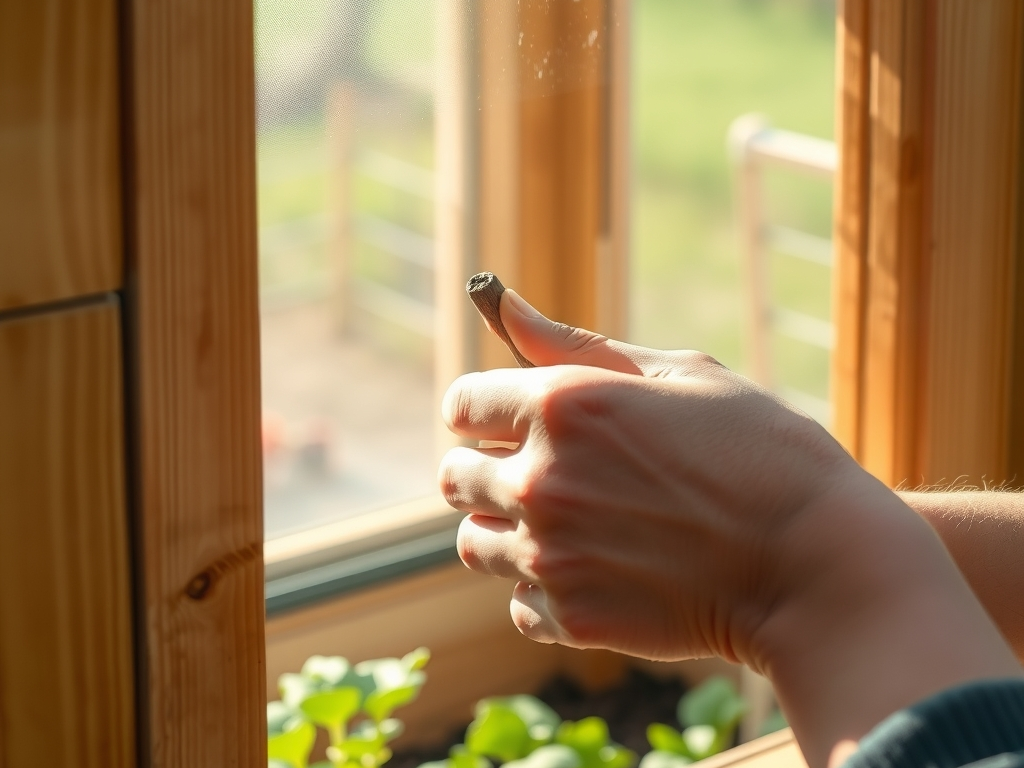
- Sunny and above ~5°C outside → prop the sash open a hand’s width in the morning (a notched stick gives you two or three settings).
- Close it mid-afternoon, before the day’s heat leaves, to bank warmth for the night.
- Genuinely cold, gray days → leave it shut, and on hard-freeze nights throw an old blanket or a flake of straw over the glass for extra insurance.
If the morning ritual doesn’t fit your schedule, a wax-cylinder automatic vent opener (~$25–35) lifts and lowers the sash by temperature with no power at all — the one gadget in this project that earns its price, and the difference between a cold frame you manage and one that manages itself. Come spring, the same box becomes a hardening-off station for seedlings — arguably its most valuable month of the year.
What works
- Let the found window dictate the box size - never the reverse
- Back 30cm, front 20cm: one diagonal cut makes both sloped sides
- Site it south-facing against a wall and sink it 5-10cm into the soil
- Vent on sunny days above 5C - or fit a $30 auto-opener and forget it
What doesn't
- Leaving it sealed on a sunny afternoon (salad cooks at 35C+ inside)
- Flaking old paint left bare over food beds - seal it or skip that window
- Building in a frost pocket at the bottom of a slope
- Designing a fancy box first, then hunting for glass to fit it
FAQ
What temperature difference does a cold frame actually make?
Roughly 5–10°C warmer than the open garden — more on sunny days, less in gray weeks — plus complete protection from wind and frost settling on leaves. In practice that shifts your garden one to two climate zones warmer: hardy greens like spinach, mache and scallions that would stall or die outside keep growing slowly and harvestably through much of winter, and fall crops keep producing weeks after the first frosts end the open-bed season.
Which vegetables grow best in a cold frame?
The compact cold-lovers: lettuce, spinach, mache (corn salad), arugula, winter radishes, scallions and small Asian greens. Sow them late summer to early fall so plants are established before daylight gets short — after that they hold in the frame like a living refrigerator, growing slowly and staying harvest-ready. Skip anything tall (it touches the glass and freezes there) and anything frost-tender: a cold frame extends the season for hardy crops; it doesn’t grow tomatoes in January.
Do I need to open my cold frame every day?
On sunny days, yes — and it’s the most important job the frame asks of you. Trapped sun can push a closed frame past 35°C even in cold weather, which damages winter greens faster than any freeze. Prop the sash a hand’s width open on bright mornings above about 5°C and close it mid-afternoon to store warmth for the night. If daily tending is unrealistic, a wax-cylinder automatic opener (around $30, no electricity) raises and lowers the sash by temperature on its own.
How big should a cold frame be?
Whatever your window is — that’s the honest answer, and the budget one. The practical sweet spot is roughly 60–120 cm wide and 60–90 cm deep: big enough for a real salad supply, small enough that the sash lifts easily and your arm reaches the back row. Height: about 30 cm at the back sloping to 20 cm at the front, which fits low winter crops and angles the glass toward the sun. Bigger ambitions are better served by two frames than one giant sash you can’t lift.
A window that spent decades keeping weather out of a house retires to a garden and spends the next decade letting winter sun in. Better than the dumpster.
Keep reading
guides
Season Extension for Beginners: Row Covers, Cold Frames, and 8 More Weeks of Harvest
Frost doesn't have to end the garden. How row covers, low tunnels and cold frames add weeks or months of harvest — what each really does, and what to build in August.
guides
Best Greenhouse for Beginners: Honest Picks by Budget (None Are Sponsored)
From a $30 pop-up to a real polycarbonate kit — which beginner greenhouse actually survives wind, what each tier honestly grows, and the anchoring rule that decides everything.
guides
What to Plant in September: The Last Calls and the Head Starts
September runs on two clocks — last-call sowings that still finish (spinach, radishes, greens) and head starts that pay next year (garlic, cover crops). The honest month plan.