guides
DIY Chicken Coop on a Budget: Three Builds, Real Costs, Five Rules
Pallet coop for $75, lumber coop for $250, or plans vs winging it — honest chicken coop economics, the sizing math, and the five non-negotiables that decide whether hens thrive.
Honest disclosure: Some links below are affiliate links — Glivox earns a commission if you purchase, at no extra cost to you. We pay full price for products we review and rankings are never paid. Read the full policy.
A prefab coop from the farm store costs $300–600, houses fewer birds than the box claims, and often starts sagging in year two. The same money in lumber — or a quarter of it in pallets — builds something sturdier, sized honestly, and repairable forever. That’s why the coop is the classic first real homestead build: big enough to matter, simple enough to survive beginner carpentry.
But coops are also where beginner builds go wrong in expensive ways, because chickens have five non-negotiable requirements that Pinterest coop photos routinely ignore — and one of them (the wire) is a genuine life-or-death detail. So here’s the honest version: three builds by budget, the sizing math nobody does, the five rules, and where plans help versus where they’re padding. Disclosure up front: this article links to a woodworking-plans product we’ve reviewed; Glivox earns a commission on it. The build advice doesn’t change either way.
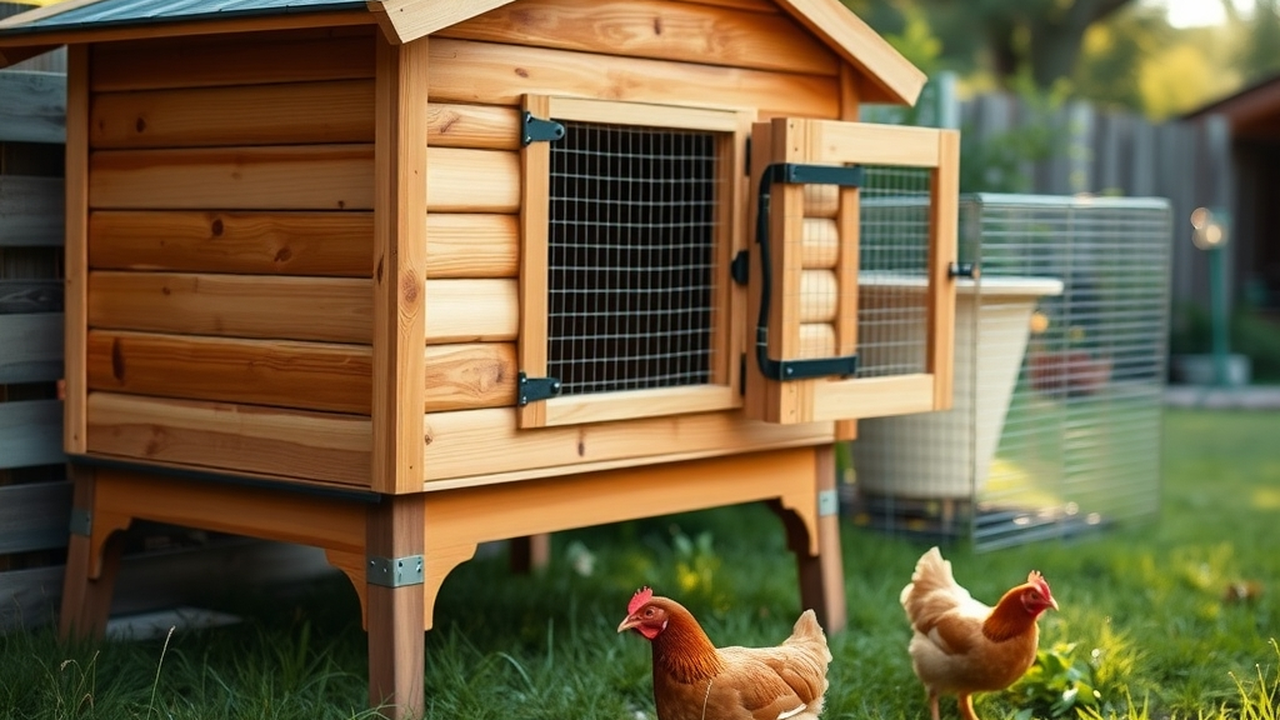
First, the math that sizes everything
Two numbers decide your whole build, and skipping them is why craigslist is full of “outgrown coop, $50”:
- Indoor coop space: ~4 sq ft (0.4 m²) per standard hen. Less and you get pecking, stress, and dirty eggs.
- Outdoor run: 8–10 sq ft (~1 m²) per hen — more is always better; chickens are professional destroyers of bare ground.
So the classic starter flock of 4 hens wants a coop of ~16 sq ft (4×4 ft) plus a run of ~40 sq ft — roughly a 4×10 ft footprint total. Build for the flock you’ll have (chicken math is real: everyone adds birds), and note that bantams need less, big dual-purpose breeds more.
4 + 10
Square feet per hen - indoor coop + outdoor run. The two numbers that size every coop decision before a single board is cut
Three builds, three budgets (honest totals)
The pallet build — $0–75. Free pallets (heat-treated “HT” stamp only — never “MB”, methyl bromide) supply the framing and much of the siding; you buy hardware cloth, hinges, a latch, and roofing. The catch is labor: pallet disassembly is its own workout, and pallet dimensions fight you at every joint. Best for: tight budgets, salvage temperaments, and anyone with more weekends than dollars. Totals stay under $75 if the roof is salvaged metal or heavy tarp-over-ply.
The new-lumber basic — $150–300. A 4×4 ft raised coop on legs with an attached run, framed from 2×3s and 2×4s, plywood skin, metal or shingle roof. This is the sweet spot: square lumber, predictable joints, one honest weekend plus a Saturday, and the same four carpentry basics as a raised bed — measure, pre-drill, exterior screws, check square. Most first-time builders should land here.
The upgraded build — $300–500. Same bones, plus the comfort tier: wheels or skids (a movable “chicken tractor” spreads the manure blessing and the lawn damage), external nest-box access, a full-height walk-in run, automatic door. Add these after the basics work — every one bolts on later.
Whichever build: the coop pays itself back in eggs slowly and in garden fertility quickly — chicken bedding plus droppings is the hottest compost input a backyard produces.
The five non-negotiables (where coops actually fail)
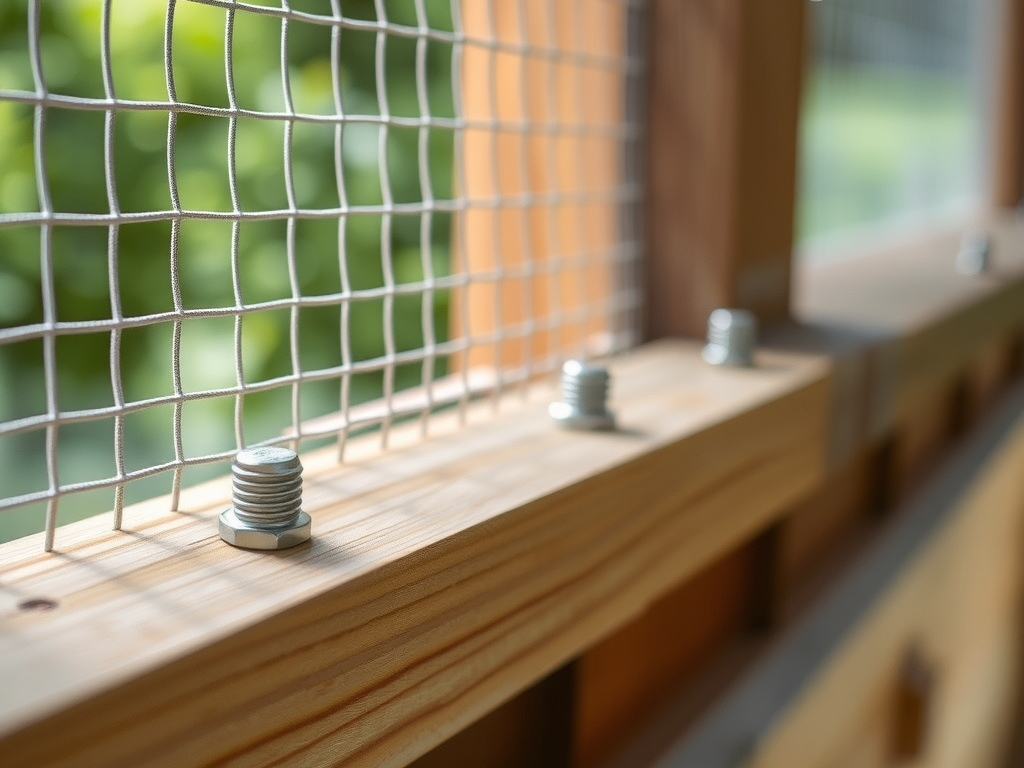
- Hardware cloth, never chicken wire. The single most important sentence in coop building: chicken wire keeps chickens in; it does not keep predators out. Raccoons tear it open with their hands. Use ½-inch galvanized hardware cloth on every opening, screwed down with washers or lath strips — staples alone lose to a determined raccoon.
- Ventilation high, drafts low. Ammonia and moisture are the silent flock-killers; coops need generous vent area up near the roofline (above roosting heads) while roost level stays draft-free. Cold rarely hurts chickens; wet, stale air constantly does.
- Roosts higher than nest boxes. Chickens sleep on the highest thing available — make sure that’s the roost bar (5 cm wide, rounded edges), not the nest boxes, or the boxes fill with overnight droppings and the eggs arrive filthy.
- One nest box per 3–4 hens, dark and low. Build fewer than you think; they’ll all use the same favorite anyway.
- Design for cleaning day. A full-open side, a droppings board you can slide out, a human-height door on walk-ins — whatever your build, the question “how do I scrape the far corner?” must have an answer that isn’t “crawling.” Coops that are miserable to clean get cleaned rarely, and every problem in rule #2 follows.
Floor note: raise the coop 30+ cm on legs — it eliminates the rat condo underneath, gives the run shade, and keeps the floor dry. Bury a 30 cm skirt of hardware cloth angled outward around the run and digging predators hit wire and give up.
Plans or no plans? (the honest version)
A basic box coop genuinely doesn’t need purchased plans — the sizing math above plus the five rules plus any free extension-service design gets a competent beginner there, and free coop plans are abundant.
Where plans earn money: complex builds (walk-ins, tractors with axles, integrated runs with people-doors) where cut lists and framing order save real material waste, and serial builders who’ll also want the shed, the compost bays, the potting bench. That’s the honest case for the big plan libraries — the best-known one, Ted’s Woodworking ($67, 16,000 plans including a whole coop section), is exactly what our 3.5-star review says it is: huge breadth and real cut lists, uneven polish, sprawling to navigate. Worth it for the person building a homestead’s worth of projects; skippable for one box coop.
Quick wins vs. expensive mistakes
What works
- Hardware cloth on every opening, screwed with washers (rule zero)
- Size by the math: 4 sq ft in + 8-10 out, per hen, before cutting
- Raise the coop on legs + bury a wire skirt around the run
- Vent high above the roosts; keep roost level draft-free
What doesn't
- Chicken wire as predator protection (raccoons open it like a bag)
- Believing the prefab box ("houses 6 hens" usually means 3)
- Nest boxes higher than roosts (permanently dirty eggs)
- MB-stamped pallets (methyl bromide - never for animal housing)
FAQ
How much does it cost to build a chicken coop yourself?
Honest ranges: $0–75 using heat-treated pallets and salvage (buying only hardware cloth, hinges and roofing), $150–300 for a new-lumber 4-hen coop with attached run — the beginner sweet spot — and $300–500 with upgrades like wheels, walk-in height and automatic doors. DIY typically halves the price of an equivalent prefab while building something sturdier and repairable. The two costs beginners forget: hardware cloth (meaningfully pricier than chicken wire, and non-negotiable) and roofing.
How big should a chicken coop be for 4 chickens?
About 16 square feet of indoor coop (a 4×4 ft box) plus 32–40 square feet of run — roughly a 4×10 ft total footprint. The working rules: 4 sq ft of coop and 8–10 sq ft of run per standard-size hen, more for large breeds, less for bantams. Crowding is the root of most flock problems (pecking, stress, dirty eggs), and flocks tend to grow — build for one or two more birds than you’re starting with.
What is the difference between chicken wire and hardware cloth?
Chicken wire is thin, twisted hexagonal mesh designed to contain chickens — raccoons can tear it open, and larger predators go through it. Hardware cloth is welded galvanized square mesh (use ½-inch) that predators can’t tear or reach through. Every opening on a coop — windows, vents, the run, the buried skirt — should be hardware cloth, attached with screws and washers rather than staples. It costs several times more than chicken wire and is the least skippable line in the entire coop budget.
Do I need plans to build a chicken coop?
For a basic box coop: no — the sizing math (4 sq ft per hen inside, 8–10 outside), the five build rules, and any free extension-service design are enough for a beginner with basic tools. Purchased plan libraries earn their price on complex builds (walk-ins, movable tractors) where cut lists prevent material waste, or for people planning a whole list of homestead builds beyond the coop. If that’s you, read an independent review first and treat sprawling plan collections as an archive to mine, not a curated course.
Four square feet per hen, hardware cloth everywhere, and the raccoons stay theoretical.
Keep reading
guides
How to Start Composting at Home (2026 Beginner's Guide)
Turn kitchen scraps and yard waste into free, rich soil. A beginner's guide to composting at home — what to compost, the simple browns-to-greens method, and how to fix a smelly or slow pile.
reviews
Ted's Woodworking Review: Are 16,000 Plans Worth $67 in 2026?
An honest look at Ted's Woodworking — what the 16,000-plan library actually contains, the real complaints about quality and refunds, and whether it's worth $67 for homestead DIY builds.
comparisons
Raised Beds vs. Containers vs. In-Ground: Which Should You Choose?
An honest comparison of the three ways to grow vegetables — real costs, effort, yields, and which setup actually fits your space, soil, and budget.