guides
Off-Grid Solar for Beginners: Kits vs DIY Builds (What to Buy First)
Solar kits, component DIY, or a $49 course? The honest beginner path into off-grid solar — real watt-hour math, what each route costs, and the upsells to walk past.
Honest disclosure: Some links below are affiliate links — Glivox earns a commission if you purchase, at no extra cost to you. We pay full price for products we review and rankings are never paid. Read the full policy.
Search “off grid solar” and you’re handed three doors: kits (a panel and power station bundled and ready), component DIY (panels, charge controller, battery, inverter — assembled by you), and courses promising to teach you the whole trade for the price of a pizza. Each door has an industry behind it insisting theirs is the only sensible one.
Here’s the honest map: which door fits which beginner, the watt-hour math that sizes any system before you spend a dollar, and where the marketing on all three paths gets ahead of the physics. Disclosure: Glivox earns a commission on the course linked below — our full review rates it a middling 3.0 and flags its upsell funnel, and none of that changes here.
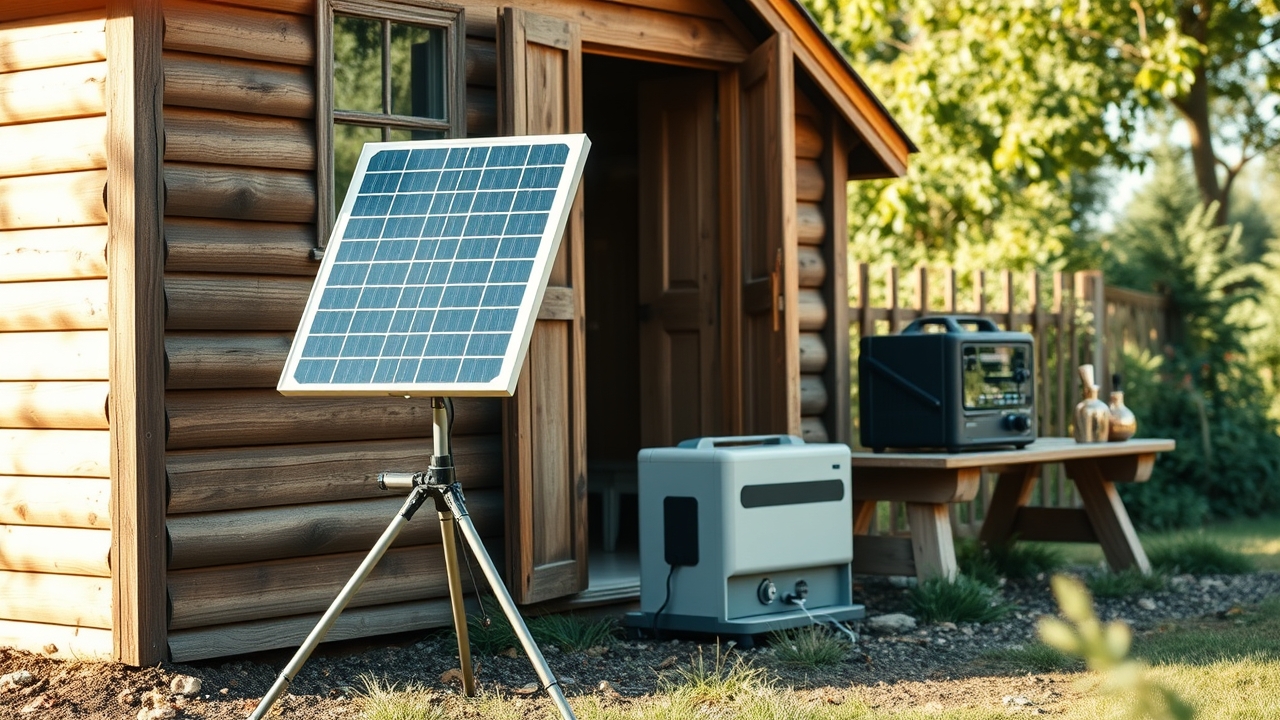
TL;DR — the honest answer by budget and temperament
Most beginners should buy a small kit — a 100W panel + 250–500Wh power station bundle ($200–500) — because it teaches real solar ownership with zero wiring risk and does genuinely useful work (blackout kit, shed power, camping). Component DIY saves 20–40% at the same capacity and scales far better, but adds fusing, wiring and battery decisions that punish guesswork — it’s the right second system, or a first system for the already-handy. Courses ($49-ish) are optional either way: decent consolidated theory for absolute beginners, oversold on bill-savings claims — read our review before buying. And regardless of door: size from your measured loads, not the marketing photos — the arithmetic below takes ten minutes and prevents 90% of solar regret.
Buy it if
a 100W kit if you want working solar this week with no wiring decisions — or component DIY if fusing and crimping sound like fun, not danger
Skip it if
anything promising to slash your whole-house bill from a small system — grid power is cheap; small solar buys independence and backup, not bill relief
Try instead
Goal is actually lowering a household bill? Professionally installed grid-tie solar with incentives beats every DIY off-grid path on that math
The ten-minute math that sizes everything
Two numbers decide every solar purchase:
What you’ll harvest: a panel’s rating is peak-lab output. Real world: multiply by ~0.75, then by your usable sun-hours (4–6 in summer for most of the US, far less in winter — northern winters can cut harvest to a third or a fifth of July’s). So a 100W panel banks roughly 300–500Wh on a good day.
What you’ll spend: add up your actual target loads. Typical figures — LED bulb 5–10W · router 5–15W · laptop 30–65W · small fan 25–50W · phone ~12Wh per charge · a modern fridge ~1,000–1,500Wh/day. The instant lesson most buyers learn too late: electronics and lights are cheap to run; anything that heats or cools is not. Kettles, heaters and AC (1,000W+) don’t belong on beginner systems at all, and a fridge needs the $800+ tier, not the $300 one.
A $15–25 plug-in power meter turns this from estimating into measuring — the single best pre-purchase spend in all of solar.
300-500Wh
Real daily harvest from a '100W' panel (0.75 derate x 4-6 sun-hours) — size purchases from this number, not the sticker watts
Door 1 — Kits and power stations ($200–500 to start)
A “solar generator” kit is a lithium power station (battery + inverter + charge controller in one box) bundled with a folding panel. What the category does well: zero wiring decisions, zero fusing risk, working solar on day one, clean indoor-safe power, and honest usefulness — a 300Wh station + 100W panel runs lights, router, laptop and phones through an evening or an outage, and recharges by lunch.
What to check before buying any kit (this is where kit marketing plays games): battery chemistry — insist on LiFePO4 (2,000–4,000 cycles) over older lithium-ion (300–800); real capacity in Wh, not the “peak watts” number in the product name; input rating — some budget stations accept solar so slowly the panel is decorative; and the panel’s actual wattage — bundles love pairing big batteries with toy panels. Ignore “powers your home!” imagery on anything under 2,000Wh; that’s the marketing, not the machine.
The honest downside of kits: you pay $1.50–3 per usable watt-hour versus roughly half that for component DIY at scale, and expansion is limited to what the box accepts.
Door 2 — Component DIY (same capacity, 20–40% cheaper, real decisions)
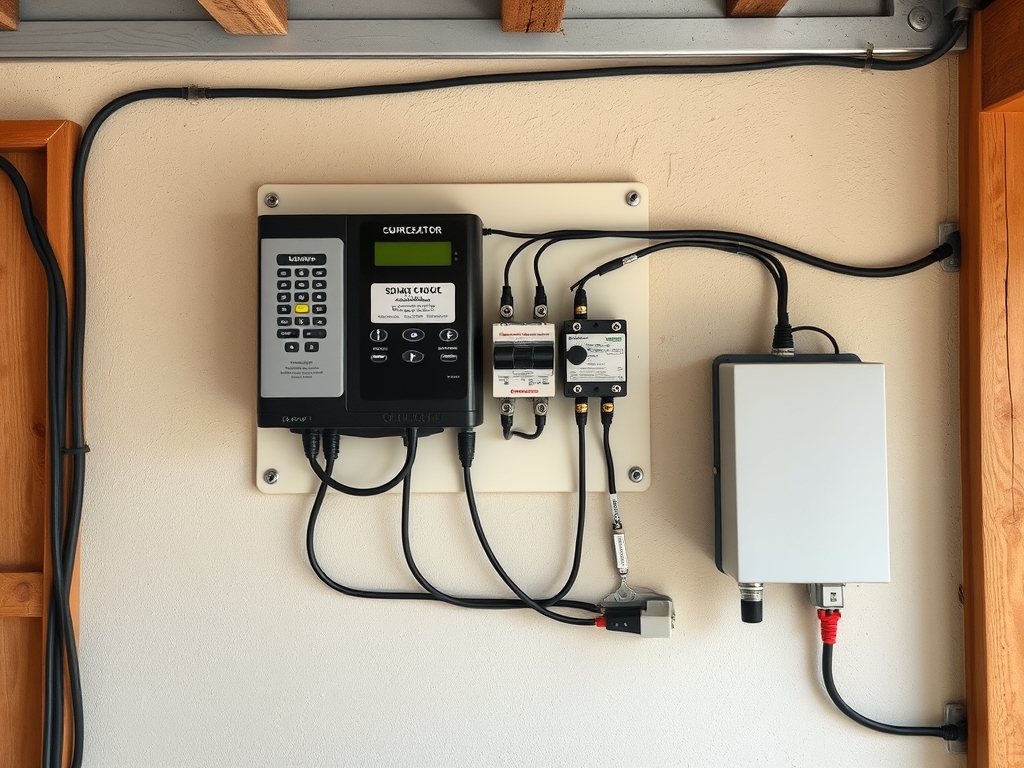
Panels ($0.50–1/W), a charge controller (MPPT, not the cheaper PWM, once your panel array passes ~200W), a LiFePO4 battery (the budget’s biggest line), an inverter sized to your loads, plus fusing and wire — assembled on a board in an afternoon if you know which afternoon skills you need: correct wire gauges, a fuse between every major component, battery terminals treated with respect.
DIY wins on: price per watt-hour, expandability (add panels or battery later), repairability (one dead part ≠ dead system), and the education itself. It loses on: mistakes that cost real money (an unfused short can end a battery — or worse), research time, and no single warranty. The honest gate: if the sentence “fuse the positive lead between controller and battery” reads like a foreign language and you don’t want to change that, buy the kit. If it sounds learnable — it is, and this door is where serious homestead systems live. (Related honesty: reviving old lead-acid batteries to save money here is its own oversold genre — the recondition-vs-new math only clears for existing fleets; budget for real LiFePO4 instead.)
Door 3 — The $49 course (optional, oversold, occasionally useful)
The best-known beginner course in this niche (DIY Home Energy, $49) teaches panel assembly and small-system design. Our full review lands at 3.0: a solid consolidated intro for absolute beginners with a low refund rate — and two honest flags. First, the sales page’s bill-slashing claims collapse against the watt-hour math above; a few hundred DIY watts cannot erase most of a household bill anywhere. Second, the post-checkout upsell funnel is heavy — most buyers get pitched at least one add-on; the base product is the product, decline the rest. Who it genuinely fits: the person choosing Door 2 who wants one organized sequence instead of forty YouTube tabs. Who should skip: anyone comfortable self-teaching (the knowledge is all free, scattered) and anyone buying Door 1 (kits need no course at all).
The beginner path that actually works
- Measure your three target loads with a power meter ($15–25). Add 30% margin.
- Start with the kit tier that covers the measured job — usually 100W/300Wh. Run it a full season on real work: blackout kit, shed, camp box.
- Then decide about scale. Half of owners discover the small system covers everything they truly wanted. The other half now knows exactly what to build at Door 2 — and builds it right the first time.
That sequence spends the least money on the most learning, which is the entire game in small solar.
Quick wins vs. money-wasters
What works
- Measure real loads with a $15 meter BEFORE any purchase
- LiFePO4 chemistry only — cycle life is the whole battery economy
- Buy the kit for learning speed; build components for scale
- Winter-size any year-round system (Dec harvest = 1/3 to 1/5 of July)
What doesn't
- Buying capacity by marketing photo ("runs your home!") instead of Wh math
- Heating or cooling anything on a small system (physics always wins)
- Skipping fuses in a DIY build (the cheapest part protects the dearest)
- Stacking course upsells — the base product is the product
FAQ
What is the best off-grid solar kit for a beginner?
The right first kit for most people: a 100W panel bundled with a 250–500Wh LiFePO4 power station from an established brand, at $200–500. Check four specs before the brand name: LiFePO4 chemistry (thousands of cycles), honest watt-hour capacity (not the peak-watts marketing number), a solar input rating fast enough to recharge in a day, and a real 100W panel in the bundle. That tier runs lights, phones, router and laptop — genuine blackout and shed power — and teaches you exactly what to build next, if anything.
Is it cheaper to build your own solar system than buy a kit?
At the same capacity, component DIY typically costs 20–40% less than kit pricing, and the gap widens as systems grow — panels are cheap; you’re mostly paying for battery, and buying it directly beats buying it in a branded box. The trade: DIY requires correct wire sizing, fusing between every major component, and battery handling discipline — mistakes can be expensive or dangerous. Honest rule: first system as a kit for speed and safety, second system as components for scale, unless you’re already electrically handy.
Can a small solar system power a refrigerator?
Not at the beginner tier. A modern fridge averages 1,000–1,500Wh per day, which needs roughly 400W of panel and 1–2kWh of battery to run reliably — an $800–2,000 system — while a starter 100W/300Wh setup harvests only a fifth of a fridge’s daily appetite. The fridge threshold is the honest dividing line in off-grid solar: below it, systems back up electronics and lights; above it, you’re powering appliances. Budget accordingly and don’t let a product name containing “1000” (peak watts, not stored energy) convince you otherwise.
Are DIY solar courses worth it?
Sometimes, narrowly. A $49 structured course can genuinely help an absolute beginner who wants one organized path into component-level DIY instead of assembling knowledge from scattered videos — that consolidation is the real product, and refund rates on the well-known one are low. What no course delivers: the “slash your electric bill 60–80%” outcomes the sales pages promise, which small-system physics doesn’t support. If you buy one, decline the upsell funnel after checkout, and read an independent review first — ours scores the category leader a deliberate middle 3.0.
Glivox compares products for homesteaders honestly — watt-hours don’t read sales pages. Methodology on the About page.
Keep reading
reviews
DIY Home Energy Review: Is the $49 Solar Course Worth It? (2026)
An honest review of DIY Home Energy — what the $49 video course actually teaches about home solar, where the savings claims oversell, and whether it's a smart first step before you buy panels.
guides
Off-Grid Water Systems for Homesteads: A Realistic 2026 Guide
Rainwater, wells, springs, and air-to-water: the real off-grid homestead water options for 2026 — what each costs, delivers, and where they oversell.
reviews
EZ Battery Reconditioning Review 2026: Legit Skill or Overhyped Course?
An honest look at the $47 EZ Battery Reconditioning course — what battery reconditioning can genuinely do, where the sales page oversells, and who should skip it.